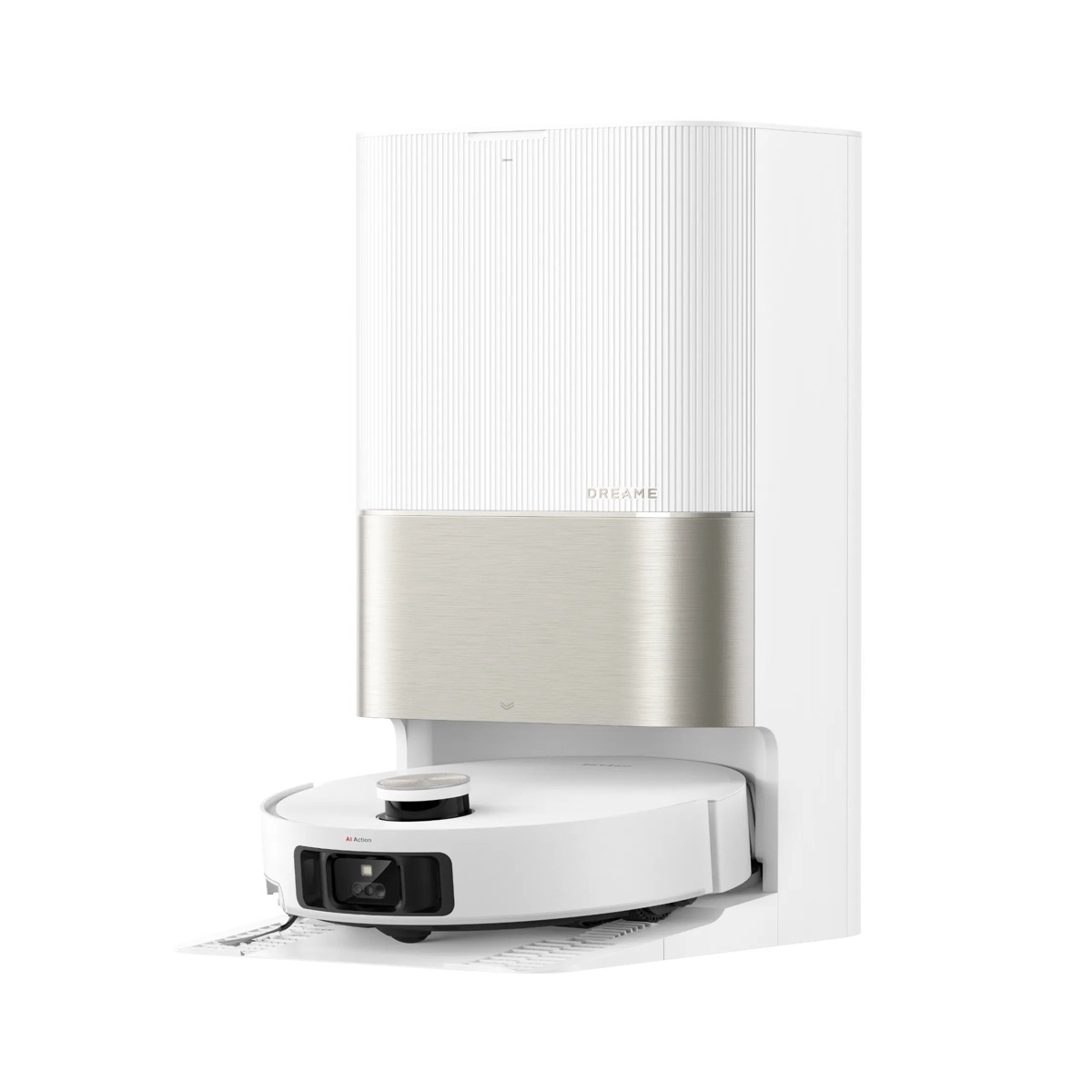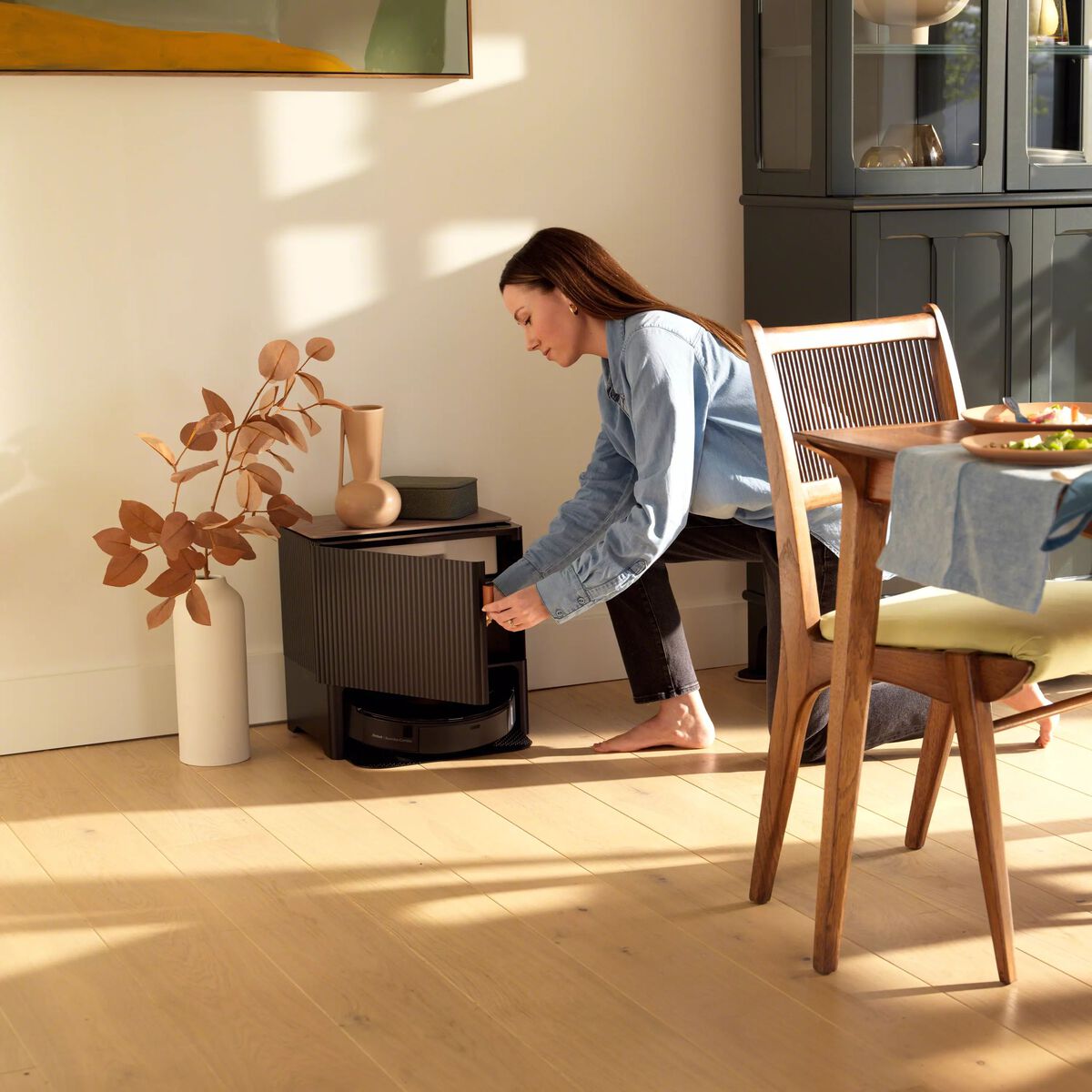
If you have hard floors, a busy life, or a shedding pet, yes — a robot vacuum is worth it in 2026, and probably more than you think. The category has quietly crossed a threshold over the past 18 months. A $400 robot today does what a $1,200 robot did in 2024: LiDAR mapping, real suction, no-tangle rollers, app schedules, even basic mopping. That is the short version.
The long version is more honest, because we have also heard from owners who returned theirs after a month. Some of those returns were bad product choices. Some were realistic mismatches — a robot is not a deep-cleaning tool, and there are homes where one will frustrate you no matter how nice the model is. This guide tells you which side of that line you are on, and what the real cost looks like once you factor in dust bags, brushes, and the occasional repair.
We have tested over 50 robots across price tiers in the past two years. The data and the regret stories below come from that, plus thousands of owner reports we tracked on Reddit, Amazon, and YouTube.
30-Second Summary
- Worth it for: people with hard floors, pet hair, busy schedules, single-story or open floor-plan homes
- Skip it if: your home is mostly carpet, full of clutter or cords, or has lots of stairs you expect a robot to handle
- Sweet-spot price: $400–$700 (where flagship features stop mattering for daily cleaning)
- True cost: $50–$100/year in dust bags and replacement parts; expect 4–6 years of service
- One-line verdict: yes if you want maintenance, no if you want deep cleaning
The Short Answer
A robot vacuum is worth it if you treat it like an automated maintenance tool rather than a replacement for your upright. Owners who go in expecting "set it and forget it forever" tend to return their robots. Owners who go in expecting "the floors stay 80% clean without me lifting a finger" tend to keep them for years.
The math also leans heavily in favor of buying one in 2026. A premium robot pays for itself in roughly 8 months when used in place of weekly manual vacuuming, according to long-term cost analyses — and that calculation only counts time, not the fact that the floors are actually cleaner because the robot runs every day instead of every weekend.
Who Should Buy a Robot Vacuum
You will get strong value from a robot vacuum if at least two of these apply to you:
1. You have pets that shed. This is the clearest worth-it case in 2026. A self-emptying dock with a 60-day bag holds a shocking amount of dog and cat hair, and the daily clean prevents the visible drift you get when you only vacuum on weekends. One Reddit user with four pets said the j7+ ran every day and "the house was cleaner for longer without having to do any vacuuming, aside from stairs." That has become the median pet-owner experience.
2. You have mostly hard floors. Hardwood, tile, vinyl, and laminate are where robot vacuums perform their best. Smooth surfaces let suction do its job without resistance, and the navigation is more reliable than on plush carpet. If 70%+ of your floor area is hard surface, a robot is doing exactly the work it was designed for.
3. You are time-constrained. Two-career households, parents with young kids, people who work long shifts — the labor savings are real. The 30–40 minutes of active time you spend pushing an upright around three times a week is roughly 80–100 hours a year. A robot does that work while you are at the office or asleep.
4. You live in a single-story home or apartment. Robots cannot navigate stairs (no, none of them can in 2026 either, despite the headlines). Multi-story homes either need two robots or a person who is willing to carry one between floors. Single-floor layouts get the full benefit with zero friction.
5. You have mobility issues or back problems. Vacuuming is one of the most physically demanding household chores. Owners with arthritis, post-surgery limits, or chronic back pain often describe the robot as life-changing rather than a luxury.
If two or more of those describe your situation, the answer is yes. Move on to picking the right model — our robot vacuum buying guide walks you through the decision tree.
Who Should Skip One
We will say the part most product reviews will not. There are real situations where a robot vacuum is the wrong purchase:
Your home is mostly thick or high-pile carpet. Robots can pick up surface debris on plush carpet, but they cannot pull embedded dirt out of fibers the way an upright with a beater bar at full power can. If you have shag rugs or wall-to-wall plush carpet throughout, the robot becomes a top-up tool rather than a primary cleaner — and that is a hard sell at $500+.
You have a cluttered floor. Cords, kid toys, pet bowls, charging cables, dropped socks — robots get stuck on or eat anything they cannot navigate around. The "set it and forget it" promise breaks down if you have to tidy the floor before every run. One former owner on Reddit put it bluntly: "I returned mine because the prep work to make the room robot-ready took longer than just vacuuming."
You have lots of stairs. This includes split-level homes, sunken living rooms, and houses with rooms that are only reachable via stairs. No mainstream robot in 2026 climbs stairs. Stair-climbing prototypes exist (we covered them in our stair-climbing robots guide), but they are not shipping consumer products yet.
You expect deep cleaning. Robots are great at picking up daily dust, dander, crumbs, and surface debris. They are not great at extracting fine pet allergens from upholstery, cleaning along baseboards perfectly, or scrubbing dried-in stains. If your goal is "I want to stop using my upright entirely," you will be disappointed. If your goal is "I want to use my upright twice a month instead of weekly," you will be thrilled.
You really hate maintenance. Robots have moving parts that need attention. You will be removing tangled hair from the brush every 1–2 weeks, replacing dust bags every 1–2 months, swapping HEPA filters quarterly, and replacing brushes annually. If you want zero involvement, this is not it.
What Changed in 2026
The reason this guide is being written now and not three years ago is that the category has actually moved. Specifically:
- LiDAR navigation is in $300 robots. The structured mapping and methodical room-by-room cleaning that used to be a $700+ feature is now in budget tier. Random bounce navigation is essentially extinct above $200.
- Self-emptying docks are standard above $400. The dock that empties the robot's bin into a sealed bag has gone from premium-only to mid-tier default. This is the single biggest quality-of-life feature, and getting it at this price changes the value math.
- Mopping has gone from gimmick to functional. Hot-water washing, auto-detergent dispensers, and lifted mop pads on carpet are now common in the $700–$900 range. The "wet rag dragging across the floor" mopping of 2022 is gone.
- AI obstacle avoidance recognizes 100+ object types. The famous "Roomba ran over the dog poop" stories are mostly historical. Modern AI obstacle avoidance from 2026 flagships actually works on cords, pet waste, socks, and shoes.
- Battery and runtime support whole-home cleaning. Most $400+ robots now run 150–200 minutes per charge and can resume after recharging mid-job. A 3,000 sq ft single story is no longer a stretch goal.
The practical implication: if your reference point for "robot vacuums" is a Roomba you tried in 2018, your impression is out of date by two product generations. Try the category again before deciding.
The Real Cost of Ownership
The sticker price is half the story. Here is the full five-year cost picture for a typical mid-tier robot:
| Cost item | Year 1 | Annual after | 5-year total |
|---|---|---|---|
| Robot purchase | $500 | — | $500 |
| Replacement dust bags (6/yr) | $50 | $50 | $250 |
| Side brushes + main roller | $30 | $30 | $150 |
| HEPA filters | $25 | $25 | $125 |
| Mopping pads (if applicable) | $30 | $30 | $150 |
| One battery replacement (year 3–4) | — | — | $80 |
| Total over 5 years | ~$1,255 |
That works out to roughly $250 per year of total ownership cost for a mid-tier robot, or $50–$100 per year if you skip mopping consumables and stretch part replacements.
For comparison, a $400 corded upright over five years (no consumables to speak of) is about $80 per year — but you also spent ~80 hours per year pushing it around. At even minimum wage, that is $600+ in time you could be doing literally anything else.
Premium flagships ($1,000+) push the maintenance number toward $265/year because of more accessory parts, but the robot itself often lasts 5–7 years rather than 4. We track current pricing on every model in our database; check Best Robot Vacuums Under $500 if you want to keep total cost down, or Best Robot Vacuums 2026 for the full picture.
What Robot Vacuums Are Bad At
A short, honest list:
- Stairs. Still none. Will not be a real consumer product before 2027.
- Edges and corners. Side brushes help, but you will see a thin strip of debris along baseboards after a clean. Manual touch-up every few weeks.
- Wet messes. Spilled drinks, kid accidents, wet pet food — robots either avoid these or smear them across the floor. Clean wet spills yourself before running the robot.
- Furniture surfaces. Couches, ottomans, stairs (again), shelves. Robots clean floors. Period.
- Long-pile carpet over 1.5 inches. They get stuck. Lift the robot or lay temporary cardboard over the rug edge.
- Pet vomit or accidents. No robot is equipped for this. Clean it yourself, run the robot afterward.
If any of those are deal-breakers for your daily use case, you are looking at the wrong category of product.
Common Regrets We Heard from Owners
We pulled the most repeated complaints from Reddit returners, Amazon 1-star reviews, and Quora threads. Three patterns dominate:
"I bought too cheap." Sub-$200 robots in 2026 are still mostly bad. Random bounce navigation, weak suction, no app, frequent failures. Almost every "robot vacuums are useless" post we found traced back to a $99–$179 budget impulse buy. The bottom of the market is where the bad reputation comes from.
"I bought too expensive for my needs." A $1,500 flagship is overkill for a 700 sq ft apartment with no pets and bare floors. The features you are paying for — multi-floor mapping, AI obstacle avoidance for cluttered homes, premium mopping — do not pay back in a simple environment. The right $500 robot beats the wrong $1,500 robot every time.
"I expected too much." Owners who returned within a month often described it as "not as good as my Dyson on carpets" or "still had to vacuum manually anyway." Both true. Robots replace 80% of routine vacuuming, not 100%, and they work alongside an upright for deep cleaning. Going in with that expectation prevents the regret.
The owners who kept their robots for 3+ years almost universally said the same thing in different words: it works because they stopped expecting it to be perfect and started using it as a daily maintenance layer.
The Best Price Tier for Most People
For 2026 specifically, the $400–$700 range is the sweet spot for most households. Here is why each tier above and below has tradeoffs:
| Price tier | What you get | What you give up |
|---|---|---|
| $0–$200 | Basic robot, app maybe | LiDAR, real navigation, real suction. Skip. |
| $200–$400 | LiDAR, app, decent suction, no self-empty | Self-emptying dock, decent mopping, AI avoidance |
| $400–$700 | Self-empty, LiDAR, good suction, basic mopping | Premium mopping, top-tier obstacle AI, hot water washing |
| $700–$1,000 | Hot-water mopping, premium AI avoidance, multi-floor | Marginal gains on top |
| $1,000+ | Cutting-edge features, top reliability | Diminishing returns for most homes |
The $400–$700 tier is where you stop paying for marketing and start paying for things you will actually notice. Above that, you are buying flagship features that most homes do not need.
Recommended Picks by Use Case
Based on the use cases above, here are our current top picks across budget tiers. Each is a robot we have tested and would recommend to a friend in the matching scenario:
Tight budget, hard floors, small home: Roborock Q5 Pro — —
LiDAR navigation, decent suction, and a real app at the budget end. No mopping, no self-empty, but it does the basics well. Check on Amazon
Best mid-range value (most people start here): Yeedi M14 Plus — $1,199.99
Self-emptying dock, active roller mop, real navigation. Punches above its weight for the price and covers the daily-use sweet spot. Check on Amazon
Best for pet hair and busy households: eufy X10 Pro Omni — $899.99
Strong suction on carpet, no-tangle roller, full-feature dock. The pet-shedding workhorse. Check on Amazon
Best premium for multi-surface, mixed flooring: Roborock Saros 20 — $1,389.99
Hot-water washing, AI obstacle avoidance that actually works, lifted mop on carpet. The flagship pick if budget is not the constraint. Check on Amazon
For more recommendations sorted by use case, see Best Robot Vacuum for Pet Hair or Best Robot Vacuum for Hardwood Floors 2026.
How to Decide in 5 Questions
If you are still on the fence, run through these five questions honestly:
- What percent of my floor area is hard surface vs carpet? If it is over 50% hard floor, a robot is a strong fit. If it is over 70% plush carpet, reconsider.
- Do I have stairs or multiple stories? If yes, you accept either two robots or carrying one between floors.
- Am I willing to pick up cords and small clutter before each run? If no, the robot will frustrate you within a month.
- Am I treating this as a maintenance tool or a vacuum replacement? Maintenance tool: yes, buy. Replacement: no, keep your upright.
- Can I commit to monthly maintenance — emptying the dock, removing tangled hair, replacing parts annually? If yes, you will get 4–6 years out of it. If no, you will be one of the regret stories.
If you answered "yes" to questions 1, 3, 4, and 5, buy one. The 2026 generation is genuinely good and the math works in your favor.
The Verdict
Robot vacuums are worth it in 2026 for the majority of US households — but worth it as a daily maintenance layer, not a vacuum replacement. The category has crossed a real quality threshold in the past 18 months, and the $400–$700 price tier now delivers what cost more than $1,200 two years ago.
The owners who regret their purchases mostly bought too cheap, bought for the wrong home, or expected the wrong thing. The ones who keep theirs for 3+ years use them daily, run them while they are out, accept the monthly maintenance, and pair them with an upright for deep cleans.
If you are time-constrained, deal with pet hair, or have mostly hard floors, the answer is yes. Start in the mid-tier picks and budget about $250/year in total cost of ownership. You will not regret it.
Frequently Asked Questions
Are robot vacuums worth it for pet hair?
Yes — this is the clearest worth-it case. Daily runs combined with a self-emptying dock keep pet hair from accumulating, and modern no-tangle rollers handle long fur without wrapping. Pet owners report needing to manually vacuum 2–4 times less often after switching. Look for a model with a self-emptying base; it is the difference between emptying the bin daily versus every 6 weeks.
How long do robot vacuums last?
Most last 4–6 years with normal use and basic maintenance. Premium models from established brands often reach 7+ years. The biggest lifespan-limiting factor is the battery, which typically loses meaningful capacity after 3–5 years and may need a $50–$80 replacement. Brushes, filters, and bags are routine consumables and do not affect lifespan if replaced on schedule.
Are budget robot vacuums under $300 worth it?
The sub-$300 tier in 2026 is meaningfully better than it was two years ago. Models in this range now offer LiDAR mapping, app control, and decent suction. What you give up versus a $500–$700 model is mainly self-emptying docks, AI obstacle avoidance, and capable mopping. For someone with a small home, hard floors, no pets, and a willingness to empty the bin manually, a $250 robot is genuinely worth it. Below $200, quality drops sharply — that is the floor we would not go under.
Can a robot vacuum replace my regular vacuum?
No, and you should not buy one expecting that. Robot vacuums are excellent at routine maintenance — daily dust, surface debris, pet hair pickup, light mopping. They cannot match an upright on deep carpet cleaning, edge work, stairs, or upholstery. The right mental model is: robot for daily maintenance (5 days a week), upright for deep clean (twice a month). Together they keep your home cleaner than either could alone.
What are the downsides of owning a robot vacuum?
Three real downsides: (1) ongoing maintenance — dust bags, brushes, filters, and the occasional hair untangling; (2) the need to keep floors clear of clutter, cords, and small objects; (3) limited cleaning power compared to a full-size upright, particularly on plush carpet and stairs. None of these are dealbreakers if you go in with the right expectations, but each is a friction point that some owners decide is not worth it.