If your Dyson has lost suction, started smelling musty, or is flashing a red filter light — the filter is almost always the culprit. The good news: most Dyson filters do not need replacing as often as the warning lights suggest. A proper wash buys you another month or two, and even a full replacement is a 60-second job once you know which way to twist.
This guide covers every Dyson filter you might own — cordless V-series, Ball uprights, robot vacuums, and air purifiers — with step-by-step replacement, wash instructions, OEM-vs-aftermarket pricing, and the single most common reason new filters still trigger the red light.
30-Second Summary
- When to replace: Every 12 months for typical use, every 6 months with pets or daily use
- Try washing first: Free, 24-hour dry, restores suction in most cases
- Cost: $20-30 for genuine Dyson filters, $8-15 for aftermarket
- #1 mistake: Putting the filter back damp — this triggers the red filter light every time
- One-line answer: Wash monthly under cold water, replace yearly, dry 24 hours, never use soap
5 Signs Your Dyson Filter Needs Replacing
You don't need to replace on a calendar — replace when the filter tells you. These are the five reliable signals:
- Red or flashing filter light — All V11, V12, and V15 models have a filter sensor that triggers when airflow drops below threshold. If a wash + 24-hour dry doesn't clear it, you need a new filter.
- Suction has noticeably dropped — Picks up surface debris but leaves embedded pet hair or fine dust behind. Usually the filter, sometimes a clog.
- Stale or musty odor when running — Dust trapped in the filter media starts to smell, especially in humid climates. A wash usually fixes this once; if it returns within a week, the filter is done.
- Filter looks gray, matted, or torn — Even after washing, the pleats stay dark. The HEPA media has structurally degraded.
- It has been 12+ months — Most owners forget. If you can't remember when you last changed it, it's probably time.
How Often to Replace by Model
Dyson's official guidance is "every 12 months" across the board, but real-world intervals vary by model and household.
| Model | Wash Interval | Replace Interval | Filter Type |
|---|---|---|---|
| V7 / V8 | Monthly | 12 months | Single washable HEPA (rear) |
| V10 | Monthly | 12 months | Lifetime HEPA (rear cap) |
| V11 / V12 | Monthly | 6-12 months | Combined HEPA with airflow sensor |
| V15 / V15 Detect Submarine | Monthly | 6-12 months | Combined HEPA with sensor |
| Outsize / Ball Animal 2 | Monthly | 12 months | Pre-motor + post-motor HEPA (set of 2) |
| 360 Vis Nav (robot) | Every 2-3 months | 12 months | HEPA cartridge in dustbin |
| Spot+Scrub Ai (robot) | Every 2-3 months | 12 months | HEPA cartridge in dustbin |
| Air purifiers (TP, HP, BP, PH) | Not washable | 12 months | Sealed glass HEPA + carbon |
Pet households or daily-use vacuums: halve every interval. A V15 in a three-pet home realistically needs a new filter every 4-6 months, not 12.
Step-by-Step Replacement by Model
Dyson V7 and V8
The V7 and V8 hide the filter at the top of the cyclone, behind the purple plastic cover.
- Power off and place the vacuum on a flat surface
- Pull the purple filter housing straight up off the top of the cyclone — it lifts out without twisting
- Tap the old filter into a trash bin to inspect it
- Drop the new filter in pleat-side-down and press the housing back on until it clicks
There is no calibration step on these models. Done.
Dyson V10
The V10 was the first cordless to move the filter to the rear. The filter is the dome-shaped piece behind the trigger.
- Power off
- Grasp the rear cap and twist counterclockwise about a quarter turn
- Pull the filter straight back — it slides out
- Insert the new filter pleat-side-out, twist clockwise until the arrows align
Dyson V11 and V12
These models add an airflow sensor that triggers the red filter light if installation is even slightly off. This is the most common reason owners get "I just put a new filter in and it's still red" — the cap is twisted, but not into the locked stop position.
- Power off
- Twist the rear cap counterclockwise until it stops
- Pull the filter out and discard
- Slide the new filter in, then twist firmly clockwise — it should click into a hard stop, not a soft one
- Power on the vacuum and run it for 30-60 seconds — the sensor recalibrates automatically once it detects clean airflow
Dyson V15 and V15 Detect Submarine
Same mechanism as the V11, just a slightly different filter housing.
- Power off
- Press or twist the rear cap to release (varies by sub-model — V15 Detect uses a press-button, V15 Submarine uses twist)
- Lift filter out and discard
- Drop the new filter in, lock the cap into place
- Run the vacuum for 1 minute to clear the filter light
If the light stays on after a minute of running, see the troubleshooting section below.
Upright Vacuums (Ball Animal 2, Outsize)
Upright Dysons have two filters — a pre-motor washable filter under the cyclone, and a post-motor HEPA at the back.
- Pre-motor: Lift the cyclone off the ball, the filter is the cone-shaped piece sitting in the well. Pull straight up.
- Post-motor HEPA: Open the rear panel (release button at the back of the ball), the HEPA is the rectangular filter. Pull out and replace.
- Reseat both filters firmly — these models do not have an airflow sensor, but a loose filter still leaks dust.
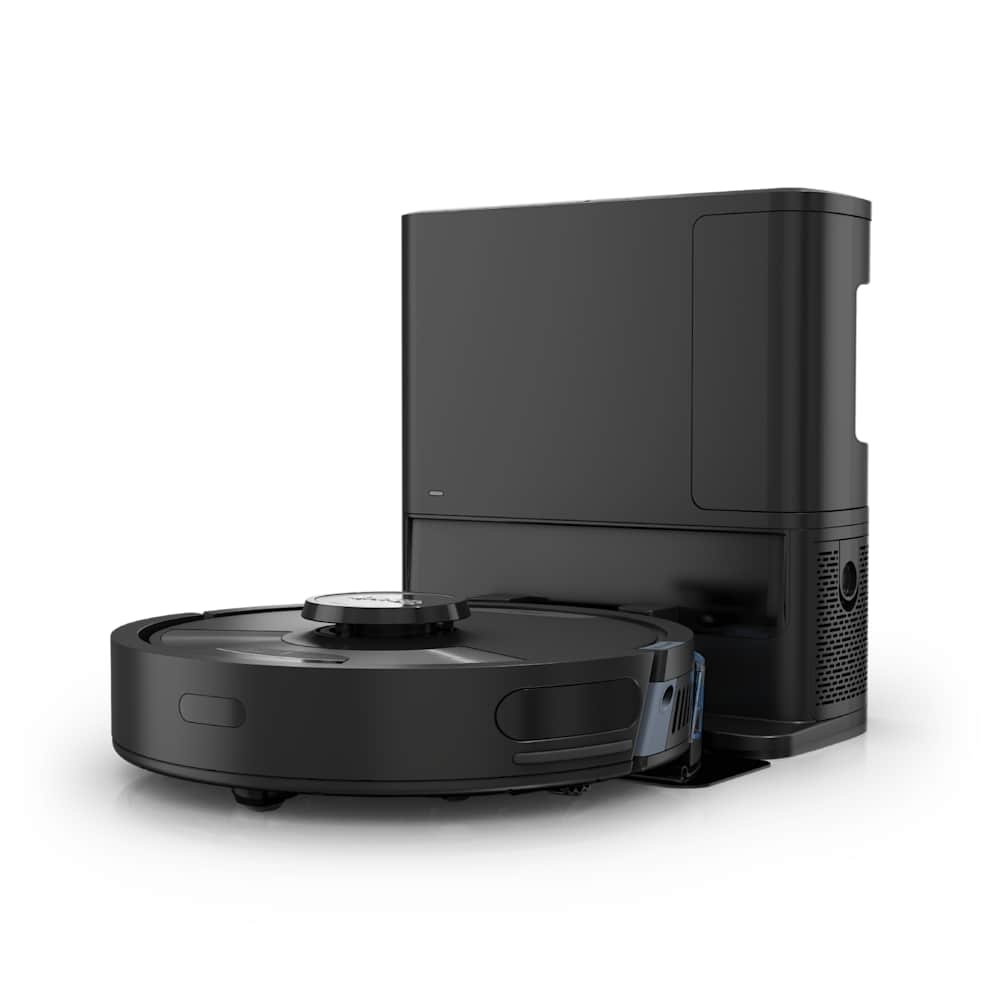
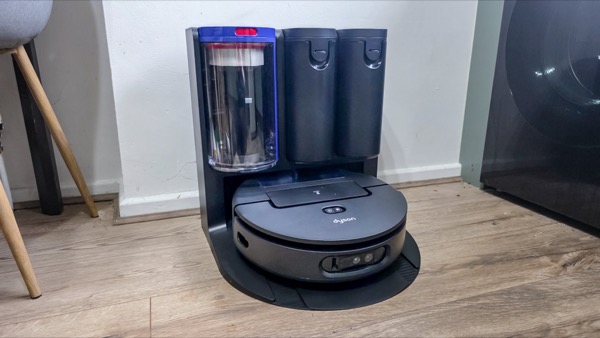
Robot Vacuums (360 Vis Nav, Spot+Scrub Ai, 360 Heurist)
Dyson robot filters are smaller and live inside the dustbin assembly. We covered the full Spot+Scrub Ai performance in our Dyson Spot+Scrub Ai review.
- Lift the dustbin out of the robot
- Empty the bin completely
- Locate the small HEPA cartridge (usually clipped to the underside of the bin lid)
- Pull straight out, drop new filter in
- Reseat the bin in the robot
Air Purifiers (TP, HP, BP, PH series)
Important: Dyson air purifier filters are NOT washable. The glass HEPA media will rupture if it gets wet. Replace, do not clean.
- Power off and unplug
- Push down on the buttons on either side of the machine to release the outer cover
- Lift the cover off — the filter cylinder is now exposed
- Pull the filter straight out
- Insert the new filter and reseat the cover
- Plug in, power on, and reset the filter life in the MyDyson app (this is the step most people skip — without resetting, the warning will return early)
How to Wash a Dyson Filter (Save $20)
Before you buy a replacement, wash the old one. According to Dyson's own guidance, the washable filters in V-series and upright models can be washed and reused for several cycles.
Steps:
- Tap the filter against the inside of a trash can to dislodge loose dust
- Hold under cold running tap water — never warm or hot
- Squeeze gently with the water running until it runs clear
- Tap excess water out
- Lay flat in a well-ventilated room for 24 hours minimum, 48 hours preferred in humid climates
What NOT to do — every one of these will kill your filter or trigger the red light:
- ❌ Don't use soap, detergent, dish soap, or anything other than water
- ❌ Don't put it in the dishwasher or washing machine
- ❌ Don't use a hair dryer, radiator, oven, or tumble dryer
- ❌ Don't twist or wring the filter — squeeze only
- ❌ Don't reinstall it the same day — even if it feels dry, the inner pleats hold moisture for 24+ hours
OEM vs Aftermarket: Which Should You Buy?
| Genuine Dyson (OEM) | Amazon Aftermarket | |
|---|---|---|
| Price | $20-30 | $8-15 |
| Lifespan | 6-12 months | 2-4 months typical |
| Fit | Perfect — sensor reads correctly | Variable, some trigger filter light |
| Warranty | Maintains Dyson warranty | Voids warranty per Dyson terms |
| HEPA seal | Tested and certified | Often unverified |
Our recommendation:
- V11, V12, V15: Buy genuine. The airflow sensor is calibrated to the OEM filter's resistance — aftermarket filters frequently leave the red light on no matter how well they're seated.
- V7, V8, V10, Ball Animal 2, Outsize: Aftermarket is fine. No sensor, no compatibility issue. Just buy from a reputable seller (Wessel-Werk, Crucial Vacuum) and avoid no-brand listings.
- Air purifiers: Buy genuine. The carbon layer in aftermarket purifier filters is often a fraction of OEM thickness, and the HEPA seal frequently fails.
A genuine filter that lasts 8 months at $25 costs less per month than three aftermarket filters at $10 each that need replacing every 3 months. Cheap is rarely cheaper.
Filter Light Still On After Replacing? Troubleshooting
A new filter and the red light is still flashing. Run through this checklist in order:
- Is the filter completely dry? If you washed before installing, you need 24-48 hours. Dampness is the #1 cause.
- Is it twisted fully into place? V11, V12, V15: rotate clockwise until you hit a hard stop, not a soft one. The sensor reads the seal pressure.
- Is the rubber gasket clean? A hair, thread, or dust on the gasket breaks the seal. Wipe both gasket and housing with a dry cloth.
- Are there other blockages? The sensor measures total airflow, not filter-specific resistance. Check the wand, brushbar, cyclone, and dustbin for clogs before blaming the filter.
- Hard reset: Pop the battery off, wait 30 seconds, reattach. This forces the sensor to recalibrate from scratch.
- Run the vacuum for 60+ seconds in MAX mode — the sensor needs sustained high airflow to confirm the new state.
If all six steps fail, the filter sensor itself may be faulty. Contact Dyson support — sensor failures are covered under the standard 2-year warranty.
Cost Breakdown by Model
| Model Family | Genuine Filter | Aftermarket | How Often |
|---|---|---|---|
| V7, V8 | $20-25 | $8-12 | 12 months |
| V10 | $25-30 | $10-12 | 12 months |
| V11, V12 | $25-30 | $10-15 | 6-12 months |
| V15 series | $30-35 | $12-18 | 6-12 months |
| Outsize, Ball Animal 2 (pre + post set) | $25-35 | $12-20 | 12 months |
| 360 Vis Nav, Spot+Scrub Ai | $20-25 | $10-15 | 12 months |
| Air purifier (TP, HP series) | $80-100 | $30-50 | 12 months |
For owners of multiple Dysons, buying a 2-pack of genuine filters from Dyson directly typically runs about 15% cheaper per unit than single packs from third-party retailers.
Frequently Asked Questions
How often should I replace my Dyson vacuum filter?
Dyson recommends every 12 months for typical use. In real life: every 6 months if you have pets or vacuum daily, every 12 months for light use. Wash monthly regardless to extend filter life.
Can I wash my Dyson filter every time it gets dirty?
Yes — washable filters in the V-series and Ball uprights can be washed dozens of times before structurally degrading. Use cold water only, no soap, and dry 24-48 hours. Air purifier filters are the exception — never wash these.
Why is my Dyson filter light still on after replacing the filter?
Three most likely causes, in order: the filter is still damp from washing, the filter is not twisted into the locked position, or there is a blockage elsewhere (wand, brushbar, cyclone) that the sensor is reading as low airflow. Battery reset clears stuck sensor states.
Are aftermarket Dyson filters as good as genuine ones?
For V7, V8, V10, and upright models — close enough, often half the price. For V11, V12, and V15 with airflow sensors — usually not worth the savings, as cheap filters frequently trigger the red filter light and force you to buy genuine anyway. For air purifiers, always buy genuine.
How do I reset the filter light on my Dyson?
There is no manual reset button on V-series vacuums — the airflow sensor recalibrates automatically once it detects clean airflow for 30-60 seconds. For air purifiers, open the MyDyson app, select your machine, and tap "Reset filter life" after replacement.
Bottom Line
Most Dyson filter problems are not actually broken filters — they are wet filters, loose filters, or filters that just need a wash. Try the cold-water rinse first, give it a full 48 hours to dry, and only buy a replacement if performance hasn't returned.
When you do replace, buy genuine for sensor-equipped models (V11/V12/V15) and air purifiers, and feel free to go aftermarket for older V-series and uprights if budget matters.
If your Dyson robot vacuum is the issue, see our full Dyson Spot+Scrub Ai review and Roborock vs Dyson comparison for context on how the robots stack up against the brand's cordless lineup. If your filter problems are getting expensive and you're ready to switch, our best robot vacuums of 2026 covers competitors that often outperform Dyson's robot lineup at lower prices.