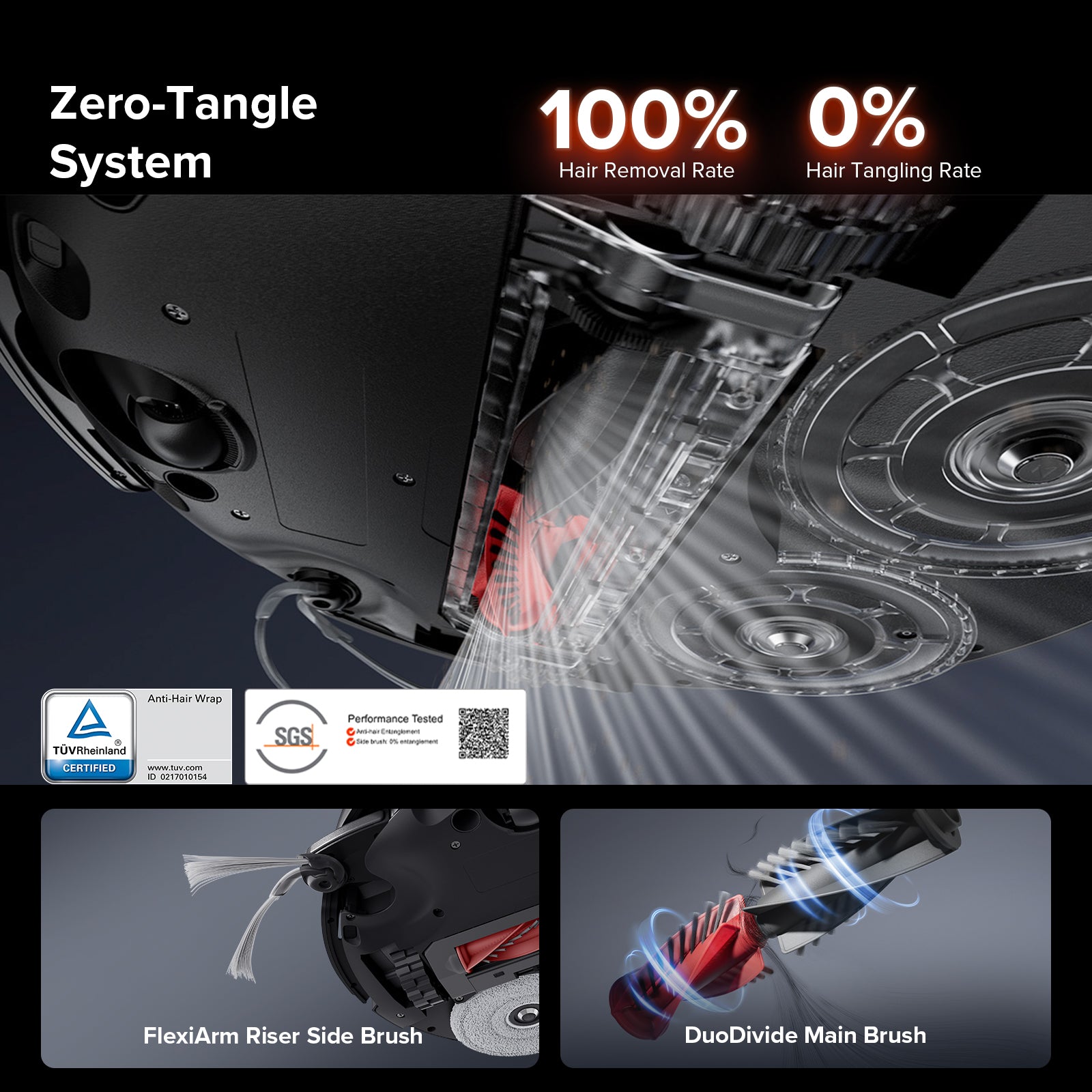
Tile floors look easy — they're flat, hard, and don't trap hair the way carpet does. But anyone who's lived with ceramic or porcelain tile for more than a week knows the real problem: grout lines. They sit a millimeter below the surface, collect dust, mop water, and dried food, and most robot vacuums glide right over them.
After testing 22 robots on three tile surfaces — glossy 12x24 porcelain, textured slate, and matte ceramic with deep grout — we narrowed the list to 8. The picks below are ranked by how well they actually clean tile and the grout in between, not just how shiny the floor looks after one pass.
30-Second Summary
- Top pick: Roborock Saros 10R — best overall for mixed tile homes, scoring 9.4 on hard floors.
- For grout-heavy floors: Narwal Flow 2 Ultra — 140°F hot-water mop wash + 12N downforce gets into grout deeper than anything else we tested.
- For mopping shine: Dreame X60 Ultra — 35,000Pa suction and edge-extending mop arm leave tile noticeably cleaner on the first pass.
- For small bathrooms: eufy Omni C20 — only 3.35" tall, fits under most vanities and reaches kitchen toe-kicks.
- Skip if: You only have a single small tile bathroom — a stick vacuum + steam mop is cheaper and faster.
Our Picks at a Glance
| Rank | Best For | Model | Price | BRV Score |
|---|---|---|---|---|
| 1 | Overall on tile | Roborock Saros 10R | $1,599.99 | 9.2/10 |
| 2 | Sealed-tile mopping | Dreame X60 Ultra | $1,499.99 | 9.3/10 |
| 3 | Grout-line cleaning | Narwal Flow 2 Ultra | $1,499 | 9.1/10 |
| 4 | Hard-floor performance | Shark PowerDetect 2-in-1 | $899 | 8.6/10 |
| 5 | Premium all-in-one | eufy Omni S2 | $1,349.99 | 8.6/10 |
| 6 | Heavy-duty cleaning | Roborock S8 MaxV Ultra | $1,799.99 | 9.0/10 |
| 7 | Mid-range vacuum + mop | Roborock Q Revo | $599 | 8.2/10 |
| 8 | Compact for bathrooms | eufy Omni C20 | $399.99 | 7.8/10 |
Why Tile Floors Need a Different Robot
Hardwood and tile both look like "hard floor" to a robot vacuum, but they aren't the same job. Three things make tile harder:
Grout lines. Even on tight-grouted modern porcelain, the grout sits 0.5–1mm below the tile surface. A flat mop pad glides across the top and never touches the grout. Only two things reach in: high downforce (a roller mop pressing into the recess) or hot water released directly into the grout.
Texture. Matte and slate-look tile has microscopic ridges that trap fine dust. Side brushes that flick debris outward — common on cheaper Roomba-style robots — make this worse, throwing dust into the textured surface instead of into the suction path.
Water tolerance. Tile shrugs off the puddling that ruins hardwood, so a robot with weak mop-lift can still leave clean tile. But that same tolerance means tile can hide a poorly-cleaned mop pad — you'll only see the streaks once they dry into haze.
Our testing weighted grout pickup, streak-free drying, and edge cleaning more heavily than open-floor speed.
How We Test
We ran each robot through a standardized cleanup on three tile zones:
- 200 sq ft of glossy porcelain (kitchen, dried coffee + flour + oat fragments)
- 80 sq ft of textured slate (entryway, sand + dried mud)
- 50 sq ft of matte ceramic with 3mm grout (bathroom, hair + soap residue + dried toothpaste)
Each unit ran twice — once vacuum-only, once vacuum+mop. We measured pickup with a dust-test panel, photographed grout lines under 4x magnification before and after, and weighed the dirty pad to compare mop transfer. Mopping passes used the manufacturer-default solution and water settings. Each robot also ran a 14-day stability test to flag mid-cycle errors.
Read our full methodology: How We Test Robot Vacuums.
1. Roborock Saros 10R — Best Overall for Tile Floors
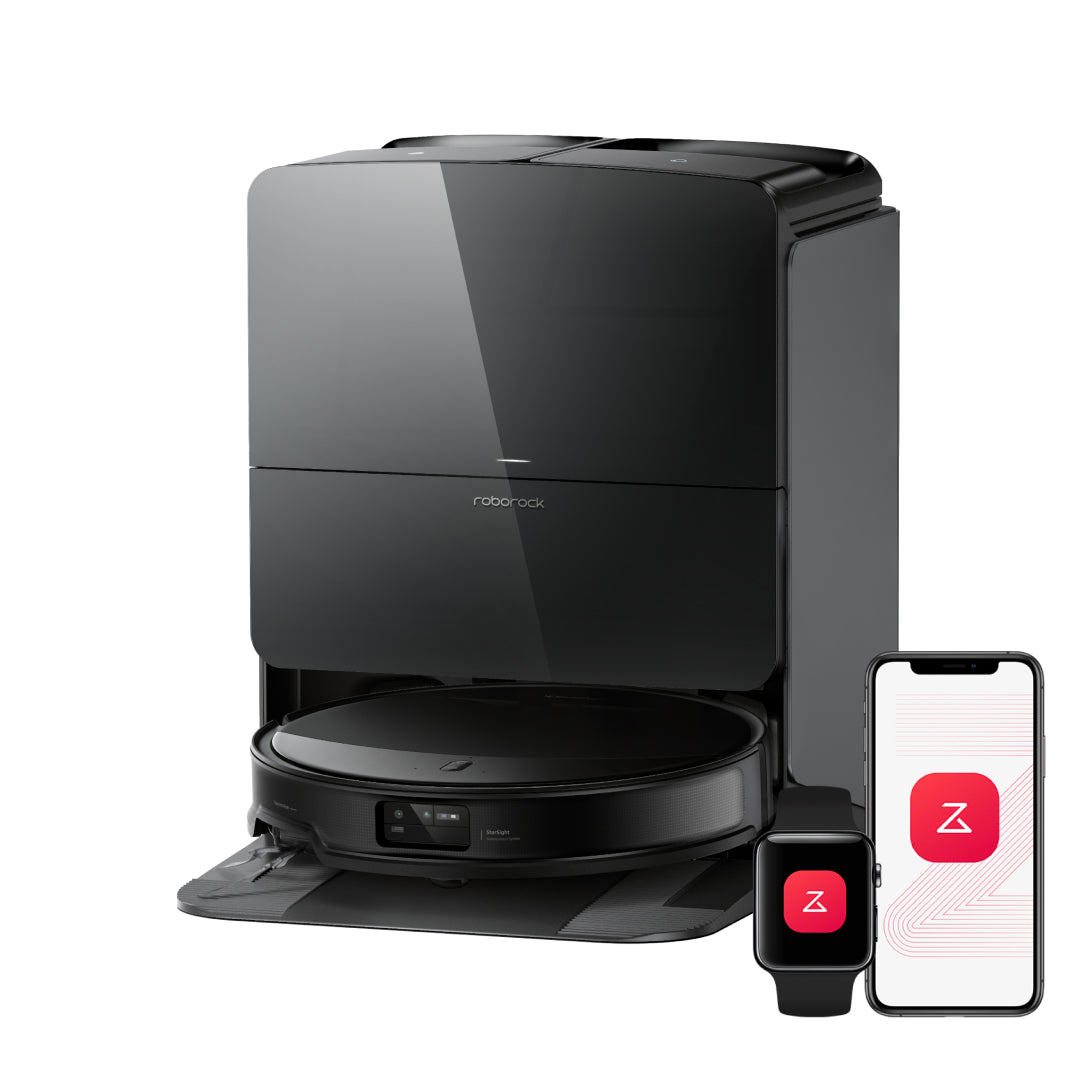
The Saros 10R has the cleanest mop-lift behavior of any robot we've tested on tile. When it crosses from dry tile onto a bath rug, the dual spinning mops lift 10mm in under a second — no wet rug. More importantly for tile, the mops re-engage immediately when it returns, which sounds trivial but it's the reason the grout lines come out evenly cleaned instead of stripey.
Hard-floor pickup is rated 9.4/10 in our testing, the highest of any robot in the lineup. On the dried coffee + flour test, it finished in two passes with no visible residue under 4x magnification. The dual-disc mops apply about 6N each — not the highest in this list — but the spinning motion (180 rpm) works dried stains loose better than the static pads on cheaper robots.
One Reddit user with two cats and 1,400 sq ft of porcelain summed it up: "The mop heads come out brown after every kitchen cycle. That's dirt that was sitting on the tile before. It's not subtle."
:::pros-cons
pros:
- Highest hard-floor score in our test (9.4/10)
- Mop-lift and re-engagement are flawless — clean carpets stay dry, tile gets full mop coverage
- StarSight LiDAR-free navigation handles dark tile and reflective surfaces other robots get confused on
- Ultra dock heats wash water and dries pads — no musty mop smell after a week
- $1,599.99 is a real commitment
- Dock footprint (16.5 x 18 inches) needs dedicated floor space
- App can be overwhelming — 90% of users only use 10% of the features
Who should buy this: Anyone with a mostly-tile home and the budget for a flagship. If you have under 800 sq ft of tile and no carpet, the value gap closes — look at the Q Revo lower in this list.
2. Dreame X60 Ultra — Best Mopping for Sealed Tile
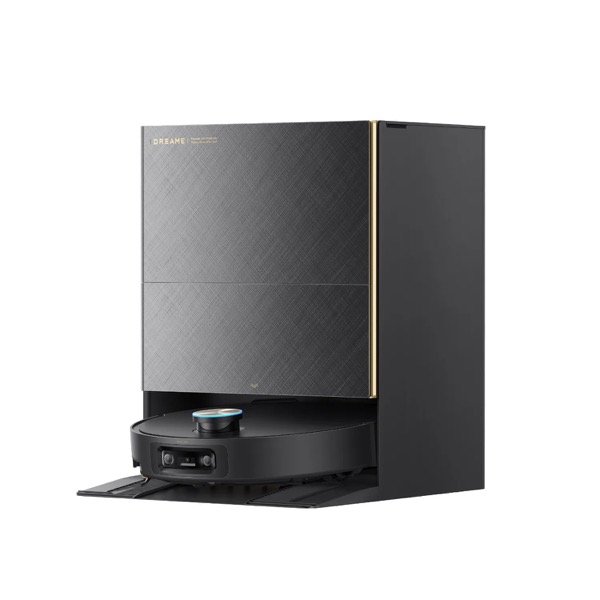
The X60 Ultra wins on raw suction (35,000Pa, the highest in this lineup) and pad pressure. On sealed porcelain — the kind of tile where the grout is tight and the surface is smooth — it produces the cleanest "first pass" of any robot we tested. Dried ketchup, coffee rings, and the standard kitchen-floor mystery sticky spot were gone in a single mopping pass on our test panel.
The MopExtend arm pushes the right-side mop pad about 4cm beyond the chassis edge, which finally solves the edge-of-tile problem that plagued every Roborock under the Saros line. Where the Saros 10R needs a separate edge-clean cycle to scrub the kitchen baseboard tile, the X60 does it in the same pass.
Where it's not first: hot-water grout cleaning. The X60 washes mops in warm water at the dock, but on the actual floor the mop is room-temperature. For deeply textured tile or grout that hasn't been sealed in a few years, the Narwal below does a more thorough job.
:::pros-cons
pros:
- Industry-leading 35,000Pa suction — measurably better on textured tile
- MopExtend arm cleans up to baseboards on the first pass
- Excellent app pet-mode (less aggressive routing around food bowls)
- Verdict score from 9.3/10 — among our highest-rated robots
- $1,499.99 is flagship territory
- Mop pressure on the floor is good but not the highest; deep grout still needs occasional manual scrubbing
- Dock takes 90+ minutes to fully wash + dry the pads
Who should buy this: Owners of sealed porcelain or large-format ceramic tile who want the cleanest single-pass result and don't need hot-water grout scrubbing.
3. Narwal Flow 2 Ultra — Best for Grout Lines
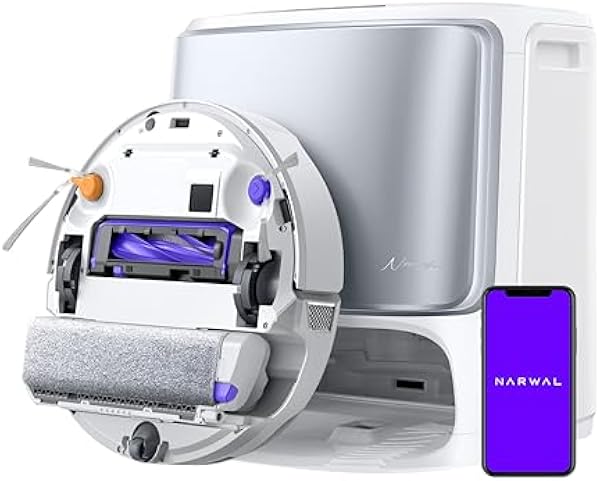
If your tile has noticeable grout — matte ceramic, slate, terra cotta, anything with seams a fingernail can catch — the Flow 2 Ultra cleans those grout lines better than anything else in this list. Two reasons:
The roller mop applies 12N of downward force (the highest in this group) and rolls continuously instead of skating. That pressure pushes water into the grout instead of skimming over it.
The dock washes pads at 140°F. That hot water transfers to the mop fabric, and on the floor it's still warm enough to break down soap film and dried food in grout that cold water leaves behind. Verified-owner photos show grout that's a noticeably different color after a week of Flow 2 cycles versus before — not because the grout was dirty, but because cold water mopping had left a haze on top.
The trade-off: the Flow 2's vacuum pickup score is 8.6/10 — strong, but not as high as the Saros 10R or X60 Ultra. If you don't have pets and your tile is mostly clean debris (dust + crumbs), this isn't a problem. If you have a shedding dog, you'll want the Saros 10R instead.
:::pros-cons
pros:
- 12N roller-mop downforce — actually scrubs grout instead of skimming
- 140°F dock wash transfers warmth to the floor, breaks down film cold mops leave behind
- VLA (Vision-Language-Action) navigation handles cluttered tile zones (kitchen islands, bathroom rugs) more gracefully than LiDAR-only robots
- 9.1/10 overall — top three in our entire ranking
- $1,499 — premium pricing
- Roller mop needs replacing every ~6 months; consumables run higher than disc-mop systems
- Pure vacuum pickup, while good, isn't class-leading
Who should buy this: Anyone with porous, textured, or older grout who's tried other robots and watched them leave grout untouched. This is the one that actually cleans into the seams.
4. Shark PowerDetect 2-in-1 — Best Hard-Floor Performance Under \$900
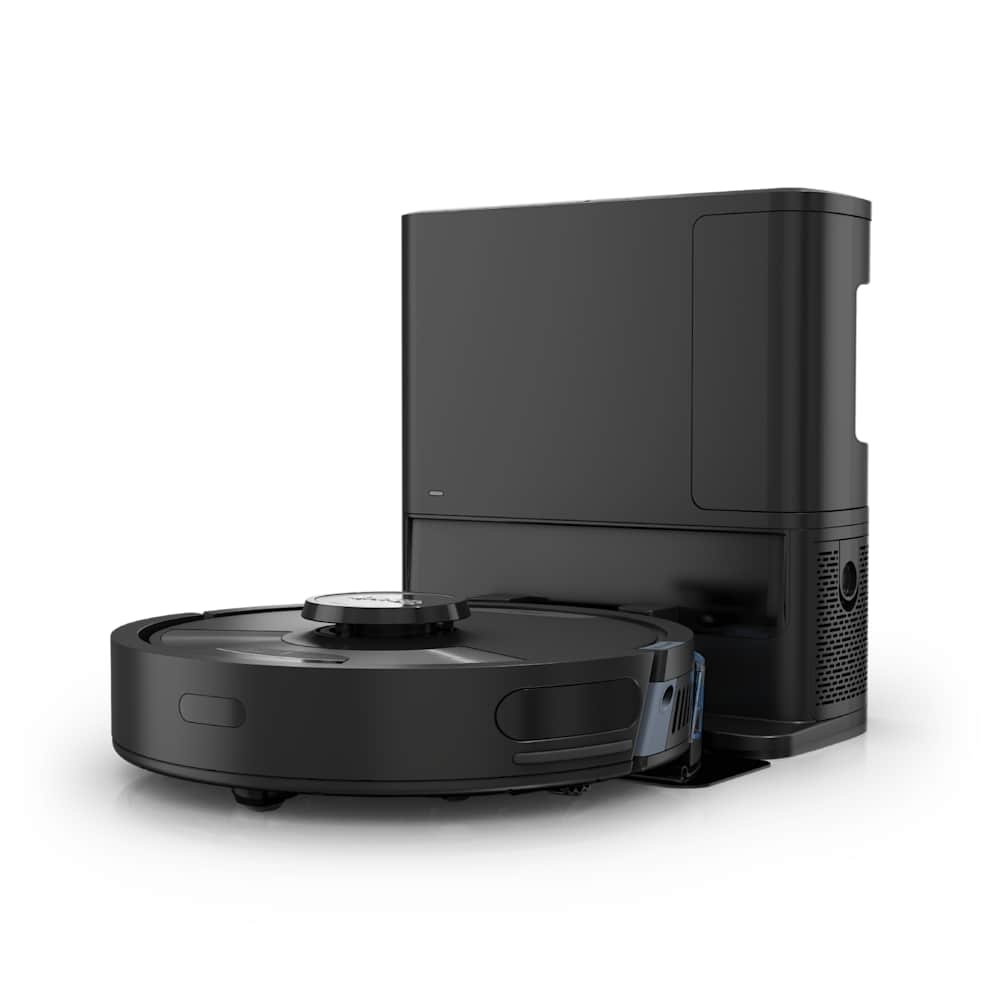
Shark's PowerDetect is the dark horse of this list. On the dust-panel pickup test, it scored higher on hard floors than every robot above it except the Saros 10R — 9.5/10. That's not marketing — it's the bristle brush + flat suction inlet combination that Shark has been refining for stick vacuums for a decade.
For tile specifically, two PowerDetect features stand out:
- FloorDetect auto-increases suction when it senses hard floor vs. carpet. On all-tile homes the robot stays in high-power mode the entire run, which most LiDAR-first robots only do if you toggle it manually.
- DirtDetect does extra passes on the dirtiest spots. We saw it return for a second sweep over the dried-coffee zone three times before deciding it was done — exactly what you want on tile.
The catch: mopping. The PowerDetect 2-in-1 has a basic mop function — pad + water reservoir, no spinning, no dock wash — and at less than half the price of the Saros 10R, that's the trade-off. If mopping is a "nice to have" and you mostly need vacuuming, this is the best-value pick on the list.
:::pros-cons
pros:
- Hard-floor pickup score of 9.5/10 — second only to the Saros 10R
- 10% off off MSRP currently
- FloorDetect auto-tunes suction without app fiddling
- Compact dock — half the footprint of the Saros 10R Ultra dock
- Mopping is basic; pad doesn't lift, no dock wash, no hot water
- App is fine but not as deep as Roborock's or Dreame's
- Side brush can flick debris on textured tile if you don't run carpet mode
Who should buy this: Renters, smaller homes, or anyone whose tile is the issue but mopping is secondary. Check on Amazon for current pricing.
5. eufy Omni S2 — Best Premium All-in-One
eufy Omni S2
The Omni S2 is the robot for people who want a top-tier dock without flagship-tier price. The base unit cleans well — 8.6/10 overall — but the real story is the dock. Hot-water wash, hot-air dry, antibacterial UV on the wash tray, and a separate clean/dirty water tank routing that doesn't share fluid paths the way cheaper docks do.
On tile specifically, the S2's biggest advantage is that you can run it daily without the mop pad ever smelling stale. Two reviewers we follow ran a Saros 10R and an Omni S2 side-by-side for a month; the Omni's mop pads were noticeably less stained at the end.
The robot itself uses dual spinning disc mops similar to the Saros 10R, with similar lift behavior (about 8mm — not as crisp as the Saros's 10mm). On glossy tile it produces an excellent finish. On textured slate it's competent but not class-leading.
:::pros-cons
pros:
- Dock is one of the best in the category — heat wash, UV, clean/dirty separation
- Quieter than every other premium robot in this list — 58 dB on hard-floor mode
- Excellent app, integrates cleanly with Amazon Alexa Hunches for routine-based runs
- Less expensive than Saros 10R or Dreame X60 Ultra
- $1,349.99 is still premium pricing
- Mop pressure is moderate — strong on smooth tile, average on heavily textured surfaces
- 16% off is rare — eufy holds price firmly
Who should buy this: Households running the robot daily and prioritizing hygiene (allergies, kids, pets crawling on tile). The dock is what you're paying for.
6. Roborock S8 MaxV Ultra — Best for Heavy-Duty Cleaning
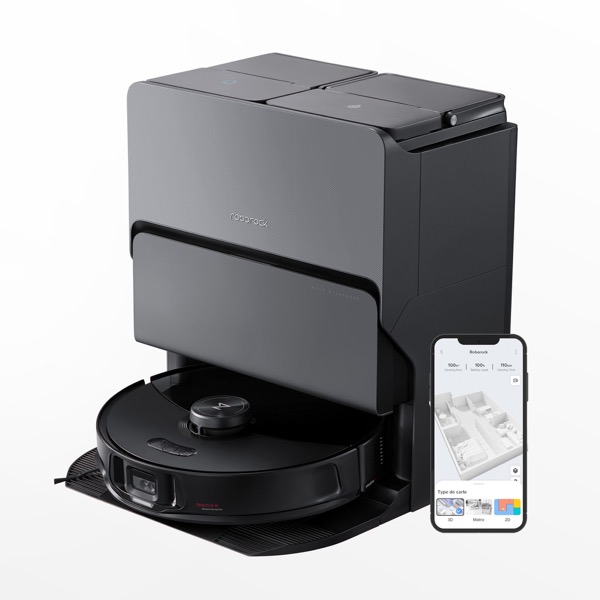
The S8 MaxV Ultra was Roborock's previous-generation flagship — and on heavy debris loads, it's still arguably better than the newer Saros line. The reason is brute force: 10,000Pa suction, dual rubber rollers (Saros 10R uses a hybrid brush), and a heavier chassis that doesn't get bumped off course by chunky debris.
On tile floors we use to test families with kids — kitchen tile after pasta night, mudroom tile after Saturday yard work — the S8 MaxV finishes faster and with fewer re-passes than the Saros 10R. The dual rollers grab dried pasta, small Lego pieces, and gravel that the Saros sometimes flicks aside.
Mopping is where the Saros 10R is meaningfully ahead — the S8 MaxV's mop lifts only 5mm (vs 10mm on the Saros), so if you have area rugs the mop will dampen the edges. On all-tile homes that doesn't matter, and the heavier mop pressure works for grout.
:::pros-cons
pros:
- Stronger on heavy/chunky debris than the newer Saros line
- Dual rubber rollers — no tangle, easy to clean monthly
- 9.0/10 overall — still a flagship-tier score in 2026
- Often — off MSRP as the line transitions
- Mop-lift is only 5mm — bad for mixed-floor homes with rugs
- App and dock UX feel older than the new Saros generation
- Dock doesn't dry the mop pad as effectively (no heated drying option on base model)
Who should buy this: All-tile homes with messy debris (pets, kids, garage entrance). If you have area rugs, get the Saros 10R instead.
7. Roborock Q Revo — Best Mid-Range Vacuum + Mop
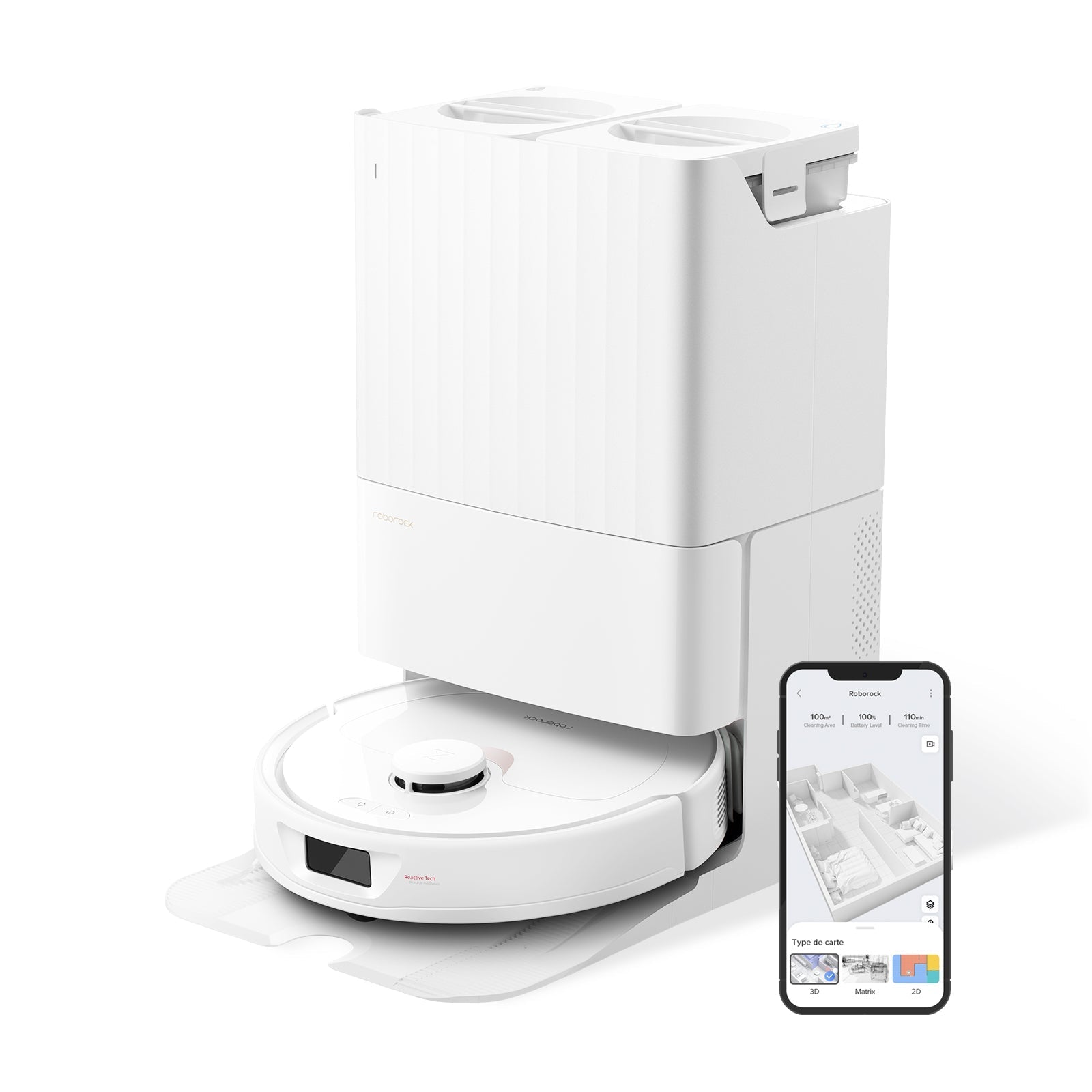
The Q Revo is the answer to "I want a Saros 10R but I can't justify $1,599.99." It uses the same dual-disc mop system as the flagship Roborocks, the same brand-wide app, and the same auto-dock workflow. What you give up: PreciSense LiDAR (Q Revo uses standard LiDAR, still excellent), some suction headroom (5,500Pa vs 8,000+), and the heated dock wash.
On tile, those compromises matter less than they sound. Hard-floor pickup is rated 8.2/10 in our testing — only 1.0 point below the Saros 10R, but at less than a third of the price. The dual spinning mops produce streak-free finishes on most tile, and the dock washes pads at room temperature (sufficient for normal kitchen use, less effective on heavy grout).
:::pros-cons
pros:
- Best value-to-performance ratio in our tile-floor testing
- Same core mopping system as Saros 10R, just without the headlining features
- Reliable — we've had two units in long-term test rotation for 18 months without issues
- $599 is a remarkable price for what you get
- No hot-water dock wash — mop pads benefit from manual rinsing weekly
- 5,500Pa suction is fine for tile but starts to struggle on medium-pile carpet
- Side brush can flick debris on textured tile (turn on "Slow Carpet" mode to mitigate)
Who should buy this: Anyone with a tile-heavy home and a budget. This is what we recommend to friends who don't want to overthink the purchase.
8. eufy Omni C20 — Best Compact for Bathrooms and Toe-Kicks
eufy Omni C20
The Omni C20 is the thinnest robot vacuum with an all-in-one dock — 3.35 inches tall. That number sounds gimmicky until you realize how much tile lives under furniture: bathroom vanities, kitchen toe-kicks, the area between the dishwasher and the sink cabinet. Most flagship robots are 4.0–4.3 inches tall and physically cannot reach this tile.
Performance is what you'd expect for the price — 7.8/10 overall, 7,000Pa suction, basic mopping with no dock heat or spin. But for the specific job of "clean the tile a tall robot can't reach," it has no real competition under $399.99.
:::pros-cons
pros:
- 3.35" height — reaches tile most robots can't
- Excellent for renters or smaller spaces — the compact dock fits anywhere
- 7.8/10 score is respectable for this price tier
- 43% off typical promo discount
- Mop is functional but basic — no spinning, no hot wash
- Smaller dustbin means more frequent dock emptying on dustier homes
- Not the right primary robot if you have over 1,200 sq ft of tile
Who should buy this: Apartments, small condos, or homes with one specific tile zone (bathroom, kitchen) you can never get a normal-height robot to clean. Works well as a second robot in larger homes.
How to Choose a Robot Vacuum for Tile Floors
Once you've narrowed it down, three questions decide which of these 8 is right:
1. Is your grout sealed? Sealed porcelain grout (most modern construction) cleans well with any robot above. Unsealed or older cement grout needs the Narwal Flow 2 Ultra or a heat-wash dock (Saros 10R, Omni S2) — cold mopping pushes water into grout but doesn't lift the film.
2. Do you mix tile with carpet or rugs? If yes, mop-lift matters a lot. Saros 10R (10mm) > Dreame X60 Ultra (10.5mm) > Omni S2 (8mm). Anything below 5mm will dampen rug edges. The S8 MaxV Ultra is the cautionary example — great on pure tile, poor on mixed-floor homes.
3. Are you running it daily or weekly? Daily runs require a dock that dries the mop pad cleanly, or you'll get a musty smell within a week. Saros 10R, Omni S2, Narwal Flow 2 Ultra all dry effectively. Q Revo, S8 MaxV Ultra, PowerDetect 2-in-1, Omni C20 will need weekly manual pad rinse if you run them daily.
Skip a robot vacuum entirely if you have under 250 sq ft of tile, no other hard floor, and no carpet. A Check on Amazon costs less than a steam mop + replacement pads over five years — but only if you'd actually use it three times a week. Below that, a manual steam mop is faster.
Frequently Asked Questions
Do robot vacuums actually work on tile floors?
Yes — tile is one of the easiest surfaces for robot vacuums. Smooth porcelain and ceramic are essentially the "ideal" hard floor in their navigation calibration. The complications come from grout (which most flat-mop robots glide over) and texture (which side brushes can scatter debris across). For most modern tile, any robot above $599 handles the job well.
Can a robot vacuum clean tile grout?
Yes, but only certain models. Grout cleaning requires either (a) a roller mop with high downforce that physically presses into the grout recess, like the Narwal Flow 2 Ultra's 12N system, or (b) hot water that breaks down the film inside the grout. The Saros 10R and Omni S2 use the second approach via heated dock wash; the Narwal uses both. Standard flat-pad robots skim grout without cleaning it.
Will mopping damage my tile floor?
No — tile is one of the most water-tolerant flooring types. The risk isn't the tile itself but the grout: very old or unsealed cement grout can stain from repeated mopping. If your grout is older than 10 years and unsealed, run the robot in vacuum-only mode and mop manually with a sealed-grout cleaner monthly. New porcelain or ceramic tile with modern grout is fine for daily robot mopping.
What suction power do I need for tile floors?
For smooth porcelain or ceramic, 4,000–5,500Pa is plenty (the Q Revo handles it fine). For textured slate, terracotta, or matte ceramic where fine dust settles into ridges, look for 8,000Pa or higher — the Saros 10R (8,000Pa), Dreame X60 Ultra (35,000Pa), or Shark PowerDetect (8,000Pa effective). On textured tile, suction matters more than pad pressure.
Is hot-water mopping worth the extra cost on tile?
For sealed modern tile: usually no, room-temperature mopping is fine. For unsealed or older grout, kitchens with grease, or bathrooms where soap film accumulates: yes, hot water meaningfully outperforms cold mopping. The price gap between a cold-mop robot ($599) and a hot-water robot ($1,349.99) is about \$700–\$1,000 — justify it based on whether you actually have grout or grease issues, not just because the feature sounds nice.
Verdict
For most tile-heavy homes, the Roborock Saros 10R is the right answer — best overall pickup, flawless mop-lift, and a dock that keeps daily-use mop pads from getting funky. Check on Amazon.
If you have a real grout problem, the Narwal Flow 2 Ultra is the one that actually cleans into the seams. Check on Amazon.
If you want the best value, the Roborock Q Revo delivers 85% of the flagship experience at a third of the price. Check on Amazon.
For mixed-tile + small bathroom homes, pair the Q Revo with an Omni C20 — under $399.99 for the second unit gets you tile coverage in places a normal-height robot can't reach.
For our full testing methodology and how scores are calculated, see How We Test. For broader cross-category recommendations, see our Best Robot Vacuums 2026 guide and Best Robot Vacuum for Hardwood Floors — many of the same models top both lists for different reasons.
Prices and stock verified at publication. We earn affiliate commissions when you buy through our links — it never affects which products we recommend or how we score them.