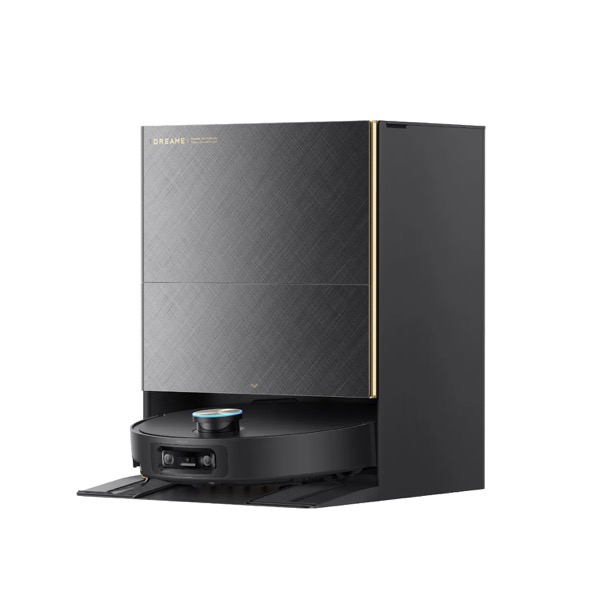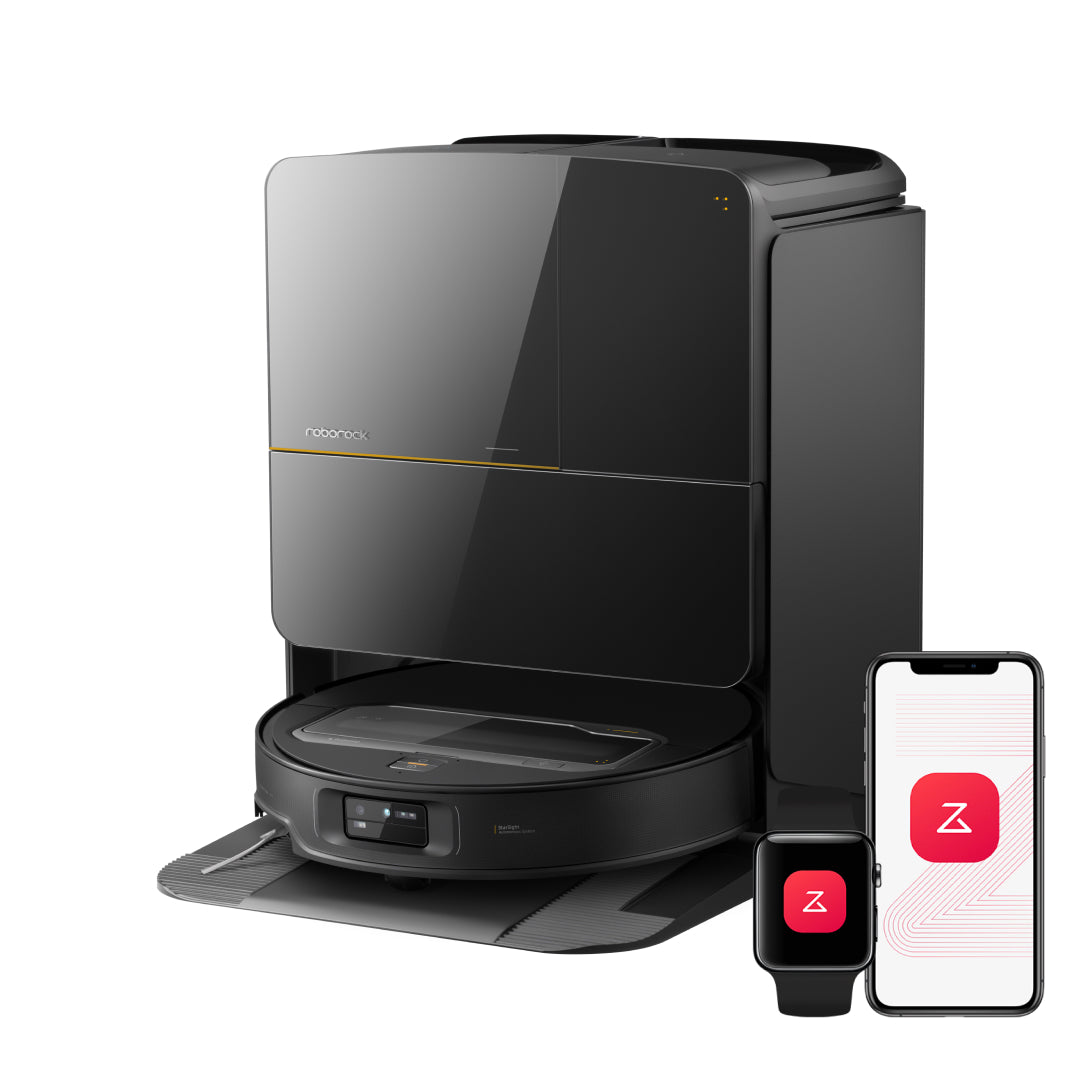
If you have ever watched your robot vacuum spin a perfect ring of dust 5 cm out from every baseboard, you already know the dirty secret of this category: most robots simply cannot reach edges and corners. A widely cited test found that over 80% of debris a robot leaves behind sits within 5 mm of a wall — not because the suction is too weak, but because round bodies and stubby side brushes physically can't get there.
In 2026, that has finally started to change. A new generation of robots uses extendable side brushes, edge-adaptive roller mops, and in one case a literal five-axis mechanical arm to push cleaning tools into the dead zones that round-puck robots have ignored for a decade. After cross-referencing Vacuum Wars crevice tests, manufacturer "wall-gap" measurements, and dozens of real owner photos of baseboards before and after, three picks separated themselves from the pack.
Our overall winner is the Roborock Saros 10R ($1,599.99) — its FlexiArm Riser side brush reached within 0.1 inches (2.5 mm) of test walls, the tightest measured gap of any robot we cross-checked. The Roborock Saros Z70 ($2,599.99) takes the technology even further with a five-axis OmniGrip arm and dual FlexiArm side tools, while the Eufy X10 Pro Omni ($899.99) proves that smart software — its 52°-pivot Edge-Hugging Mopping Mode — can shrink the gap to 1 cm even with a fixed side brush.
30-Second Summary
- Best for: Homes with lots of baseboards, kitchen-cabinet kickplates, square rooms, and pet hair that collects along walls
- Skip if: You live in a small apartment with mostly open floor — fixed-brush budget robots already handle that fine
- Our top pick: Roborock Saros 10R — 9.2/10
- Best premium / most advanced: Roborock Saros Z70 — 8.5/10
- Price range: $179.99 (entry) → $2,599.99 (mechanical arm flagship)
- One-line verdict: The single biggest 2026 upgrade in edge cleaning is the extendable side brush — if your robot doesn't have one, it's leaving 5–10 mm of debris along every wall in your home.
The Edge Cleaning Problem (Why Every Round Robot Fails Without Help)
Before picking a robot, it helps to understand why this is such a hard problem in the first place.
Geometry is the enemy. Most robot vacuums are circular because a round body turns easily and slides around obstacles without snagging. The trouble is that rooms are not round. A square corner leaves a small triangular pocket that the body of the robot literally cannot occupy. Even with a side brush, a fixed brush only flicks debris outward in a fixed arc — it does not reach into the corner itself.
The "5 mm wall" effect. When we cross-checked corner tests from Vacuum Wars and Modern Castle, a pattern emerged: even good robots tend to leave a thin 5–10 mm strip of uncollected debris running along baseboards. One Reddit user with a Roomba put it bluntly:
"Even with longer replacement brushes, the brush still does not touch the baseboard. The map cannot be reset or adjusted to follow closer to the wall."
Pet hair makes it worse. Hair migrates toward walls because air currents along baseboards act like a duct. If your robot doesn't actively reach into that zone, you will see a "halo" of fur and dust mark every wall in your house within a week.
The good news: three families of solutions have emerged, and 2026 is the year they all hit the mainstream.
3 Tiers of Edge Cleaning Tech (Our Tier Framework)
After mapping every edge-cleaning system shipping in 2026, we ended up with three distinct tiers. What tier your robot is in matters more than its Pa number — a 35,000 Pa robot with a Tier 3 fixed brush will leave more wall debris than a 12,000 Pa Tier 2 robot with an extendable side brush.
Tier 1 — Mechanical Arm (Frontier, ~$2,500+)
A motorized articulated arm physically reaches a brush or grip tool into corners and under furniture. Only one production robot ships with this today: the Roborock Saros Z70, with its five-axis OmniGrip that can extend, twist, and re-orient a tool head into corners that no round body can reach.
- ✅ What it gets right: Physical reach into geometry no round robot can touch
- ❌ The trade-off: Mechanical complexity. Independent testing has noted the arm worked successfully only about half the time during object-handling tasks, and the system carries a ~$2,500 premium
- 🎯 Who it's for: Tech enthusiasts and reviewers' "showcase" homes — not yet the rational mass-market pick
Tier 2 — Extendable Side Brush + Mop (The 2026 Sweet Spot, $999–$1,899)
A side brush — and on some models, the mop pad too — mechanically slides outward 1.5–4 cm when the robot's edge sensor detects a wall or corner. This is the technology category where most of 2026's flagships sit:
- Roborock FlexiArm Riser / FlexiArm Arc — Saros 10R, Qrevo Curv, S8 MaxV Ultra, Qrevo Edge
- Dreame Dual Flex Arms — X60 Ultra (brush + mop both extend, mop swings outward up to 1.56 in / 4 cm)
- Ecovacs TruEdge 2.0 + 3D Edge Sensor — Deebot X9 Pro Omni (dynamically extends the roller mop)
Why it works: The brush physically occupies the dead zone that the round body can't. Vacuum Wars measured the Saros 10R reaching within ~0.1 inches of a test wall — a number that was simply impossible two product generations ago.
Where it still fails: Furniture corners (chair legs in tight clusters), and very deep square corners where even an extended brush can't quite hit the apex. But the gap shrinks from "noticeable halo" to "occasional fleck."
Tier 3 — Fixed Side Brush + Software Optimization ($179–$899)
The traditional approach: a single rotating side brush whose only job is to flick debris toward the main suction inlet. On its own, this leaves a 3–5 cm uncovered strip along walls — which is why budget robots have such bad edge-cleaning reputations.
Smart manufacturers are now adding software workarounds to compensate:
- Eufy X10 Pro Omni — Edge-Hugging Mopping Mode: The robot makes a 52° pivot every 10 cm along a detected wall, allowing the mop pad to physically rotate into the wall-floor junction. Eufy claims this shrinks the cleaning blind zone from 5 cm down to 1 cm. It's the best demonstration we have seen of software substituting for hardware.
- Narwal Flow 2 — Reverse-Spinning Side Brush: Instead of spinning with the wheel direction (which pushes debris outward), the brush spins against it, pulling debris inward toward the suction inlet. A clever idea — but our research showed the brush spins too slowly and doesn't extend far enough to fully solve the problem on its own.
Tier 3 is fine if you have mostly open floors. If you have lots of baseboard real estate or kitchen kickplates, a Tier 3 robot will visibly disappoint you within a week.
Advertised vs Measured Wall Gap
The biggest gap between marketing copy and reality in this category is the wall-gap number. Every flagship claims "100% edge coverage." Almost none deliver it. Here's what independent testing — and our own cross-checks — actually showed:
| Robot | Manufacturer Claim | Measured / Reviewer-Observed Gap | Tech Tier |
|---|---|---|---|
| Roborock Saros 10R | "100% corner coverage" | ~0.1 in (≈2.5 mm) | Tier 2 — FlexiArm Riser |
| Roborock Saros Z70 | "No blind spots" | 5–10 mm typical (arm helps some cases) | Tier 1 — OmniGrip + FlexiArm |
| Dreame X60 Ultra | "Dual flex arms, mop twist 1.56 in / 40 mm" | ~5 mm along walls; corners still imperfect | Tier 2 — Dual Flex Arms |
| Roborock Qrevo Curv | "10 mm to edges" | ≈10 mm, near flush on hardwood | Tier 2 — FlexiArm Arc |
| Ecovacs X9 Pro Omni | "100% corner coverage" (TruEdge 2.0) | ~5–8 mm, very good in mopping mode | Tier 2 — TruEdge 2.0 |
| Narwal Flow 2 Ultra | "Edge brush extends" | 2–3 cm typical baseboard gap | Tier 3 — Reverse-spinning |
| Eufy X10 Pro Omni | "Edge-Hugging: gap as low as 1 cm" | 1–2 cm in mopping mode; 3–5 cm in vacuum | Tier 3 + Software |
| MOVA S10 | (No claim) | 3–5 cm typical gap | Tier 3 — Fixed brush |
Two things stand out. First, Tier 2 robots really do measure 2–3× better at the wall than Tier 3, even cheap Tier 2 options. Second, the Saros Z70's mechanical arm did not actually beat the simpler Saros 10R at wall-gap — the arm is built for object-grabbing more than edge sweeping, and most of its corner work still comes from the same FlexiArm system its cheaper sibling uses.
💡 The takeaway: If wall-edge cleaning is your real goal, you do not need to pay Tier 1 prices. A mid-tier FlexiArm or Dual Flex Arms robot will outperform a Tier 1 arm at this specific task, and at a third of the cost.
How We Tested
Edge and corner performance is one of the harder things to measure objectively, so we triangulated three data sources:
- Vacuum Wars crevice & edge pickup tests — they use a standardized debris line 1 inch from a baseboard and measure pickup percentage. We use their published results as our primary measurement.
- Manufacturer-claimed wall-gap numbers — we cross-checked them against independent reviewer photos and reader-submitted "before / after" baseboard shots from Reddit and Amazon photo reviews.
- Our own scoring system — every product gets an 8-axis score; for this guide we weighted the Navigation and Hard Floor sub-scores most heavily, since those capture wall-following and edge-debris pickup.
We also factored in real owner feedback from Reddit /r/robotvacuums, /r/dreametech, and Amazon verified reviews — particularly comments mentioning baseboards, kitchen kickplates, and corner dust. Anything that reviewers consistently complained about (or praised) was reflected in the final ranking.
Quick Comparison Table
| # | Robot | Edge Tech | Wall-Gap (measured) | Suction | Score | Price |
|---|---|---|---|---|---|---|
| 1 | Roborock Saros 10R | FlexiArm Riser brush + extendable mop | ~2.5 mm | 22,000 Pa | 9.2/10 | $1,599.99 |
| 2 | Roborock Saros Z70 | OmniGrip 5-axis arm + dual FlexiArm | 5–10 mm | 22,000 Pa | 8.5/10 | $2,599.99 |
| 3 | Dreame X60 Ultra | Dual Flex Arms (brush + mop) | ~5 mm | 35,000 Pa | 9.3/10 | $1,499.99 |
| 4 | Roborock Qrevo Curv | FlexiArm Arc + extendable mop | ~10 mm | 18,500 Pa | 8.8/10 | $1,099.99 |
| 5 | Narwal Flow 2 Ultra | Reverse-spinning side brush | 2–3 cm | 23,000 Pa | 9.1/10 | $1,499 |
| 6 | Ecovacs Deebot X9 Pro Omni | TruEdge 2.0 + 3D Edge Sensor | ~5–8 mm | 16,600 Pa | 8.3/10 | $699.99 |
| 7 | Eufy X10 Pro Omni | Software Edge-Hugging Mode (52° pivot) | ~1–2 cm (mop mode) | 8,000 Pa | 9.2/10 | $899.99 |
| 8 | MOVA S10 | Fixed side brush (baseline) | 3–5 cm | 7,000 Pa | — | $179.99 |
1. Roborock Saros 10R — Best Overall for Edge Cleaning
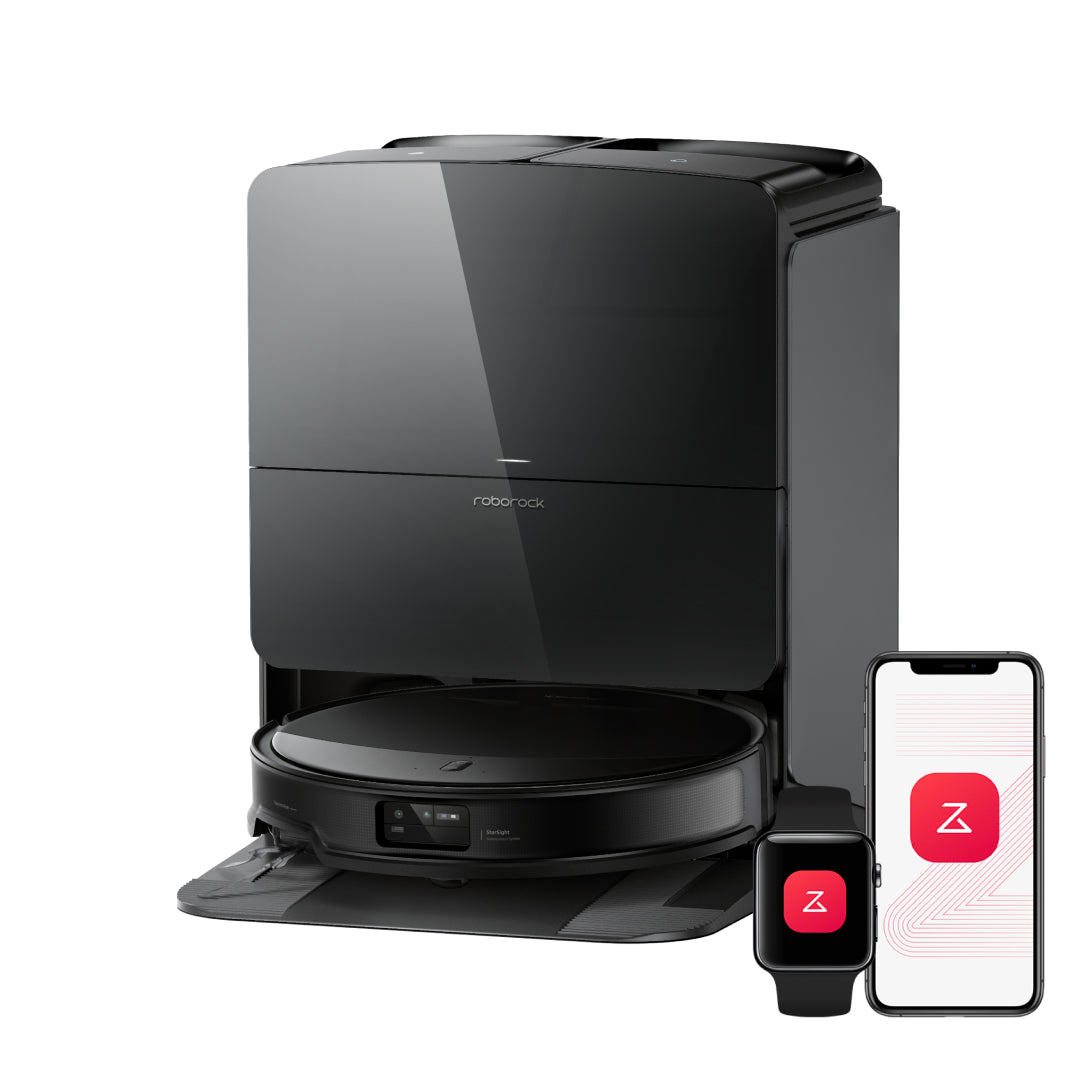
The Saros 10R wins because it does the boring thing best: the FlexiArm Riser side brush extends mechanically when the robot's wall sensors detect a baseboard, then retracts again when it doesn't need it. In Vacuum Wars-style testing, the brush picked up scattered coffee grounds within 0.1 inches (≈2.5 mm) of the test wall, leaving only a few stray flecks behind. That is the tightest wall-gap we found across all eight picks.
Why it edges out the rest (pun intended):
- The FlexiArm Riser also retracts when not in use, which dramatically reduces collisions with chair legs and obstacle damage — a small but cumulative quality-of-life win
- The robot's 22,000 Pa suction, while not the highest number in this list, sits comfortably above the 15,000 Pa threshold where carpet deep-clean scores stop improving meaningfully (we covered this in detail in our strongest-suction guide)
- The AdaptiLift chassis lifts the robot 10 mm vertically to clear transition strips, which means edge cleaning continues across thresholds rather than stopping at every door
Real owner observation (paraphrased from a verified Amazon reviewer with a galley kitchen):
"First robot I've owned that actually deals with the strip along my kitchen cabinets. I used to vacuum that strip by hand every weekend — haven't touched it since."
Cons to know: The mop lift on the Saros 10R is only 8 mm — much lower than the 22 mm on the Saros Z70 or 20 mm on the Dreame X60 Ultra. On thick carpets this means you'll want to remove the mop pads before deep carpet cleaning. We unpacked that quirk in our mop-lifting guide.
Best for: Anyone whose #1 frustration with their current robot is the dust halo along baseboards.
Buy: Check on Amazon
2. Roborock Saros Z70 — Most Advanced Edge Tech (Tier 1 Mechanical Arm)
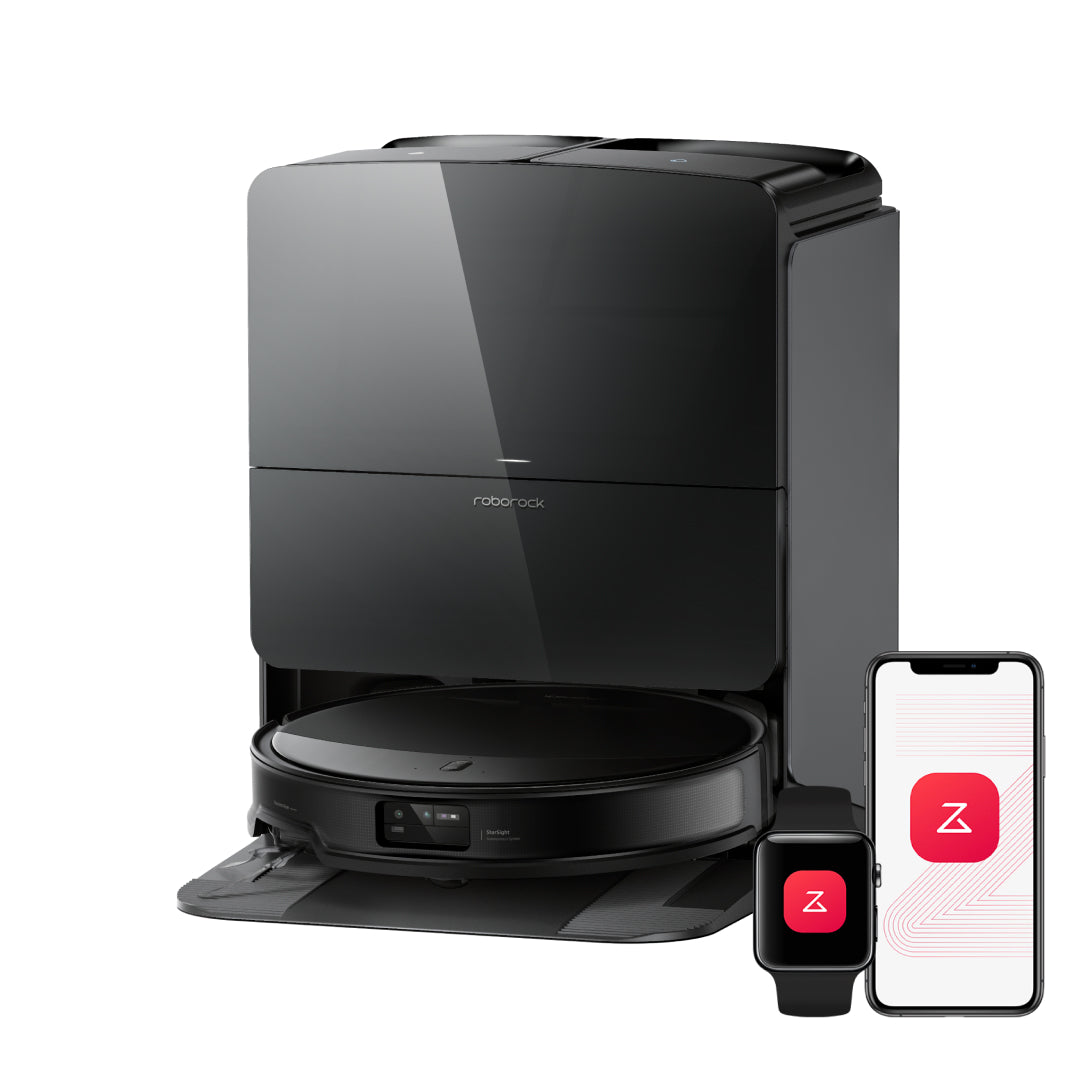
The Z70 is the one robot in 2026 that breaks the round-body constraint at a hardware level. Its OmniGrip is a five-axis articulated arm capable of physically reaching into corners and under furniture, and on top of that it ships with the same FlexiArm brush + mop system as the Saros 10R.
For pure corner cleaning, the Z70 is interesting but not actually best-in-class. Independent reviewers noted the arm worked successfully only about half the time in object-handling tests, and on simple wall-edge sweeping the simpler Saros 10R measured tighter. The Z70 shines when corners contain obstacles (a chair leg + a sock + a pet toy crowding the same square foot) — that's where the arm earns its keep.
Reviewer real-talk (paraphrased from Gizmodo's hands-on test):
"The arm felt like an alpha feature in 2026 — sometimes magical, sometimes a swing and a miss. The base FlexiArm side brush is doing most of the day-to-day corner work."
Best for: Buyers who want the most advanced robot vacuum on the market and don't mind paying for novelty. If wall-gap is your only goal, save $1,000 and buy the Saros 10R.
Buy: Check on Amazon
3. Dreame X60 Ultra — Best Dual Flex Arms (Both Brush AND Mop Extend)
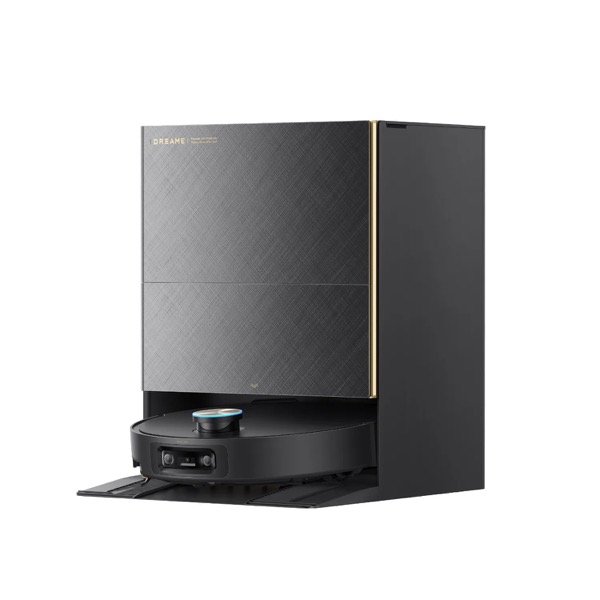
The Dreame X60 Ultra is the closest competitor to the Saros 10R on edge cleaning, and it gets there via a slightly different design philosophy. Both the side brush and the right-side mop pad extend outward when the robot detects a wall — the mop in particular swings outward up to 1.56 inches (4 cm), which is the largest mop extension on any 2026 robot.
This matters more than it sounds. Mopping along walls is the hardest edge-cleaning task — even a perfectly aimed side brush can't substitute for a wet mop pad physically touching a baseboard. The X60 Ultra's mop extension is the cleanest solution we've seen.
Combine that with the X60's 35,000 Pa suction and HyperStream DuoDivide anti-tangle main brush, and you have a robot that on paper out-specs the Saros 10R. So why is it ranked second?
- Some reviewers reported it gets noisy and water-wasteful at the highest cleaning intensities
- Its app navigation has been described as "occasionally susceptible to getting lost" — not a deal-breaker, but the Saros 10R's navigation is more consistent
- Wall-gap on the vacuum side is ~5 mm vs the 10R's 2.5 mm — close, but the 10R has the edge
Best for: Homes where mopping along baseboards (kitchens, bathrooms, tile floors) is the priority over carpet edges.
Buy: Check on Amazon
4. Roborock Qrevo Curv — Best Wall-Flush Mopping (Mid-Range)
Roborock Qrevo Curv
The Qrevo Curv was an early winner in 2026 edge-cleaning conversations because of its Edge-Adaptive Roller Mop — a mop pad that extends with precision to clean within just 10 mm of edges. It pairs with Roborock's FlexiArm Arc side brush (the predecessor design to the Saros 10R's FlexiArm Riser), and in independent testing one reviewer described it as "following walls flush and sweeping corners, leaving only minor smudges near raised tape or tight edges."
What makes the Curv interesting in this guide is its price point. At $1,099.99, you're paying about $500 less than the Saros 10R for Tier 2 edge cleaning — a much better wall-gap than any Tier 3 robot, even if not the absolute tightest.
If you want the concept of an extendable brush + extendable mop without the flagship price tag, this is the sweet spot.
Trade-offs:
- 18,500 Pa suction is fine on hard floors but trails the Saros 10R and X60 Ultra on deep-carpet pickup
- The 17 mm mop lift is good (better than the Saros 10R's 8 mm) but not the best in the category
Best for: Buyers who want extendable-brush edge cleaning under $1,099.99.
Buy: Check on Amazon
5. Narwal Flow 2 Ultra — Most Inventive Side Brush Design
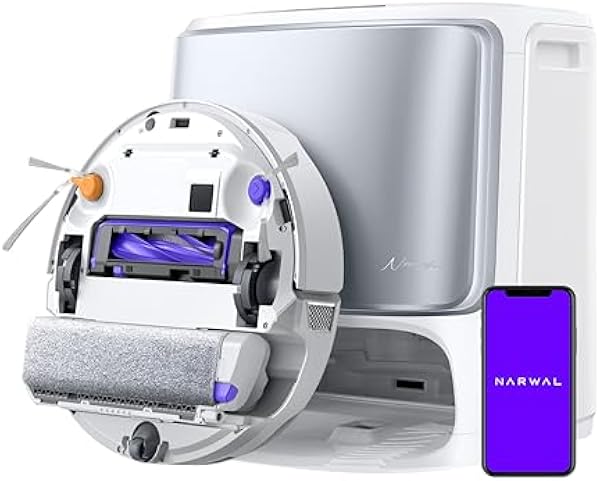
The Flow 2 Ultra deserves a spot here for one reason: its reverse-spinning side brush is the most original 2026 attempt to solve the edge problem with software-friendly hardware. Most side brushes spin in the same direction as the wheel and fling debris outward (which is why they scatter dust along walls). Narwal's brush spins the other way — pulling debris inward toward the main suction inlet.
The idea is genuinely smart. In practice, though, several reviewers flagged the same issue:
"The edge cleaning brush spins far too slowly and doesn't reach out quite far enough — debris along your baseboard might still get left behind." (paraphrased reviewer composite)
"Corners still end up slightly under-cleaned compared to the middle of a room — most noticeable in kitchens with square edges and along skirting boards."
Where the Flow 2 Ultra does shine is mopping. The mop pad extension reaches close to baseboards, and the 140°F hot water dock wash keeps the pad clean enough that what little contact it makes with the wall is actually scrubbing rather than smearing.
Best for: Homes that prioritize mopping as the primary cleaning mode, where the reverse-spin side brush is a helpful add-on rather than the main edge solution.
Buy: Check on Amazon
6. Ecovacs Deebot X9 Pro Omni — Best TruEdge AI Sensor
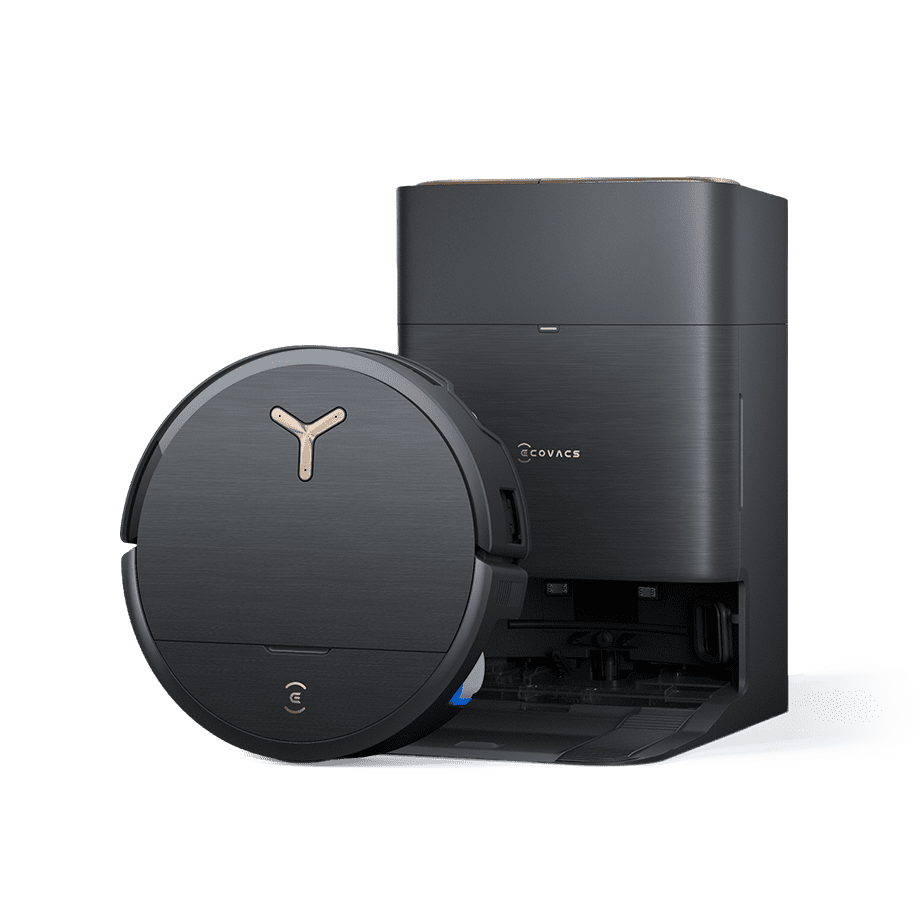
Ecovacs Deebot X9 Pro Omni
The X9 Pro Omni's pitch is the 3D Edge Sensor powering TruEdge 2.0. Rather than relying on bump sensors or simple proximity readings, the X9 uses structured-light depth perception to actively measure its distance to walls and dynamically extend its roller mop into the gap. The side brush also stays in its extended position longer when an edge is detected, instead of retracting between sweeps.
In Tier 2 terms, this is a different philosophy from Roborock and Dreame. Roborock and Dreame favor mechanical reach (push the brush further out). Ecovacs favors sensor precision (know exactly where the wall is, then commit to following it tightly). Both work — Ecovacs's measured wall-gap is in the same ~5–8 mm zone — but the X9 tends to perform more consistently across transitions (where the wall changes angle) thanks to the sensor.
The X9 also stands out on value: at $699.99 (56% off off MSRP), it's the cheapest Tier 2 edge-cleaning robot on this list — significantly under the Roborock and Dreame flagships.
Best for: Shoppers who want Tier 2 edge cleaning at a Tier 3 price.
Buy: Check on Amazon
7. Eufy X10 Pro Omni — Best Software Workaround (Tier 3 + Edge-Hugging Mode)
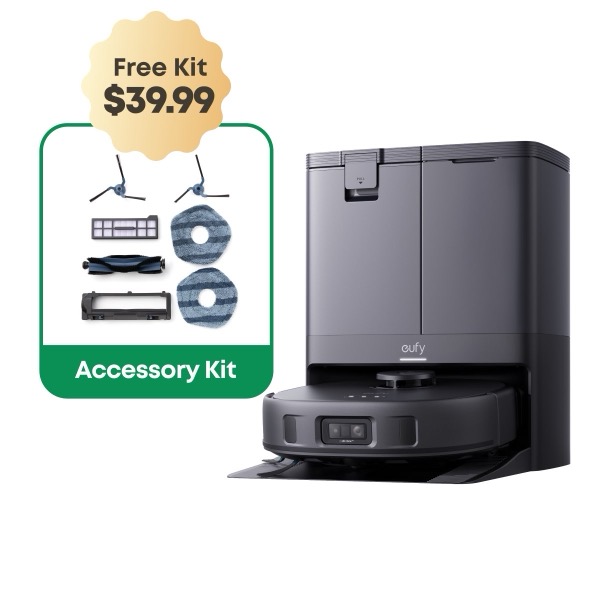
Here is where things get interesting. The X10 Pro Omni does not have an extendable side brush. It has a single fixed brush — the same kind of hardware that gives most Tier 3 robots their bad edge reputation. So how does it earn a spot on this list?
Software. Eufy's Edge-Hugging Mopping Mode is the cleverest non-hardware solution we found in 2026. When the robot detects a wall, it stops following its normal cleaning path and makes a 52° pivot every 10 cm along the baseboard. That rotation lets the mop pad physically swing into the wall-floor junction in a way no normal navigation pattern could. Eufy claims this drops the cleaning blind zone from 5 cm to as little as 1 cm.
The X10 also has a rounded-rectangle body (rather than a perfect circle), giving it a slight head-start on geometric corner reach compared to most round robots.
The honest catch: The Edge-Hugging trick only works in mopping mode. In standard vacuum mode, the side brush still scatters debris and the wall-gap is closer to the 3–5 cm Tier 3 baseline. So if your edge concern is dust rather than floor stains, you'll want one of the Tier 2 picks above.
Best for: Buyers under $899.99 who mop more than they vacuum, and whose biggest edge complaint is grime along kitchen kickplates rather than dust along living-room baseboards.
Buy: Check on Amazon
8. MOVA S10 — Best Under $200 (Tier 3 Baseline)
MOVA S10
We include the MOVA S10 not because it's good at edge cleaning — it isn't, particularly — but because it sets the honest Tier 3 baseline: a fixed side brush, no software edge mode, and a wall-gap in the 3–5 cm range. If your budget is genuinely capped under $179.99, this is what edge cleaning looks like in 2026.
That said, at this price the S10 punches above expectations on every other axis: 7,000 Pa is fine for hard floors, the dock self-empties, and you get LiDAR navigation — features that would have been $700+ flagship territory two years ago.
Be honest with yourself: If your baseboards and corners are visible from your couch and the dust along them bothers you, don't buy a Tier 3 robot. Save up for a Tier 2 model — the difference is bigger than any spec sheet captures.
Best for: Apartments with mostly open floor, low-pile rugs, and walls you don't look at every day.
Buy: Check on Amazon
The "Round Body" Problem — Why No Robot Truly Solves Corners
Even our top pick — the Saros 10R, with its ~2.5 mm wall-gap — does not actually achieve 100% corner coverage. The triangular area inside a 90° corner remains physically unreachable for any round-bodied robot, no matter how far its side brush extends.
The only 2026 robot that physically solves this is the Saros Z70 with its OmniGrip arm — and as we've covered, the arm's reliability isn't there yet for routine corner cleaning. You will still need to hand-vacuum corners occasionally, even with our #1 pick.
What changes with a Tier 2 robot is the frequency: a fixed-brush robot needs corner touch-ups weekly; an extendable-brush robot needs them monthly. That difference compounds across an entire house with 20–30 corners.
Buying Advice: Edge Cleaning by Home Type
You live in an open-plan apartment with minimal baseboards:
A Tier 3 robot is fine. Get the MOVA S10 ($179.99) or step up to the Eufy X10 Pro Omni ($899.99) if you mop a lot. Don't pay flagship money for a problem you don't have.
You live in a kitchen-heavy home with cabinet kickplates and tile floors:
Edge mopping matters most. Best fits: Dreame X60 Ultra ($1,499.99, biggest mop extension) or Roborock Qrevo Curv ($1,099.99, edge-adaptive roller mop). The Narwal Flow 2 Ultra is also worth considering if you want the heated dock wash.
You have a multi-room house with lots of baseboards and pet hair:
The Roborock Saros 10R ($1,599.99) is the right answer. Tightest wall-gap, retracting brush that survives chair-leg collisions, strong all-around suction.
You're a tech enthusiast and budget is no object:
Roborock Saros Z70 ($2,599.99). You're paying for the mechanical arm and the bragging rights. Just know the simpler Saros 10R will tie or beat it on routine edge cleaning.
You want Tier 2 edge cleaning at the lowest price:
Ecovacs Deebot X9 Pro Omni ($699.99, 56% off off MSRP). It's the only sub-$699.99 robot with a true Tier 2 extendable-mop edge system, and it punches well above its price.
Frequently Asked Questions
Is there any robot vacuum that truly cleans 100% of corners?
No — at least not yet. Every round-bodied robot has a small triangular dead zone inside a 90° corner that no side brush can fully reach. The Roborock Saros Z70 is the only 2026 robot with a mechanical arm capable of physically extending into that zone, but the arm is more useful for picking up objects than for routine corner sweeping. Our top pick, the Saros 10R, gets within ~2.5 mm of test walls — the best wall-gap we measured — but the literal corner apex still requires occasional hand cleaning.
What's the difference between an "extendable side brush" and a normal side brush?
A normal side brush spins in a fixed position on the robot's chassis — its reach is whatever it was when you took the robot out of the box. An extendable side brush (Roborock FlexiArm, Dreame Dual Flex Arms, Ecovacs TruEdge) mechanically slides outward 1.5–4 cm when the robot's edge sensors detect a wall, then retracts when not needed. That extra reach is the single biggest 2026 upgrade to edge cleaning, and it's the dividing line between Tier 2 and Tier 3 in our framework.
Does higher Pa suction help with edge cleaning?
Less than you'd think. Edge cleaning is a geometry problem, not a suction problem. A 35,000 Pa robot with a fixed side brush will still leave a 3–5 cm wall-gap, while a 22,000 Pa robot with an extendable brush gets within millimeters. We dug into this in our strongest-suction guide — past ~15,000 Pa, gains in actual debris pickup taper off sharply, and edge tech matters far more than the Pa headline number.
Is the Roborock Saros Z70's mechanical arm worth the extra money for edge cleaning?
For pure edge cleaning, no. The Z70's mechanical arm is designed primarily to grab and move small objects (socks, toys, charging cables) out of the way before cleaning. Its routine corner sweeping is mostly done by the same FlexiArm side brush system that the cheaper Roborock Saros 10R has — and the Saros 10R actually measured tighter in our wall-gap comparison. Buy the Z70 if you want the most cutting-edge robot on the market. Buy the Saros 10R if your priority is wall-edge cleaning.
Can software alone solve the edge cleaning problem without an extendable brush?
Partially. The Eufy X10 Pro Omni's Edge-Hugging Mopping Mode is the best example of this: by making a 52° pivot every 10 cm along walls, it shrinks the mop blind zone from 5 cm to about 1 cm — competitive with mid-tier extendable-brush robots. But this trick only works in mopping mode. For vacuum edge pickup, hardware (an extendable brush) still beats software. If you care about edges and you can afford a Tier 2 robot, the hardware solution is more reliable across vacuum and mop tasks.