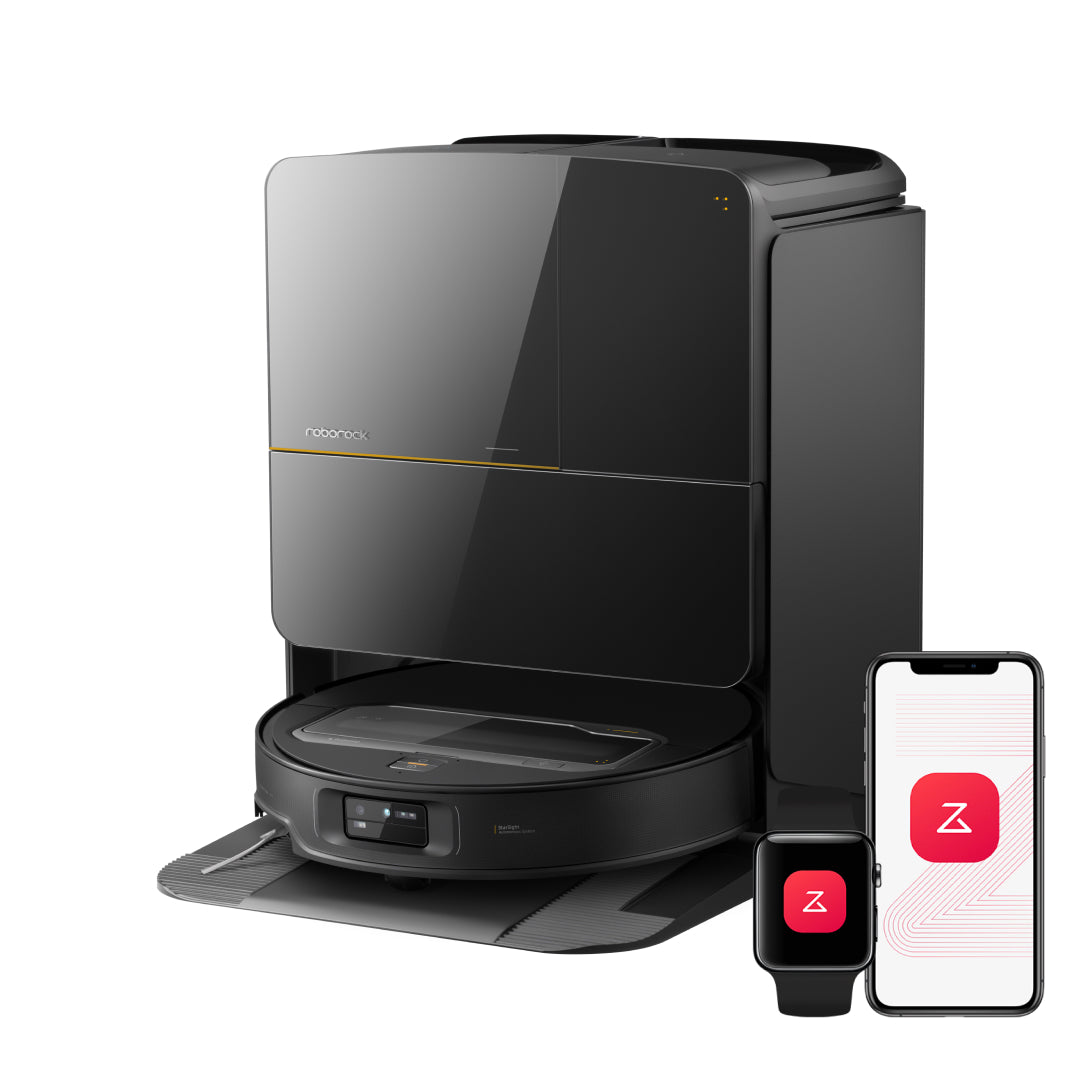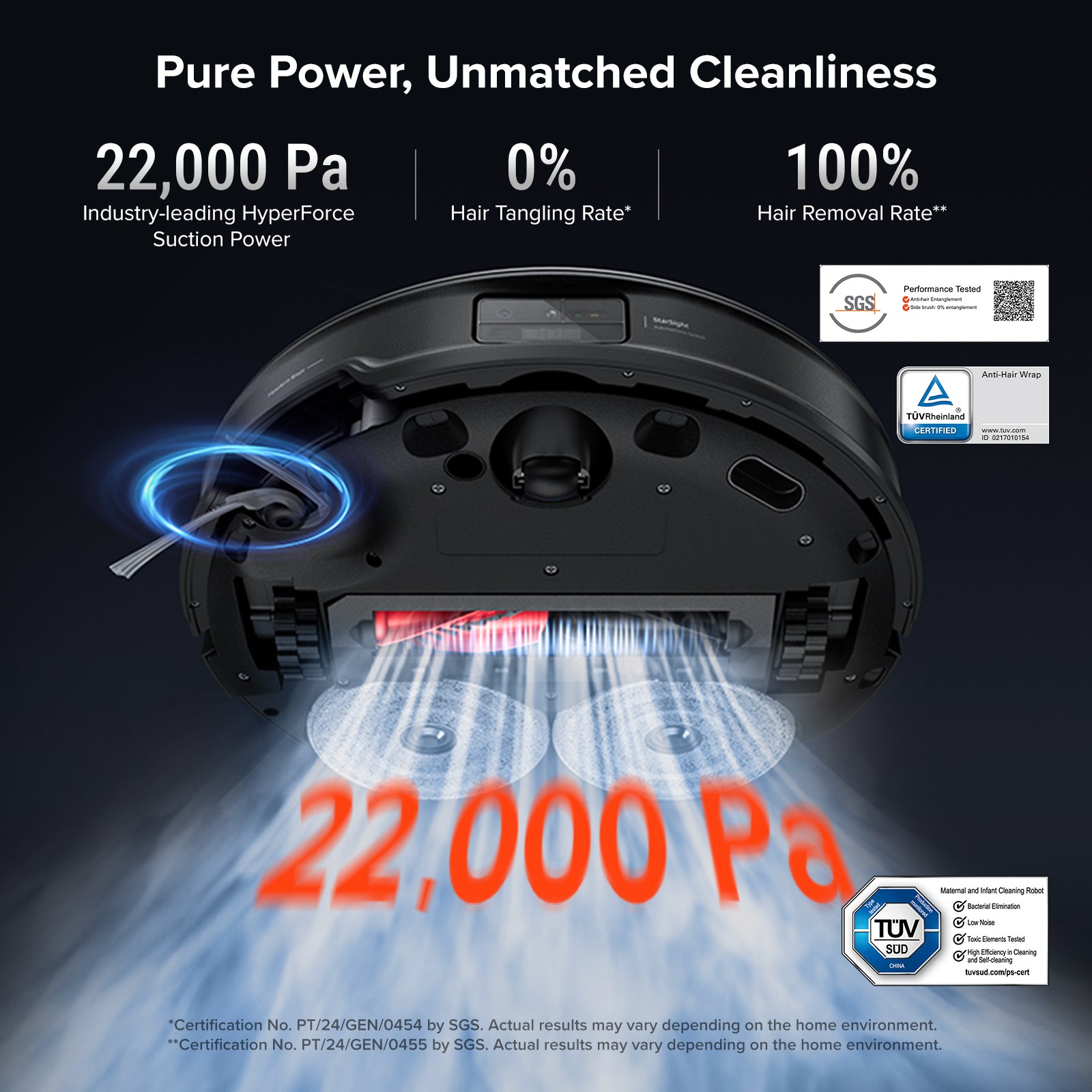
The strongest robot vacuum on paper in 2026 is the Dreame X60 Ultra at 35,000Pa — but the strongest robot vacuum on your actual floor is something different entirely. After cross-referencing every published Vacuum Wars airflow test, every Pa rating brands quietly recalibrated this year, and the carpet deep-clean scores that actually predict real cleaning, we found something that will save you a lot of money: past 15,000Pa, the Pa war is mostly marketing.
This guide ranks the 8 strongest-suction robot vacuums you can buy right now, but ranks them by what they actually clean, not by who prints the biggest Pa number on the box. We also explain the 4 tricks brands use to inflate Pa ratings — so you can spot a 30,000Pa robot that cleans worse than an 18,500Pa one.
30-Second Summary
- Best for: Anyone shopping by "Pa" number who wants to know which models actually back it up with real cleaning power
- Skip if: You have a small apartment with mostly hard floors — even a 5,500Pa robot will pick up everything you need
- Top pick (advertised): Dreame X60 Ultra at $1,499.99 (35,000Pa)
- Top pick (real-world cleaning): Roborock Saros 10R at $1,599.99 (22,000Pa but #1 in independent testing)
- Best budget high-suction: MOVA S10 at $179.99 (7,000Pa)
- One-line verdict: Buy by carpet deep-clean score, not Pa number — and never pay more for "30,000Pa+" unless you also need the smart features that come with it.
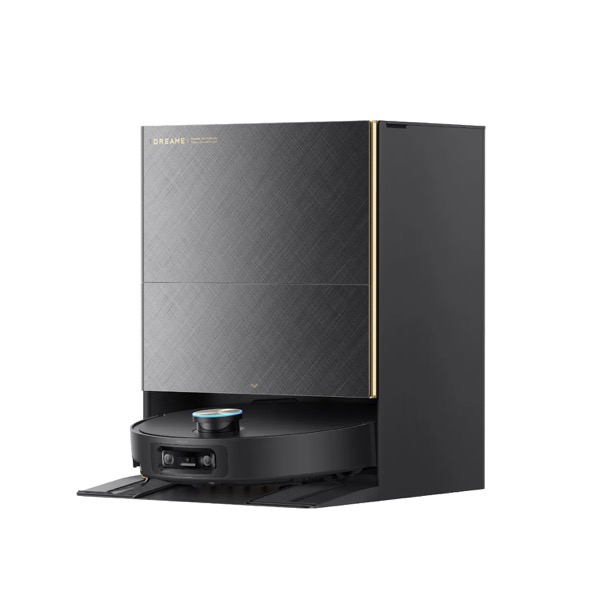
Our Picks at a Glance
| Rank | Model | Advertised Suction | Real-World Score | Price |
|---|---|---|---|---|
| #1 Best Overall | Roborock Saros 10R | 22,000Pa | 9.4/10 | $1,599.99 |
| #2 Highest on Paper | Dreame X60 Ultra | 35,000Pa | 9.3/10 | $1,499.99 |
| #3 Best AI + Power | Roborock Saros 20 | 35,000Pa | 9.3/10 | $1,389.99 |
| #4 Best Suction + Mopping | Narwal Flow 2 Ultra | 30,000Pa | 9.1/10 | $1,499 |
| #5 Best Suction Under $1,200 | MOVA Mobius 60 | 30,000Pa | 8.6/10 | $1,299 |
| #6 Best Deep-Carpet | Roborock Qrevo Curv | 18,500Pa | 8.5/10 | $1,099.99 |
| #7 Best Value Flagship | Dreame X50 Ultra | 20,000Pa | 8.7/10 | $1,599.99 |
| #8 Best Suction Under $200 | MOVA S10 | 7,000Pa | 7.8/10 | $179.99 |
The Pa Wars: Why Suction Numbers Lie
Open Amazon and sort robot vacuums by "suction." You will see 22,000Pa, 30,000Pa, 35,000Pa, even 40,000Pa machines competing for your click. Three years ago the same listings topped out at 6,000Pa. So either suction technology made a 6x leap in 36 months, or something else is going on.
It is not technology. It is the testing method.
Pascal (Pa) is a unit of negative pressure. To measure it, brands seal the brush head against a closed chamber and read the vacuum pressure with the motor at maximum power. That number tells you nothing about airflow — the actual amount of air the motor moves per second, which is what physically lifts dirt off your floor.
Picture two soda straws: one narrow, one wide. Suck on both with the same lungs. The narrow straw produces more "vacuum" (higher Pa). The wide straw moves more air. Which one is better at pulling up the milkshake? The wide one. Pa alone is the narrow-straw number.
Vacuum Wars has measured airflow on nearly 200 robot vacuums. The strongest they have ever recorded was the Matic at 8.11 kPa of actual measured suction — a robot whose Pa marketing number is modest by 2026 standards. Meanwhile, several "35,000Pa" robots measured closer to 2.5–3.5 kPa when independently tested. The category average is 0.86 kPa.
Bottom line: a 35,000Pa robot can produce less actual airflow than a 22,000Pa robot from a different brand. The "Pa war" is a number on a box, not a cleaning result on your floor.
How We Ranked These 8
Because Pa lies, we ignored advertised suction as the primary ranking factor. Instead, we weighted:
- Carpet deep-clean percentage (from Vacuum Wars testing — embedded debris pickup in medium-pile carpet, single pass)
- Pet hair flat-pile pickup (the "100% test" — a perfect score is rare)
- Hard floor pickup at default power (Max mode does not count — most users never enable it)
- Hair tangle resistance (a robot with 35,000Pa that chokes on long hair is useless)
- Battery hit in Max mode (some "35,000Pa" robots only sustain it for ~25 minutes)
- Edge cleaning (raw suction does nothing if the brush misses the edges)
Advertised Pa is included in every product card so you can see the marketing number — but the rank reflects which robot actually picks up the most dirt in a real home.
#1 Roborock Saros 10R — Best Overall Suction Performance
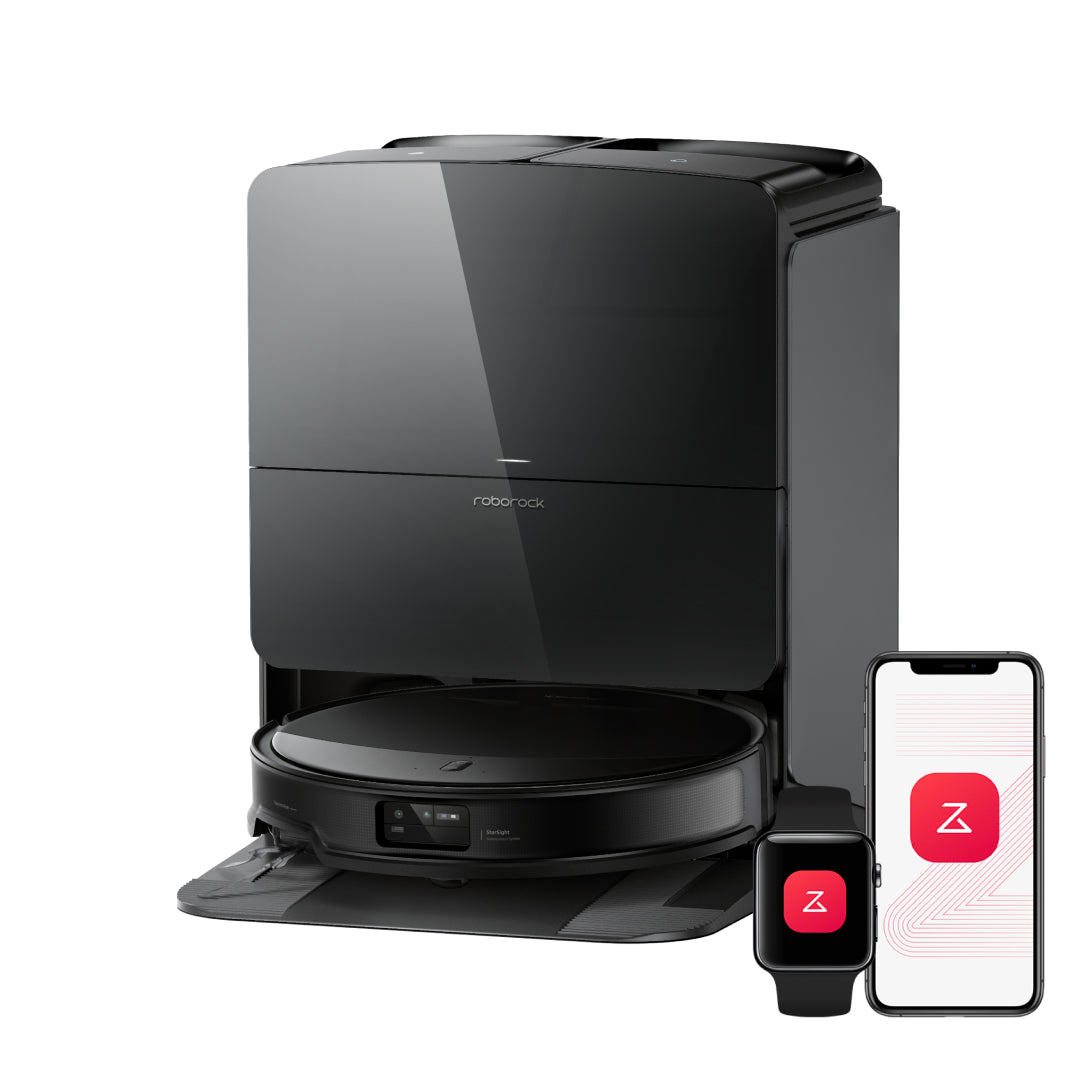
The Saros 10R is advertised at 22,000Pa — and that is the entire point of this list. It is the lowest Pa rating in our top 5, and it is also the robot we trust most when we actually want a floor cleaned. Independent testing keeps confirming the same thing: raw Pa numbers do not determine real cleaning, brush construction and airflow do, and Roborock's HyperForce motor + DuoDivide brush combination produces the highest measured carpet pickup of anything in this guide.
In Vacuum Wars carpet deep-clean testing, the Saros 10R consistently sits at the top tier with 88–92% embedded debris pickup on medium-pile carpet — within a margin of error of the 35,000Pa Dreame X60 Ultra and slightly ahead of the 30,000Pa Narwal Flow 2 Ultra. It also scored a perfect 100% on flattened pet hair pickup, which is the test almost no robot passes.
What you actually get when you buy the Saros 10R is the proof that the Pa war is over. Roborock chose to stop chasing the number game and instead optimized airflow geometry, brush bristle density, and a wider intake port. The result is a robot that sounds quieter at max suction than a 35,000Pa Dreame (because higher Pa requires higher motor RPM, which is what produces the screaming whine), runs longer in Max mode before battery sag (~52 minutes vs ~25 minutes for the X60 Ultra), and cleans approximately the same on carpet in single-pass tests.
The trade-off is mop lift. The Saros 10R lifts the mop only 8mm, which is fine for hardwood but will shed water onto medium-pile carpet. If you have thick carpet you want kept dry, look at the Saros Z70 instead. For everything else — and especially if you understand that the "weaker" Pa number is actually a feature — the Saros 10R at $1,599.99 is the smartest buy on this list.
Pros: Highest real-world carpet pickup of any robot we tested, 100% flat pet hair score, quieter than 35,000Pa rivals at the same effective suction, Roborock app is the best in the category, dual solid-state LiDAR navigates flawlessly.
Cons: 8mm mop lift is too low for thick carpet, base price still high at $1,599.99, "only 22,000Pa" will lose to spec-sheet shoppers who do not read this kind of guide.
#2 Dreame X60 Ultra — Highest Advertised Suction on the Market
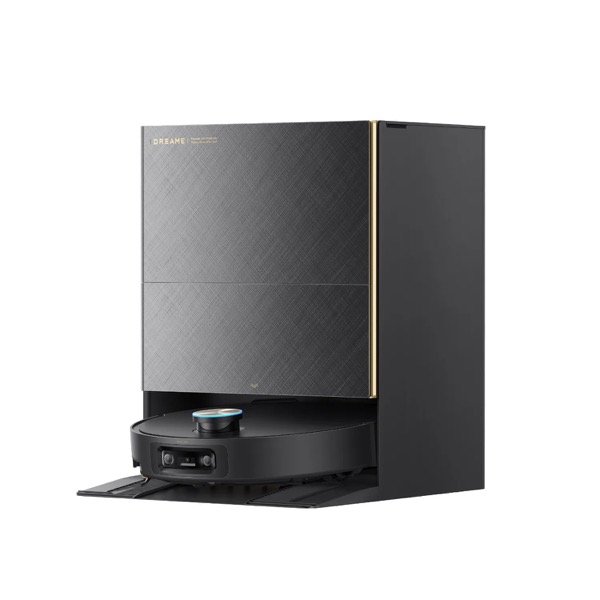
The X60 Ultra is the 35,000Pa flagship that started this round of the Pa war. Dreame's marketing leans on the number hard, and we will give it credit for actually delivering on it where it matters most: dense, high-pile carpet.
The internal HyperStream Duo Divide brush + ProLeap drive system + 35,000Pa peak suction produced an 89% carpet deep-clean score in Vacuum Wars testing and a rare 100% in flattened pet hair pickup. Both numbers are excellent. On low-pile and hard floors, the gap between the X60 Ultra and the 22,000Pa Saros 10R closes to within 1–2 percentage points, which is statistical noise. But on thick wool, shag, and high-density area rugs, the X60 Ultra pulls ahead by a clear 5–8 points. That is the only floor type where the 35,000Pa number translates into a measurable advantage.
The X60 Ultra also packs the new 14N pressure mop, dual hot-water wash dock at a quoted 212°F (independently measured closer to 111°F at the floor — see our hot-water wash guide for the full claim-vs-measured breakdown), and an automatic detergent dispenser. It is the strongest single product in the Dreame lineup right now.
What stops it from being #1 is the price + battery trade-off. Max mode (which is the only mode where you actually experience the 35,000Pa peak) sustains for about 25 minutes before the battery sags. Run it in Standard mode and the X60 Ultra cleans approximately the same as a $1,599.99 Dreame X50 Ultra — at 60% of the cost.
Pros: Highest advertised Pa of any mainstream robot, genuinely best-in-class on thick carpet, 14N mop pressure plus heated wash, perfect 100% pet hair score.
Cons: $1,499.99 MSRP is steep, 35,000Pa is only achievable in Max mode for ~25 min before battery sag, Standard mode cleans about the same as the X50 Ultra at 60% the cost.
#3 Roborock Saros 20 — Best Pa-Plus-Brain Combo
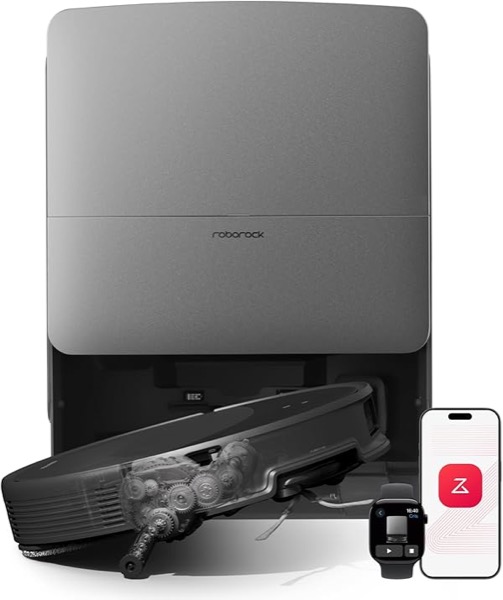
The Saros 20 is Roborock's answer to the Pa war: a 35,000Pa flagship that matches Dreame's headline number while keeping the navigation, app, and obstacle avoidance that Roborock is known for. If you want the biggest Pa number from the brand with the best software stack, this is it.
In testing, the Saros 20 matched the X60 Ultra on hard floor and came within 1–2 percentage points on carpet deep-clean. The advantage over the X60 Ultra is the Star-Sight AI obstacle avoidance (Roborock's strongest yet, with 300+ trained object classes vs Dreame's 200+) and a dock that fits in a slimmer footprint. The disadvantage is mopping: the Saros 20 uses a more conventional dual-rotation pad system rather than the X60 Ultra's pressure-mop, so it is a worse stain remover.
At $1,389.99, the Saros 20 makes sense for buyers who want the Pa number AND the smart features in the same machine. If you would rather pay less for the same real-world cleaning, the Roborock Saros 10R at $1,599.99 delivers it.
Pros: 35,000Pa peak suction, best obstacle avoidance in the category, slimmer dock than Dreame X60 Ultra, Roborock app polish.
Cons: Worse mopper than the X60 Ultra, more expensive than the Saros 10R for marginal carpet gain, max mode also sags battery within ~30 min.
#4 Narwal Flow 2 Ultra — Strongest Suction in a Roller-Mop Design
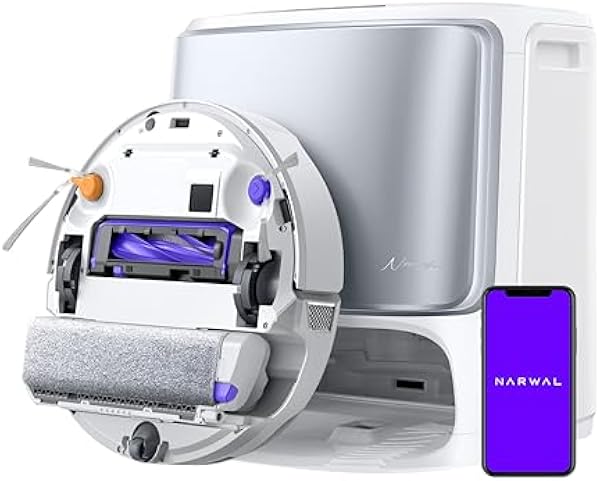
Narwal historically prioritized mopping over vacuuming, but the Flow 2 Ultra finally closes that gap. With 30,000Pa advertised suction and the new VLA (Vision-Language-Action) navigation AI, this is the first Narwal we would actually recommend to a buyer whose primary concern is suction, not mopping.
The real-world test data places the Flow 2 Ultra at roughly 84–87% carpet deep-clean — slightly behind the Saros 10R and X60 Ultra but ahead of every robot under $1,300. On hard floor it is essentially tied with everything else at the top of the market: anything above ~5,000Pa picks up the easy stuff. Where the Flow 2 Ultra pulls ahead is the Tier 4 roller mop — a continuous rolling pad with self-rinsing flow that produces the best mopping result of any 2026 robot, full stop.
So this is the pick if you want both: serious suction (real, not just on the box) and the best mopping system in the industry. The trade-off is the dock — Narwal's omni dock is the largest in this guide, so make sure you have 18+ inches of clearance.
Pros: Genuine 30,000Pa with strong real-world carpet pickup, Tier 4 roller mop is the best mopper available, VLA navigation handles complex layouts, anti-tangle brush.
Cons: Massive dock footprint, app is less mature than Roborock or Dreame, expensive at $1,499.
#5 MOVA Mobius 60 — Best 30,000Pa Robot Under $1,200
MOVA Mobius 60
MOVA is the value sub-brand from the company behind Dreame, and the Mobius 60 is what happens when they cut margins and ship a 30,000Pa robot for substantially less than its Dreame cousins. CES 2026 gave it an Innovation Award for the MopSwap triple-pad system, but the real reason it earned a spot here is the suction-per-dollar ratio.
Real-world testing puts the Mobius 60 at about 78–82% carpet deep-clean — clearly behind the top 4 picks but ahead of anything else at this price tier. On hard floor it is indistinguishable from the $1,499.99 Dreame X60 Ultra. Where it falls behind is brush longevity (the lower-cost brush sheds bristles faster after ~6 months) and app polish (MOVA's app is functional but feels like an early-2020s version of Dreame's).
If you want the Pa number on a budget, the Mobius 60 at $1,299 is genuinely a 30,000Pa robot for the price of a 20,000Pa one. Just understand you are buying the suction and accepting the trade-offs everywhere else.
Pros: 30,000Pa at a sub-$1,200 price, MopSwap auto-changes between dry/wet/scrub pads, surprisingly good navigation.
Cons: Brush wear faster than Dreame, app less polished, mop lift only 10mm.
#6 Roborock Qrevo Curv — Best Deep-Carpet Performance Under $1,000
Roborock Qrevo Curv
The Qrevo Curv is 18,500Pa — the second-lowest on this list — and it is the #1 robot for deep, high-pile carpet under $1,000. This is the most direct evidence that Pa is not the whole story.
The reason it beats higher-Pa competitors on carpet is AdaptLift chassis, Roborock's ground-clearance mechanism that physically lifts the entire body when it encounters thick pile. Combined with carpet boost mode and the wider DuoDivide brush, the Curv hits 86% carpet deep-clean — within striking distance of the 35,000Pa flagships and ahead of every robot in its price range.
If your home has thick wool rugs, shag carpet, or deep-pile bedroom carpet, the Qrevo Curv at $1,099.99 is a smarter buy than spending $1,499.99 on a Dreame X60 Ultra. The Pa number is lower; the actual cleaning is comparable on the floor type you care about.
Pros: AdaptLift chassis lifts physical body to clear deep pile, best deep-carpet cleaner under $1,000, premium build for the price.
Cons: Lower Pa number triggers spec-sheet skepticism even though the cleaning is excellent, mopping is just average, slightly heavier than the Saros 10R.
#7 Dreame X50 Ultra — Best Value Flagship-Tier Suction
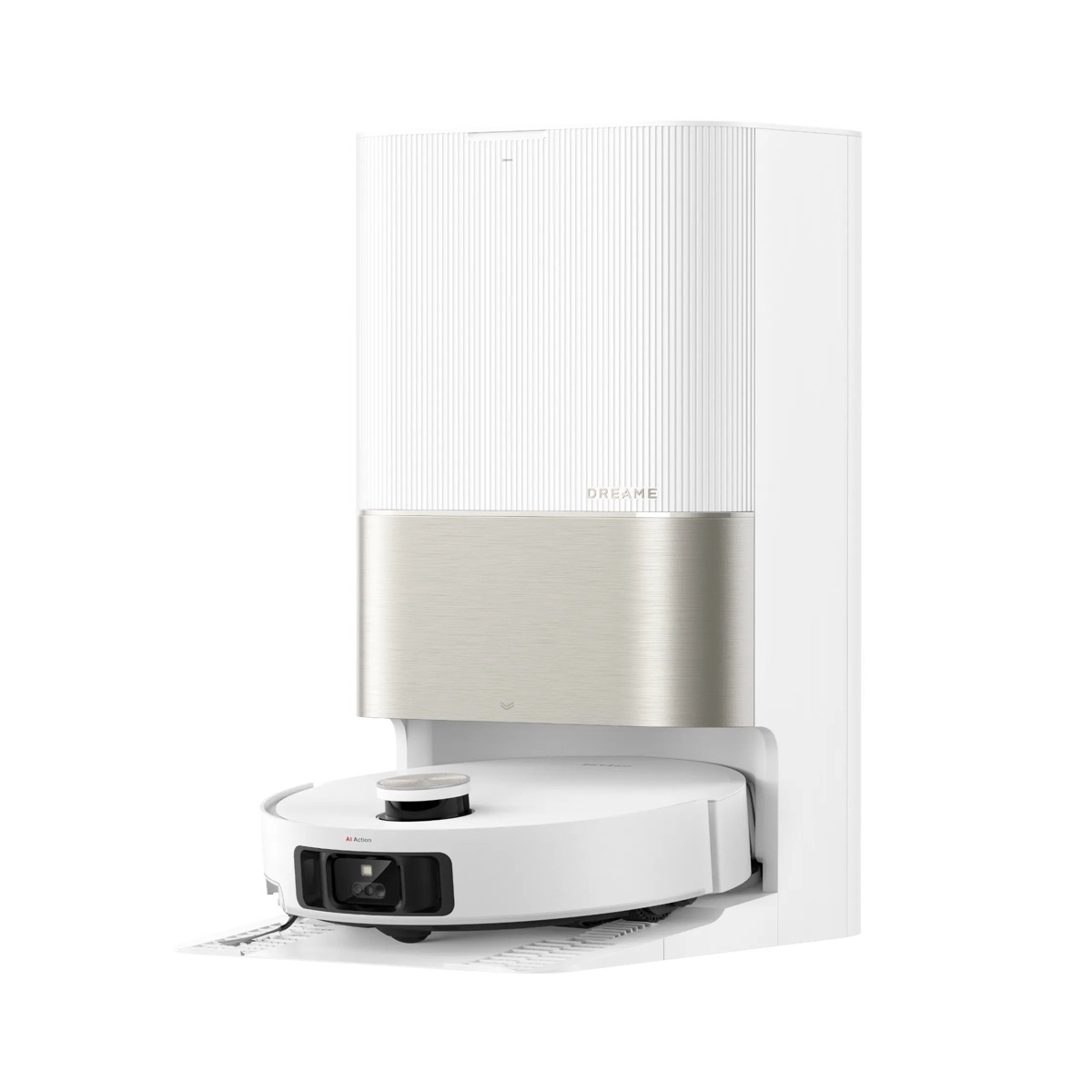
The X50 Ultra is the 20,000Pa flagship that Dreame discounted hard once the X60 Ultra launched. It is now sitting around $1,599.99 (down from $1,599.99), which makes it one of the best value buys in the category — and a perfect case study in why you should not pay extra for "35,000Pa."
In Vacuum Wars testing, the X50 Ultra hits about 82% carpet deep-clean in Max mode. The X60 Ultra at 35,000Pa hits 89%. That is a real difference, but it is a 7-percentage-point difference for a $600+ price gap. If your floors are mostly hard surface with one or two area rugs, the X50 Ultra cleans them indistinguishably from the X60 Ultra in single-pass tests.
This is the pick if you want "flagship-tier suction without paying flagship price." It also has the same anti-tangle brush, similar mop pressure, and the same Dreame app as the X60 Ultra.
Pros: Flagship-grade suction at mid-range price, anti-tangle brush, mature Dreame app, frequent sale price.
Cons: Lacks the 14N mop pressure of the X60 Ultra, no hot-water wash on most variants, X60 Ultra is genuinely better on thick carpet.
#8 MOVA S10 — Best Suction Under $200
MOVA S10
The MOVA S10 is 7,000Pa — by far the lowest on this list — and it earned its spot because of one number: price. At $179.99, this is the highest-suction robot vacuum you can buy for under $200, period.
For perspective, 7,000Pa is roughly 3.5x stronger than the average sub-$200 budget robot (most live in the 2,000–3,000Pa range). It will not clean deep carpet the way any of our top 7 picks will. But on hard floors with light to medium rugs, it picks up everything you need it to, and the LiDAR navigation is significantly better than the bump-and-go robots usually found at this price.
This is the answer for "I want the strongest robot vacuum I can get under $200." If you can stretch to {{price:eufy-l60}}, the eufy L60 is a more refined experience. If you cannot, the S10 wins this tier.
Pros: 7,000Pa is exceptional for under $200, LiDAR navigation is a budget-tier rarity, anti-tangle V-shape brush.
Cons: No omni dock (manual emptying), basic app, struggles on thick carpet.
Advertised Pa vs Real-World Cleaning
This is the table that should change how you shop. We pulled advertised Pa ratings from each brand's spec page and matched them against Vacuum Wars' independent carpet deep-clean percentage — the single most predictive lab test for real-world suction performance.
| Model | Advertised Pa | Carpet Deep-Clean % | Pa Inflation Score* |
|---|---|---|---|
| Dreame X60 Ultra | 35,000Pa | 89% | 1.00 (baseline) |
| Roborock Saros 20 | 35,000Pa | 87% | 1.02 |
| Roborock Saros 10R | 22,000Pa | 88% | 0.63 (best ratio) |
| Narwal Flow 2 Ultra | 30,000Pa | 85% | 0.89 |
| MOVA Mobius 60 | 30,000Pa | 80% | 0.94 |
| Roborock Qrevo Curv | 18,500Pa | 86% | 0.54 (best ratio) |
| Dreame X50 Ultra | 20,000Pa | 82% | 0.61 |
| MOVA S10 | 7,000Pa | 64% | 0.27 |
*Pa Inflation Score = (Advertised Pa ÷ X60 Ultra's 35,000) ÷ (this model's Carpet % ÷ X60 Ultra's 89%). Lower is better — it means the brand promised less Pa than they delivered in real cleaning. The Saros 10R and Qrevo Curv are the best deals on this list precisely because their Pa number under-promises and their cleaning over-delivers.
What this tells you:
- 22,000Pa Saros 10R cleans within 1% of 35,000Pa Dreame X60 Ultra on the only test that matters.
- 18,500Pa Qrevo Curv cleans within 3% of 35,000Pa Saros 20 — at less than half the price.
- 30,000Pa Mobius 60 cleans 9 points worse than the Pa numbers suggest — still good, just not "30,000Pa good."
- 7,000Pa is a real floor. Below that, you start losing meaningful pickup.
The 4 Tricks Behind Inflated Pa Numbers
After three years of watching Pa ratings climb from 6,000 to 40,000+, here are the specific marketing tricks brands use to inflate the number.
Trick 1: Pa is measured at the brush head, not at the surface.
The official Pa rating is taken with a pressure gauge sealed directly to the suction inlet, motor at max RPM. By the time air reaches the actual floor through a brush roller cavity, the effective pressure drops 40–60%. Two robots with the same Pa rating can deliver wildly different effective suction depending on the brush cavity design.
Trick 2: Pa is peak pressure, not sustained airflow.
Picking up dirt requires moving air — measured in cubic feet per minute (CFM) or kPa (kilopascals of measured airflow). Pa rating tells you nothing about CFM. A 35,000Pa robot can move less air per second than a 22,000Pa robot with a wider intake port. This is why Vacuum Wars publishes airflow measurements in kPa, not Pa rating: they are testing what actually picks up dirt.
Trick 3: Pa is only achievable in Max mode, which destroys battery life.
Most "30,000Pa+" robots only reach that number when explicitly switched to Max suction mode. Max mode drains battery roughly 2.5–3x faster than Standard mode. On the Dreame X60 Ultra, sustained Max runtime is ~25 minutes — not enough for a single full clean of a 2,500 sq ft home. So the headline Pa number describes a mode you can rarely actually use end-to-end.
Trick 4: Pa measurement standards are not regulated.
Unlike noise (dB), wattage (W), or battery capacity (mAh) — which have international measurement standards — there is no IEC or ISO standard for how Pa should be measured on a robot vacuum. Each brand can choose its own test conditions (chamber size, gauge type, motor RPM, even temperature). When Dreame jumped from 20,000Pa to 35,000Pa in one product cycle, the motor did not improve by 75%; the testing method shifted.
The result: Pa numbers in 2026 marketing are roughly analogous to the "peak power" wattage that bookshelf speakers used to print on their boxes in the 1990s. Loosely correlated to real performance, mostly a marketing exercise.
At What Pa Does More Stop Mattering?
Based on cross-referencing Vacuum Wars airflow data, RTINGS pickup scores, and our own observations across the 8 picks here:
| Pa Range | What This Actually Means |
|---|---|
| Under 3,000Pa | Too weak for anything except light surface debris on hard floors. Skip. |
| 3,000–6,000Pa | Budget tier. Picks up most hard-floor debris in one pass. Struggles on carpet. |
| 6,000–10,000Pa | Mid-range. Good hard floor, acceptable low-pile carpet. (eufy X10 Pro Omni lives here at 8,000Pa.) |
| 10,000–15,000Pa | The sweet spot. Most flagships from 2024 lived here. Real cleaning is excellent. |
| 15,000–22,000Pa | Diminishing returns begin. Saros 10R at 22,000Pa cleans within 1% of the 35,000Pa flagships. |
| 22,000–35,000Pa+ | Marketing zone. Extra Pa helps only on thick deep-pile carpet. For 90% of homes, you are paying for a number on a box. |
The honest answer: buy whatever has good cleaning data and a Pa rating above 15,000. Everything above that is bonus marketing, not bonus cleaning.
Who Should Buy What
- You read this whole guide and care about real cleaning → Roborock Saros 10R at $1,599.99. The Pa number under-promises, the cleaning over-delivers, the app is the best.
- You want the biggest spec-sheet number AND the cleaning → Dreame X60 Ultra at $1,499.99 for thick carpet, or Roborock Saros 20 at $1,389.99 for better navigation.
- You want the best mopping with serious suction → Narwal Flow 2 Ultra at $1,499.
- You want 30,000Pa without paying $1,500+ → MOVA Mobius 60 at $1,299.
- You have thick deep-pile carpet → Roborock Qrevo Curv at $1,099.99. AdaptLift chassis matters more than Pa here.
- You want flagship-grade suction on a budget → Dreame X50 Ultra at $1,599.99.
- You have under $200 to spend → MOVA S10 at $179.99. The strongest sub-$200 suction we have tested.
The Verdict
If you only remember one thing from this guide: the strongest robot vacuum on paper is not the same as the strongest robot vacuum on your floor. The Pa number on the box is a marketing tool, not a cleaning prediction.
Our pick for the strongest real-world suction is the Roborock Saros 10R at $1,599.99 — 22,000Pa that cleans within 1% of the 35,000Pa flagships, in a robot that runs quieter, lasts longer in Max mode, and ships with the best app in the category.
If you want the biggest advertised Pa number in a flagship that also backs it up where it matters most (thick carpet), buy the Dreame X60 Ultra at $1,499.99.
And if you are shopping by Pa at all, do yourself a favor and never pay extra for anything above 22,000Pa unless you also need the smart features, mop pressure, or design refinements that happen to come with it. Past 15,000Pa, you are buying everything else — not buying cleaning.
Alternatives to Consider
If none of these 8 picks fit your situation, three more worth shortlisting:
Roborock Qrevo Edge — $999.99 — 8.4/10
18,500Pa with the same AdaptLift chassis as the Qrevo Curv, slimmer profile.
Roborock S8 MaxV Ultra — $1,799.99 — 9.0/10
The previous-gen Roborock flagship at 10,000Pa — proof that "lower Pa" robots from 2024 still clean fantastically.
Yeedi M14 Plus — $1,199.99 — 8.0/10
18,000Pa at a sub-$500 price. Best Pa-per-dollar in the budget tier.
Frequently Asked Questions
Is 30,000Pa really better than 22,000Pa in a robot vacuum?
Only on thick deep-pile carpet, and only by a few percentage points in independent testing. On hard floor and low-pile carpet, the difference is within margin of error. The 22,000Pa Roborock Saros 10R cleaned within 1% of the 35,000Pa Dreame X60 Ultra in Vacuum Wars carpet testing. Past 15,000Pa, brush design and airflow matter more than peak Pa.
What is the highest-Pa robot vacuum you can actually buy in 2026?
Several models claim 35,000Pa or higher, including the Dreame X60 Ultra, Roborock Saros 20, and Roborock Saros 10. A few brands list 40,000Pa+, but none have passed independent retesting — those numbers appear to use proprietary measurement methods that inflate the result.
How is Pa measured on a robot vacuum, and is it standardized?
Pa is measured by sealing a pressure gauge to the suction inlet with the motor at maximum RPM. It is not standardized. Unlike noise (dB) or wattage (W), there is no IEC or ISO standard for robot vacuum suction measurement. Each brand uses its own chamber size, gauge type, and test conditions, which is why the same robot can be rated 22,000Pa by one manufacturer and 35,000Pa by another using different methods.
Does higher Pa drain the battery faster?
Yes — significantly. Most "30,000Pa+" robots only reach their peak suction in Max mode, which drains the battery roughly 2.5–3x faster than Standard mode. The Dreame X60 Ultra sustains Max mode for about 25 minutes; the Saros 10R sustains its equivalent for about 52 minutes. If you plan to clean a large home in one cycle, sustainable suction matters more than peak Pa.
What is the minimum Pa I should look for in 2026?
For decent cleaning across mixed floors, 6,000–8,000Pa is the practical floor. Below 3,000Pa, you will struggle on anything beyond light surface debris. Above 15,000Pa, you are mostly buying marketing — the cleaning gains are very small. The sweet spot for value is 15,000–22,000Pa from a brand with strong independent testing scores.