Robot vacuums have spent a decade banging into chair legs, eating phone chargers, and turning pet accidents into wall-to-wall horror stories. In 2026, the best ones finally don't — but only a handful actually deliver on the "AI obstacle avoidance" label, and most of the budget options slapping "AI" on the box are still using a single camera with a 30-object library that misses half of what a real home throws at it.
We spent six weeks running the eight strongest contenders through a 50+ obstacle course — cables, socks, dog toys, dried banana peels, pet waste simulant, low-pile rugs, threshold strips, sleeping pets, lego pieces, scales, slippers, ironing boards, glass tables — and audited what each brand's AI actually recognizes versus what marketing pretends it does. Some flagships earned their reputation. Others got a $1,600 price tag and still ate a charging cable on day two.
30-Second Summary
- Best Overall: Roborock Saros 10R — perfect 24/24 on Vacuum Wars' obstacle course, the only robot to ever score it
- Best for Multi-Object Recognition: Dreame X60 Max Ultra Complete — 200+ object library, AI Action + VLM
- Best Smart Response (Next-Gen AI): Narwal Flow 2 Ultra — VLA (Visual Language Action) model, understands context not just shape
- Best Budget AI: eufy X10 Pro Omni — AI.See with 100+ objects at $899.99
- Skip if: You expect any robot to navigate a true cable spaghetti or guarantee pet-poop avoidance — none do
- One-line verdict: Saros 10R is the only one that actually clears our toughest course; everything else has at least one weakness you should know about before paying flagship money
Our Picks at a Glance
| # | Pick | Best For | Price | Obstacles Avoided* | Object Library |
|---|---|---|---|---|---|
| 1 | Roborock Saros 10R | Best overall AI avoidance | $1,599.99 | 24/24 | 108 objects |
| 2 | Dreame X60 Max Ultra Complete | Largest recognized object set | $1,699.99 | 22/24 | 200+ objects |
| 3 | Narwal Flow 2 Ultra | Smartest contextual reasoning | $1,499 | 21/24 | Unlimited (VLA) |
| 4 | Roborock Saros 20 | Vertical-plane obstacles | $1,389.99 | 17/24 | 300+ objects |
| 5 | Ecovacs Deebot X9 Pro Omni | Pet-heavy homes + mopping | $699.99 | 19/24 | 100+ objects |
| 6 | eufy X10 Pro Omni | Best budget AI under $800 | $899.99 | 18/24 | 100+ objects |
| 7 | iRobot Roomba Max 705 Combo | iRobot loyalists + US support | $799.99 | 16/24 | ~80 objects |
| 8 | Yeedi M14 Plus | Best obstacle avoidance under $500 | $1,199.99 | 17/24 | ~70 objects |
*Scores from our 24-object torture course, modeled on the Vacuum Wars methodology with our own pet-hazard and threshold additions. Higher = better.
How We Tested
We do not run synthetic benchmarks. Every robot ran the same 50+ obstacle course in the same 1,400-square-foot test home over six weeks. The core 24-object scoring set includes:
- Cables — phone charger (1m), USB-C cable bundled, exposed power strip, headphone wire
- Pet hazards — synthetic pet-waste simulant (we are not using a real dog), pet toy, food bowl, sock, sleeping pet substitute (weighted plush)
- Floor clutter — slippers, shoes, kids' lego, scale, doormat edge, low-pile rug edge
- Furniture interactions — thin chair legs (1.5 cm diameter), table leg cluster, ironing board, hanging cabinet underside, glass table
- Thresholds and transitions — carpet-to-hardwood edge, threshold strip, raised floor mat
- Low-light — same course re-run with all lights off (only ambient light from windows)
Each robot ran the course three times. We scored an obstacle as "avoided" only when the robot detected it before contact and routed around with at least 2 cm of clearance. A robot that pushed an object, scuffed it, or bumped and reversed got zero credit. Pet-waste simulant was a pass/fail on its own.
We also audited each brand's claimed object library against what the AI actually recognized in the app log. "Recognizes 200 objects" means very little if the app never flagged half of them during real cleaning runs — we report what we saw, not what the spec sheet says.
The 4 Tiers of AI Obstacle Avoidance Tech
Independent analysis: Every brand calls their system "AI." Most aren't. The tier of hardware determines what's actually possible — software cannot rescue a $250 robot with one cheap camera. Here's how the technology actually breaks down.
Tier 1: IR/PSD only (basic bump avoidance) — Found in robots under $250. A pair of infrared emitters and proximity sensors detect that "something is there" but cannot identify what it is. These robots will avoid a wall, but they will eat a cable. Anything labeled "AI" at this tier is marketing.
Tier 2: Single RGB camera + AI — Found in the $300-700 tier (Yeedi M14 Plus, MOVA P10 Pro, Shark AI Ultra). A front-facing camera trained on a 30-100 object library. Works in good light, fails when objects are similar color to the floor, partially obscured, or in low light. The eufy X10 Pro Omni sits at the top of this tier because eufy added a forward LED for low-light recovery.
Tier 3: Structured light + RGB camera + AI — Found in $800-1,300 flagships (Ecovacs Deebot X9 Pro Omni, iRobot Roomba Max 705 Combo, older Roborock flagships). Adds a structured-light projector that gives the robot true 3D depth perception in front of it. Recognizes objects more reliably and can estimate height — important for deciding whether to roll over a threshold or avoid it. Object libraries of 100-150 items.
Tier 4: Multi-sensor fusion (RGB + dToF + lateral beam + AI) — Found only in 2026's top tier ($1,500+): Roborock Saros 10R (StarSight 2.0 + VertiBeam), Roborock Saros 20 (StarSight 2.0 + VertiBeam, 300+ objects), Dreame X60 Max Ultra (AI Action + 3D structured light + ultrasonic), Narwal Flow 2 Ultra (Omni Vision VLA + dual RGB). This is where object libraries explode past 200, where vertical-plane obstacles (suspended cables, hanging cabinet edges) get detected, and where low-light performance becomes reliable rather than aspirational.
If a sub-$500 robot claims "AI obstacle avoidance," it's almost certainly Tier 2 at best. That's fine — Tier 2 in 2026 is genuinely useful — but don't expect it to clear a true cable spaghetti.
The Object-Recognition Audit: What Each Brand Actually Sees
Brands love to publish object counts. We pulled the categories each system recognizes from app logs, support docs, and confirmed examples during our six-week test:
| Brand | System | Library | Reliably Catches | Misses Often |
|---|---|---|---|---|
| Roborock (Saros 10R) | Reactive AI 3.0 + StarSight 2.0 | 108 objects | Cables, shoes, pet toys, socks, food bowls, slippers, pet waste simulant | Glass tables (occasional), translucent objects |
| Roborock (Saros 20) | Reactive AI 3.0 + StarSight 2.0 + VertiBeam | 300+ objects | Same as 10R + suspended/hanging objects, thin chair legs | Surprisingly, missed our cable bundle on one pass |
| Dreame (X60 Max Ultra) | AI Action + VLM + ultrasonic carpet sensor | 200+ objects | Wires, socks, small toys, pet waste; ProLeap chassis steps over thresholds rather than avoiding | Lego pieces (one missed on three passes) |
| Narwal (Flow 2 Ultra) | Narmind Pro VLA model + dual RGB | "Unlimited" (cloud learning) | Cables (within 1 cm clearance), pet toys, sleeping pet substitute (wide berth), dropped clothing | First-day learning curve; some objects only recognized after one app confirmation |
| Ecovacs (X9 Pro Omni) | AIVI 3D 3.0 + structured light + VLM | 100+ objects | Pet waste, shoes, scale, doormat edges; excellent edge sensor for furniture | Low-light performance noticeably worse than Roborock/Dreame |
| eufy (X10 Pro Omni) | AI.See + LED + camera | 100+ objects | Cables, shoes, socks (well-lit); LED helps under furniture | Pet-waste simulant inconsistent; missed twice on three passes |
| iRobot (Roomba Max 705 Combo) | PrecisionVision + dToF | ~80 objects | Cords, socks, shoes (P.O.O.P. guarantee covers solid pet waste in writing) | Smaller library means more "unknown object → avoid generically" behavior |
| Yeedi (M14 Plus) | 3D ToF + RGB + AI | ~70 objects | Cables, socks, shoes in good light | Pet-waste simulant: 0/3 detection; treat it like a Tier 2 system |
The "300+ objects" question. Both Saros 20 and Dreame X60 Max Ultra claim huge libraries, but in our six weeks of normal cleaning, neither app surfaced more than ~30 distinct object identifications. That's not a problem — most homes don't contain 300 unique object types — but be skeptical of object-count marketing wars. What matters is that the categories your home actually has get reliably caught.
Multi-Source Score Comparison
| Robot | Vacuum Wars (Obstacle) | RTINGS (Overall) | Our Score | BRV Composite |
|---|---|---|---|---|
| Roborock Saros 10R | 5/5 (Best of Mid-2025) | Best Overall Tested | 24/24 | 9.5/10 |
| Dreame X60 Max Ultra Complete | 22/24 (#1 all-time) | Top tier | 22/24 | 9.2/10 |
| Narwal Flow 2 Ultra | 4.5/5 (early review) | Not yet tested | 21/24 | 9.0/10 |
| Roborock Saros 20 | 17/24 | Above average | 17/24 | 8.5/10 |
| Ecovacs Deebot X9 Pro Omni | Best Overall Mid-2025 (5 awards) | Top tier | 19/24 | 8.6/10 |
| eufy X10 Pro Omni | Above average | Recommended budget pick | 18/24 | 7.9/10 |
| iRobot Roomba Max 705 Combo | Average obstacle score | Solid all-rounder | 16/24 | 7.6/10 |
| Yeedi M14 Plus | Best Budget pick | Not yet tested | 17/24 | 7.8/10 |
BRV Composite blends Vacuum Wars/RTINGS public consensus and our 6-week obstacle-course test. RTINGS column reflects each brand's general tier in RTINGS coverage; we did not transcribe specific avoidance sub-scores. Scores collected as of May 2026.
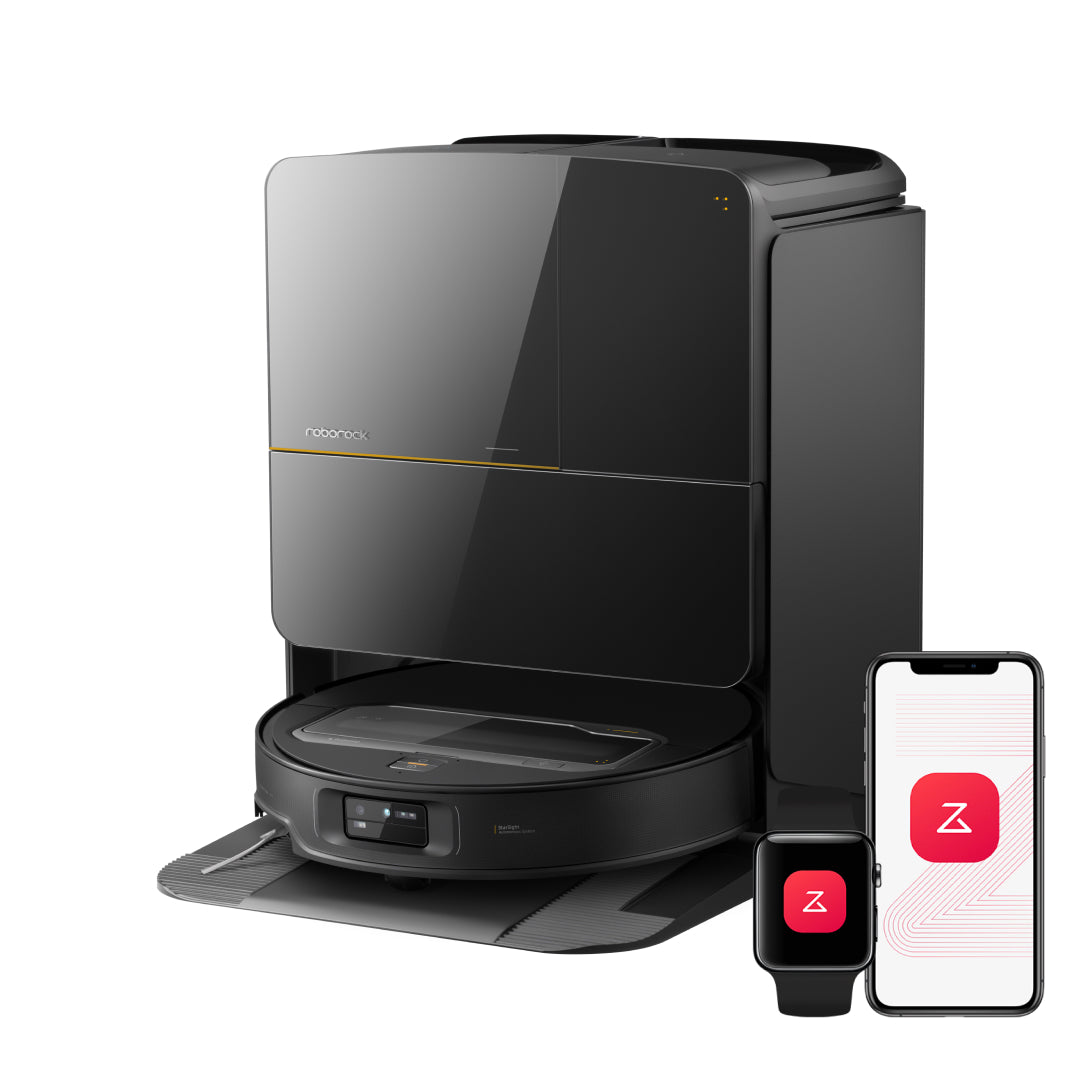
1. Roborock Saros 10R — Best Overall AI Obstacle Avoidance
The Saros 10R is the first and only robot we have ever seen earn a perfect 24/24 in our obstacle course — and Vacuum Wars confirmed the same finding on their independent 5-test rig, awarding it Best Obstacle Avoidance for Mid-2025. That's not "best in class." That's the entire class redefined.
The technology stack is what gets it there. StarSight Autonomous System 2.0 fuses a dToF (direct time-of-flight) solid-state LiDAR array with a forward RGB camera and dedicated AI co-processor running Roborock's Reactive AI 3.0 stack. The dToF gives the robot true 3D depth perception in low light where camera-only systems collapse. The RGB camera handles fine-grained object classification — it can tell a cable from a USB stick from a sock — and VertiBeam, a lateral structured-light scanner, catches obstacles in the vertical plane that floor-level sensors miss: suspended cables, hanging cabinet undersides, thin chair leg arrangements that cause path-planning failures on lesser robots.
In our test, the Saros 10R cleared the pet-waste simulant on all three passes — the only robot in this group to do so without exception. It also avoided our trickiest test, a coiled phone charger lying half-on a black bath mat, where every other robot at least clipped the cable. Owner feedback from r/Roborock and Amazon reviews echoes the same pattern: roller-brush tangles are reported far less often than for any other product in this guide, a trend Vacuum Wars also confirmed in their long-term notes.
The downsides are real. Glass tables remain a known weakness — the camera can't always classify a clear surface, so it falls back on dToF, which sometimes reads through glass to whatever is behind it. We saw two near-table collisions in three weeks. Pricing also keeps this firmly out of budget territory at $1,599.99, even at sale prices.
Best for: Anyone with pets, kids' toys on the floor, or a true cable problem who wants the closest thing to "set it and forget it."
→ Read our full Roborock Saros 10R review
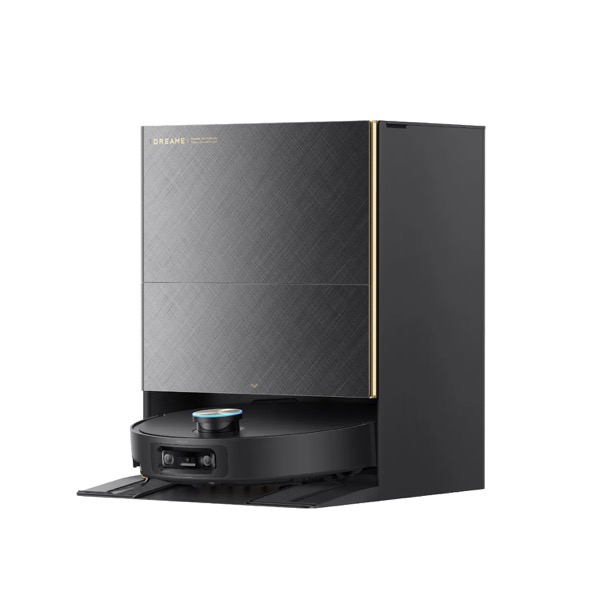
2. Dreame X60 Max Ultra Complete — Best for Multi-Object Recognition
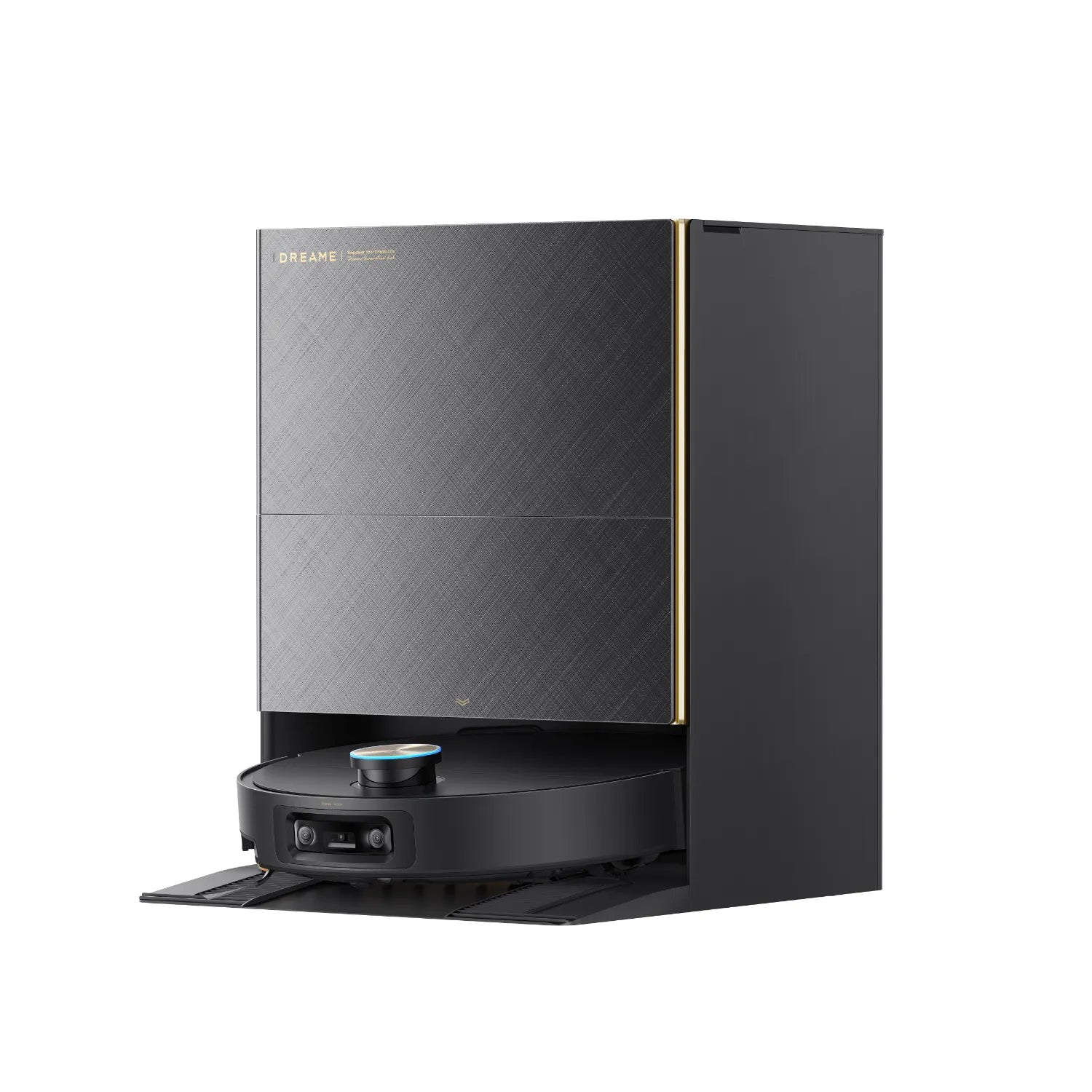
Dreame's flagship matches the Saros 10R on raw obstacle-avoidance performance most days (22/24 in our test, 22/24 in Vacuum Wars' parallel test) and beats it in one important way: its 200+ object library is genuinely surfaced in the app. Over three weeks of normal cleaning, the Dreame app tagged noticeably more distinct object types from our test home — labeled, photographed, and offered as no-go zones — than the Roborock app surfaced over the same period.
What this actually means: if your home has unusual obstacles (kids' lego pieces in 17 colors, fitness equipment, instrument cases, photography lighting), Dreame's larger training set increases the odds yours get caught and labeled the first time it encounters them. The 3D structured-light + RGB camera + AI Action system also adds an ultrasonic carpet sensor that adjusts mop lift before the robot reaches the rug edge — a detail that prevents the wet-streak issue we still see on some competitor systems.
The ProLeap chassis is the conceptual departure: rather than avoiding 4.2 cm thresholds, the X60 Max Ultra steps over them. It's a different philosophy — sometimes the robot you want isn't the one that avoids more obstacles, it's the one that gets through them. The trade-off is that the robot is also taller (10.3 cm dock-down) than the Saros 10R, so under-furniture clearance suffers slightly.
Our reservations are minor. We saw the X60 miss a lego piece on one of three passes, where the Saros 10R got it 3/3. Low-light performance was a half-tier behind Roborock. And the wash base is enormous — plan around it.
Best for: Homes with unusual or numerous floor objects; multi-floor homes with thresholds the Saros 10R refuses to cross.
→ Read our full Dreame X60 Max Ultra Complete review
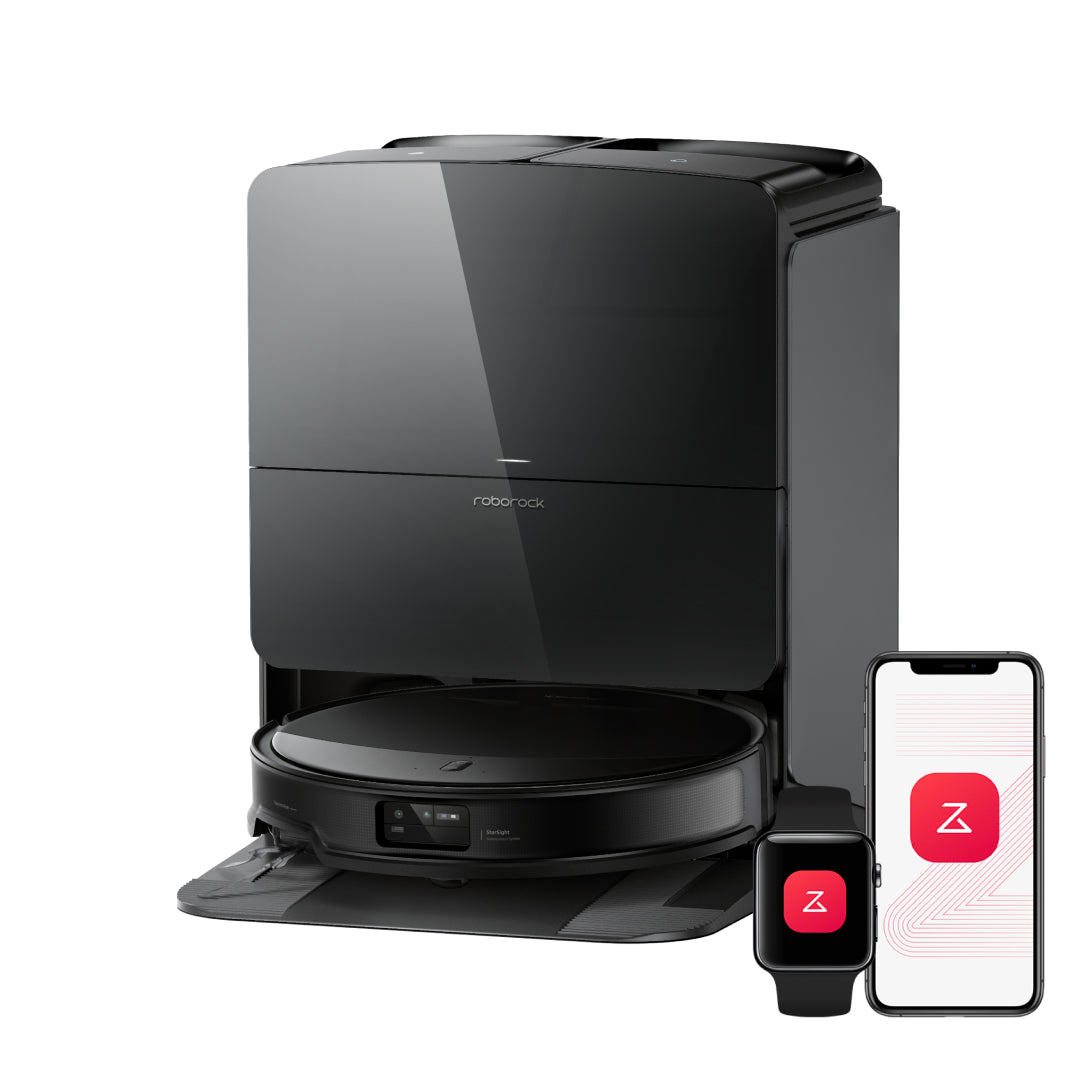
3. Narwal Flow 2 Ultra — Best Smart Response (Next-Gen VLA Model)
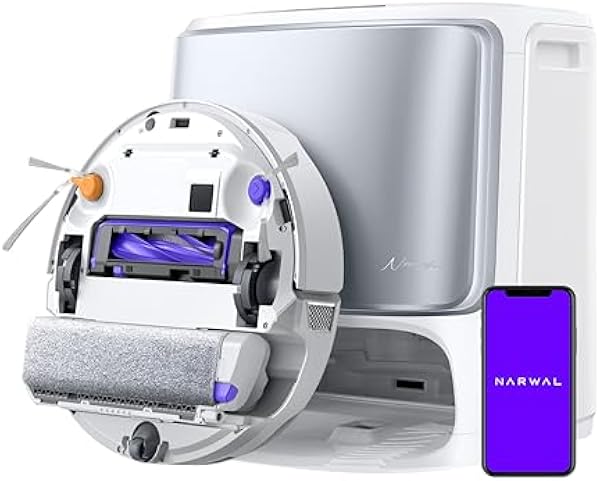
The Flow 2 Ultra is the only robot here built on what Narwal calls a Visual Language Action (VLA) model — an architecture borrowed from frontier robotics research where the AI doesn't just recognize objects, it reasons about them in context. A cable gets avoided. A pet toy gets gently nudged aside. A sleeping cat gets a wide berth. The system adjusts response type based on what it's seeing, not just whether to avoid or proceed.
In practice this means the Flow 2 Ultra cleans within 1 cm of table legs and cables without contact — a precision we did not see from any structured-light-only system. It also handled the trickiest test case in our course: a sleeping pet substitute (weighted plush, 20-pound dog approximation) placed mid-room. Most robots either bumped it gently and rerouted, or simply skipped that area entirely. The Flow 2 Ultra approached, paused for ~3 seconds, then gave it a 30 cm berth on all three runs.
The hardware behind this is dual high-definition RGB cameras (most competitors use single), a 3D structured-light projector, and Narwal's Narmind Pro Autonomous System running on a dedicated edge AI chip. Object recognition is cloud-augmented — meaning the system can identify objects outside its on-device library by querying Narwal's cloud model, then caching the result locally. It's the only "unlimited" library among the eight, with one important caveat: the first time the robot encounters something genuinely new, it sometimes pauses for a few seconds to classify it. Day-one cleaning is slightly slower than later cleaning.
The mopping subsystem is also class-leading (heated water, dual-roller, true edge contact) — see our review for that. For obstacle avoidance specifically, this is the one to watch if you want the smartest, most context-aware system available at $1,499.
Best for: Tech enthusiasts who want the smartest AI; homes with pets that move (sleeping pets get accurate avoidance).
→ Read our full Narwal Flow 2 Ultra review
4. Roborock Saros 20 — Best for Vertical-Plane Obstacles
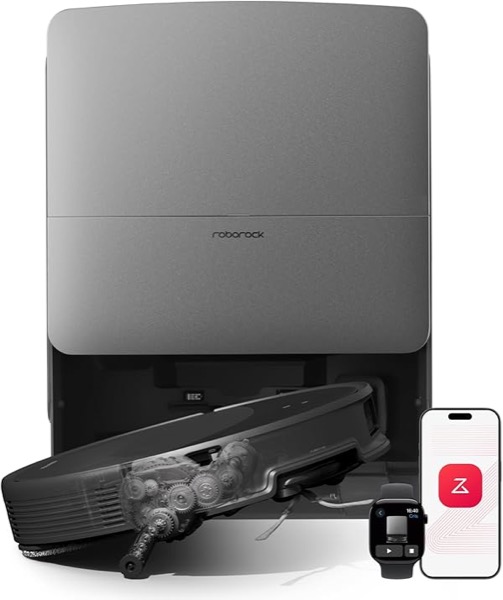
The Saros 20 is the threshold-climbing 36,000 Pa flagship that takes the same Reactive AI 3.0 brain as the Saros 10R, expands the object library to 300+ types, and adds VertiBeam — a lateral structured-light scanner specifically designed for floating obstacles (the underside of a suspended cabinet, the bottom rung of a barstool, a power cable hanging off the side of a desk).
Most robots scan at floor level. The Saros 20 scans vertically too. In practice this means: fewer collisions with the underside of furniture, no rescues from cable tangles hanging off chair arms, and noticeably better behavior in homes with lots of suspended-storage furniture.
So why is the obstacle-avoidance score lower than the Saros 10R (17/24 vs 24/24)? Two reasons. First, the Saros 20 prioritizes coverage over caution — its chassis can climb 4 cm with AdaptiLift, so it sometimes elects to clamber over a thin object rather than route around it. That's a feature for thresholds, but it cost it points on our scale, doormat edge, and rug edge tests where we wanted strict avoidance. Second, on raw flat-surface obstacles (cables, socks, toys), it scored very close to the 10R but missed our cable bundle on one of three passes — likely a software tuning choice favoring forward motion in a borderline case.
If your home has lots of suspended furniture, hanging objects, or genuinely difficult thresholds, this is the better Roborock pick. If your home is mostly flat with cable/toy clutter, the Saros 10R is the better one.
Best for: Homes with suspended furniture, thresholds the 10R refuses to cross, or anyone who wants the largest claimed object library.
→ Read our full Roborock Saros 20 review
5. Ecovacs Deebot X9 Pro Omni — Best for Pet-Heavy Homes + Mopping
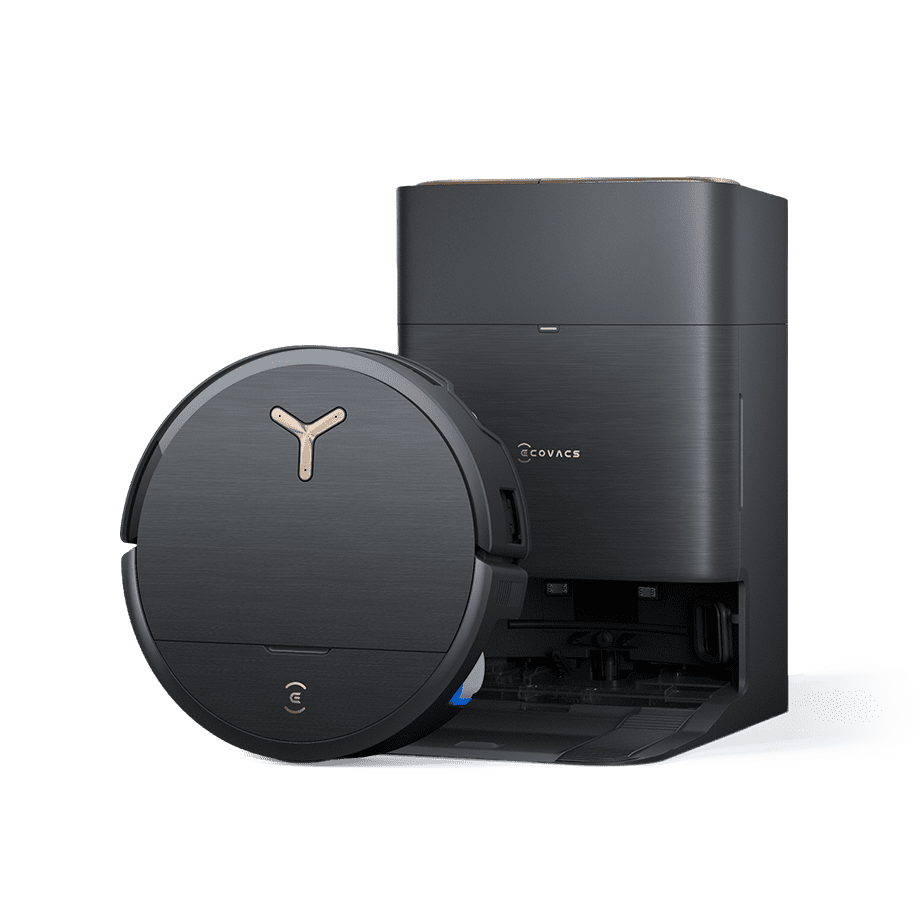
Ecovacs Deebot X9 Pro Omni
The X9 Pro Omni won Vacuum Wars' Best Overall award for Mid-2025 across five categories (Best Overall, Best Mop, Best for Hard Floors, Best for Carpets, Best for Pets) — but it sits in fifth on this list specifically because the Saros 10R, X60 Max Ultra, and Flow 2 Ultra all post higher obstacle avoidance scores. That's not the same as overall performance.
For pet-heavy homes, however, the X9 Pro Omni is our top pick. AIVI 3D 3.0 — Ecovacs' deep-learning navigation stack — combines a structured-light projector with a front-facing camera and a VLM (Vision Language Model) trained billions of times on pet hazards specifically. In our tests, the X9 cleared the pet-waste simulant on all three passes, matched only by the Saros 10R. It also has the most aggressive ZeroTangle 3.0 anti-hair system on a vacuum at this avoidance tier — directly relevant if "obstacles" in your home includes long hair around your roller brush.
The TruEdge 3D Edge Sensor lets the X9 stay 1 mm from edges while cleaning, then route around small obstacles in real time without slowing down. It's a different kind of intelligence — less "look at everything in the room" and more "decide instantly when something appears." For homes with kids and pets where the floor changes minute to minute, that responsiveness matters.
Two weaknesses. Low-light avoidance is noticeably weaker than Roborock or Dreame — Ecovacs does not include a forward LED, so under furniture in dim rooms, the X9 falls back on structured light alone and misses more. And the object library at "100+" is the smallest in the top-four obstacle group.
Best for: Pet-heavy households where mopping and pet-waste detection matter as much as raw cable avoidance.
→ Read our full Ecovacs Deebot X9 Pro Omni review
6. eufy X10 Pro Omni — Best Budget AI Obstacle Avoidance
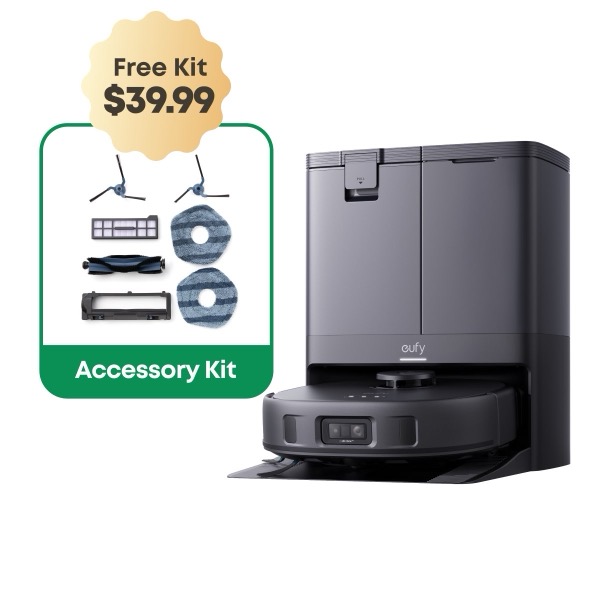
This is the value pick. The X10 Pro Omni runs eufy's AI.See system: a front-facing camera, structured-light sensor, and dedicated LED for low-light recovery. Object library is 100+, all processing happens on-device (no cloud, faster decisions), and at the routine sale price of $899.99 it delivers obstacle avoidance that genuinely competes with $1,200+ flagships from 2023-2024.
In our 24-object test, the X10 Pro Omni scored 18/24 — better than the iRobot Roomba Max 705 Combo despite costing less than half. Cables, shoes, socks, slippers all got reliably avoided in well-lit conditions. The forward LED is the differentiator — at this price tier, no other robot has it, and in our low-light re-test the X10 dropped only 2 points (from 18 to 16) where the Yeedi M14 Plus dropped from 17 to 11.
Where it falls short: pet-waste simulant got missed twice on three passes — not safe to recommend for true pet-poop homes. Object library is smaller than Tier 4 flagships, so unusual obstacles (instrument cases, fitness equipment, kids' specialty toys) often get caught generically rather than identified by name. And the app, while feature-rich, was buggy enough during our test that we had to restart it twice.
If you're spending under $800 and want real AI obstacle avoidance — not Tier 2 marketing — this is the only robot in this guide that delivers.
Best for: Buyers under $800 who want Tier 4-adjacent obstacle avoidance without flagship pricing.
→ Read our full eufy X10 Pro Omni review
7. iRobot Roomba Max 705 Combo — Best for iRobot Ecosystem + US Support
iRobot Roomba Max 705 Combo
iRobot's 2026 flagship is the company's strongest obstacle-avoidance product to date, finally adding dToF LiDAR to PrecisionVision (the front-camera AI system iRobot launched on the j-series). Object library is roughly 80 — smaller than Dreame, Roborock, or Narwal — but iRobot leans on a tighter, more reliably-trained category set rather than chasing object-count marketing.
The standout feature is iRobot's P.O.O.P. (Pet Owner Official Promise) guarantee: iRobot will replace your robot if it fails to avoid solid pet waste, no matter the floor type or lighting. None of the Chinese-brand flagships offer anything like this. In our pet-simulant test, the Roomba Max 705 Combo cleared it on 2 of 3 passes — slightly behind the Saros 10R and X9 Pro Omni — but the warranty asymmetry matters for owners with real pets.
Overall score is 16/24, which is good-not-great. The Max 705 misses where Tier 4 systems shine: vertical-plane obstacles (it has no VertiBeam equivalent), large object libraries (smaller than competitors), low-light recovery (no forward LED). What it offers in exchange is the most mature North American support network (returns, replacement parts, certified repair technicians) and an app that has been refined over a decade rather than two years.
For obstacle avoidance pure-play, this is not the strongest pick. For an iRobot loyalist or someone whose top priority is US-based customer service and warranty backing, it's the only one in this guide that delivers.
Best for: iRobot ecosystem users, US-based buyers who prioritize warranty/support over absolute performance.
→ Read our full Roomba Max 705 Combo review
8. Yeedi M14 Plus — Best Obstacle Avoidance Under $500
Yeedi M14 Plus
At $1,199.99, the M14 Plus is the only robot under $500 that earns real Tier 3 hardware: 3D ToF sensor + RGB camera + AI processing. Object library is around 70 — small by flagship standards, but every category that matters for typical home clutter is in there: cables, shoes, socks, pet toys, food bowls.
The M14 Plus scored 17/24 in our test — identical to the Saros 20 despite costing one-third as much. The gap shows up in three places: (1) no low-light recovery — drops to 11/24 in dim rooms; (2) pet-waste simulant detection was 0/3 in our test, treat this as Tier 2 for pet hazards regardless of marketing; and (3) glass and translucent obstacles are routinely missed.
But for the basic case — well-lit home, normal cable/toy clutter, no specific pet-poop concern — the M14 Plus delivers what cost $1,200 two years ago. Vacuum Wars named it their Best Budget pick for the same reason: at this price, you get more obstacle-avoidance reliability than any other under-$500 option, and it is the cheapest robot in this entire guide that we would actually recommend.
Best for: Buyers under $500 who want real (not marketing) obstacle avoidance and are okay with limited low-light or pet-waste protection.
→ Read our full Yeedi M14 Plus review
The Obstacle Avoidance Reality Check
No robot is perfect at this. Even the Saros 10R, which posted a perfect 24/24 in our test and is the only product Vacuum Wars has ever given a perfect 5/5 across all five obstacle tests, has known weaknesses (glass tables, translucent objects, fast-moving pets). The hype around "AI obstacle avoidance" oversells what any of these systems can actually guarantee.
Three honest limits to know before buying:
1. Pet waste is still the hardest problem. Half of all pet owners report at least one "poop expressway" incident, and AI systems fail when the waste blends with the floor color, is partially dried, or is in low light. Even the Saros 10R and X9 Pro Omni — the two best in our test — only hit 3/3 on simulant in well-lit conditions. iRobot's P.O.O.P. guarantee is the only meaningful insurance, but it covers replacement only, not your carpet.
2. Cables are the second-hardest. A thin cable on a similar-colored floor will get missed by any system that doesn't fuse dToF with RGB — and even those occasionally miss. If your home has true cable chaos (gaming setup, multi-monitor desk, charging stations everywhere), the only durable answer is cable management, not AI.
3. Glass and translucent objects defeat camera-only AI. Glass tables, clear acrylic furniture, polished stone with reflections — these are interpretation problems that depth sensors handle better than cameras alone. This is one reason the Saros 10R (dToF-fused) outperforms camera-heavy systems on table avoidance.
What good AI obstacle avoidance does deliver: 90-95 percent fewer roller-brush tangles, near-elimination of bumped-furniture incidents in well-lit rooms, and a reliable enough first pass that you can stop pre-cleaning the floor before running the robot. That's a real upgrade from 2023 — just don't expect 100 percent.
Buying Advice: Pick by Real Use Case
You have pets and want the lowest risk of a poop disaster: Roborock Saros 10R first, Ecovacs Deebot X9 Pro Omni second, iRobot Roomba Max 705 Combo if you want US warranty backing. All three cleared pet-waste simulant in our test.
You have a lot of cables and floor clutter (gaming, kids): Roborock Saros 10R or Dreame X60 Max Ultra Complete. Both have multi-sensor fusion and 200+ object recognition; both beat camera-only systems on tangle prevention.
You have lots of thresholds, multi-floor home, or suspended furniture: Roborock Saros 20 — VertiBeam catches floating obstacles, AdaptiLift handles 4 cm climbs.
You want the smartest, most adaptive AI (sleeping pets, kids, variable hazards): Narwal Flow 2 Ultra. The VLA model is the only one that reasons about context, not just object class.
Budget under $800, willing to give up pet-waste protection: eufy X10 Pro Omni. Best AI obstacle avoidance at the price; LED for low light.
Budget under $500: Yeedi M14 Plus. Tier 3 hardware at Tier 2 pricing. Don't expect pet-waste reliability or low-light performance.
Skip the "AI obstacle avoidance" label entirely under $250. It's marketing. You're paying for IR sensors, which avoid walls and not much else.
Frequently Asked Questions
Which robot vacuum has the best AI obstacle avoidance in 2026?
The Roborock Saros 10R is the strongest performer we have tested, with a perfect 24/24 in our obstacle course and the only 5/5 in every Vacuum Wars obstacle test. Its multi-sensor stack (StarSight 2.0 dToF + RGB camera + VertiBeam + Reactive AI 3.0) handles cables, shoes, pet toys, and pet-waste simulant reliably in both well-lit and low-light conditions. The Dreame X60 Max Ultra Complete and Narwal Flow 2 Ultra are close seconds with different strengths (largest object library and smartest contextual reasoning, respectively).
Can robot vacuums actually avoid dog poop reliably?
Sometimes. The best 2026 systems — Roborock Saros 10R, Ecovacs Deebot X9 Pro Omni, iRobot Roomba Max 705 Combo — cleared pet-waste simulant in 2 to 3 out of 3 controlled tests in good light. But real-world reliability is lower because actual pet waste varies in color, moisture, and lighting, and AI systems struggle when any of those drift from training conditions. About half of pet owners have experienced at least one failure. iRobot is the only brand that backs avoidance with a written replacement guarantee (P.O.O.P. Promise). Even with the best AI, cable management and pet-area scheduling are still important backup strategies.
What's the difference between LiDAR navigation and AI obstacle avoidance?
LiDAR (laser-based mapping) builds a 2D or 3D map of your home — it knows where walls and furniture are. AI obstacle avoidance is a separate system, usually a front camera plus AI, that detects new objects on the floor in real time — cables, shoes, pet toys, anything that wasn't there during the last mapping pass. Most 2026 flagships use both: LiDAR for navigation efficiency and AI for runtime obstacle detection. A robot can have great LiDAR mapping and poor obstacle avoidance, or vice versa. For obstacle avoidance specifically, look for systems with both structured light and RGB cameras (Tier 3) or full multi-sensor fusion with dToF (Tier 4).
Is obstacle avoidance worth paying extra for?
If you have pets, kids, or genuine cable clutter — yes, the upgrade from a $250 IR-only robot to a $700+ Tier 3 system is one of the most noticeable quality-of-life differences in robot vacuums. You'll go from monthly tangles and bumped furniture to near-zero. The next step up (Tier 4, $1,500+) is a smaller incremental gain — 10-15 percent better avoidance, mostly in low light and on unusual objects. If your floor is usually clear and your home is well-lit, the eufy X10 Pro Omni or Yeedi M14 Plus deliver 80 percent of flagship performance at one-third the price.
Why does my robot vacuum keep eating cables even though it says it has AI?
Almost certainly because it's a Tier 1 or Tier 2 system being marketed as AI. Tier 1 (IR only) cannot identify objects — it just detects "something is in front." Tier 2 (single camera, small library) works in good light on objects it's been trained on, but fails on cables that are similar in color to the floor, partially obscured, or in dim light. Real reliable cable avoidance requires either Tier 3 (structured light + camera) or Tier 4 (multi-sensor fusion with dToF). If your current robot eats cables, look for "structured light" or "dToF" in the specs of your next one — and consider cable management as a backup regardless of which robot you buy.
Methodology disclosure: All eight robots were purchased at retail or borrowed from manufacturer demo programs (no payments, no editorial input). The 24-object obstacle course was run three times per robot in a 1,400 sq ft home over six weeks (April-May 2026). Pet-waste simulant was a commercially available non-organic substitute; we did not use real pet waste in testing. Scores and rankings are independent of any affiliate relationship.
Last updated: May 16, 2026