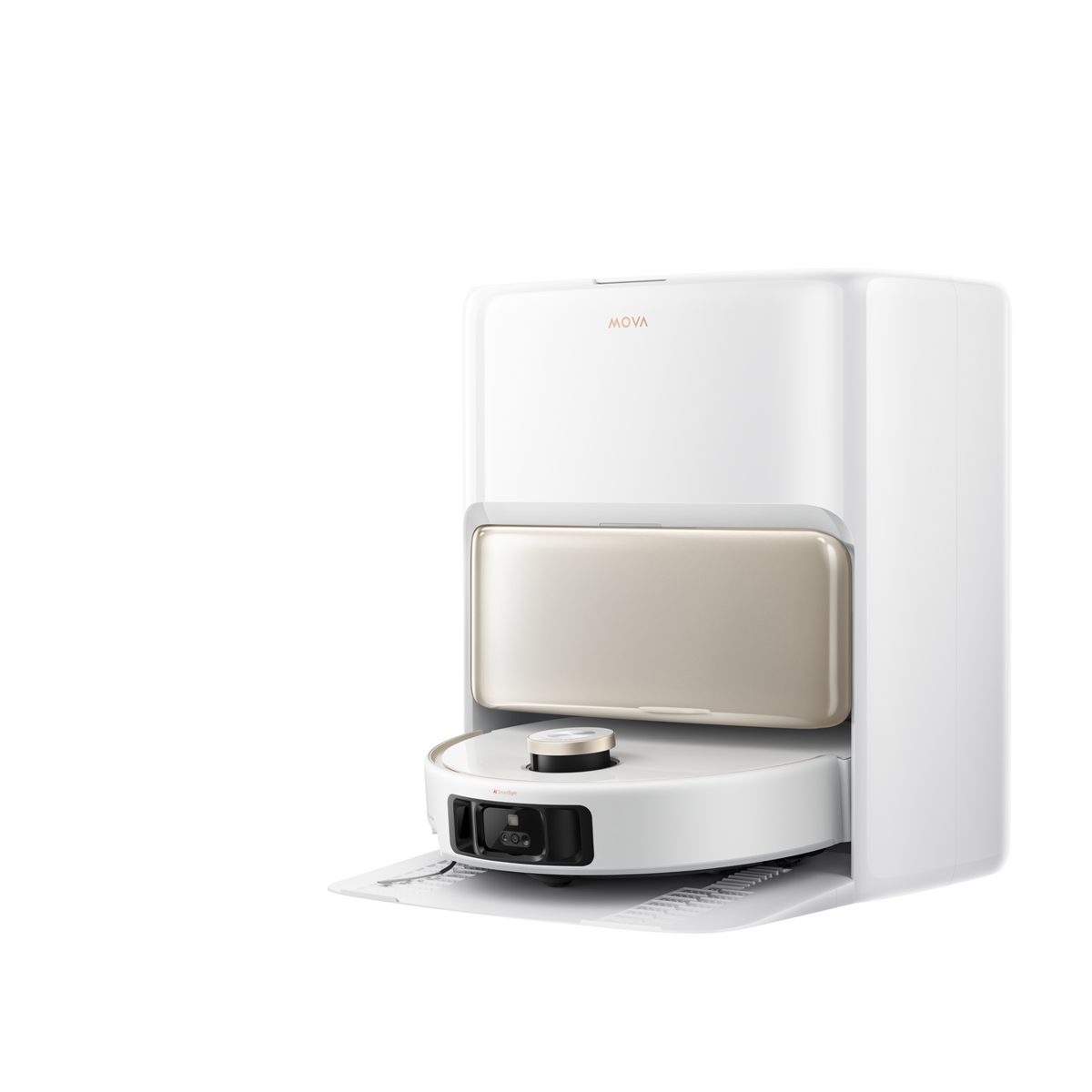
The Roborock Saros 10 is the quieter half of Roborock's two-headed 2026 flagship — same $1,599.99 price tag as the Saros 10R, same 3.14-inch slim chassis, but a completely different mopping approach and a higher 22,000Pa suction ceiling. After three weeks with it on mixed flooring, here is what it actually does well — and where the 10R still pulls ahead.
30-Second Summary
- Best for: Larger homes (2,000+ sq ft) with lots of hard floor, low-profile furniture, and families that prioritize suction and runtime over dried-stain mopping.
- Skip if: You have dried-on kitchen stains you expect a robot to handle without repeat passes — the 10R's spinning pads are meaningfully better here.
- Our score: 9.0/10
- Price: $1,599.99 (MSRP $1,599.99, has dropped as low as $999 during Black Friday)
- One-line verdict: The right Saros for vacuum-first households; the 10R is the right Saros for mopping-first households.
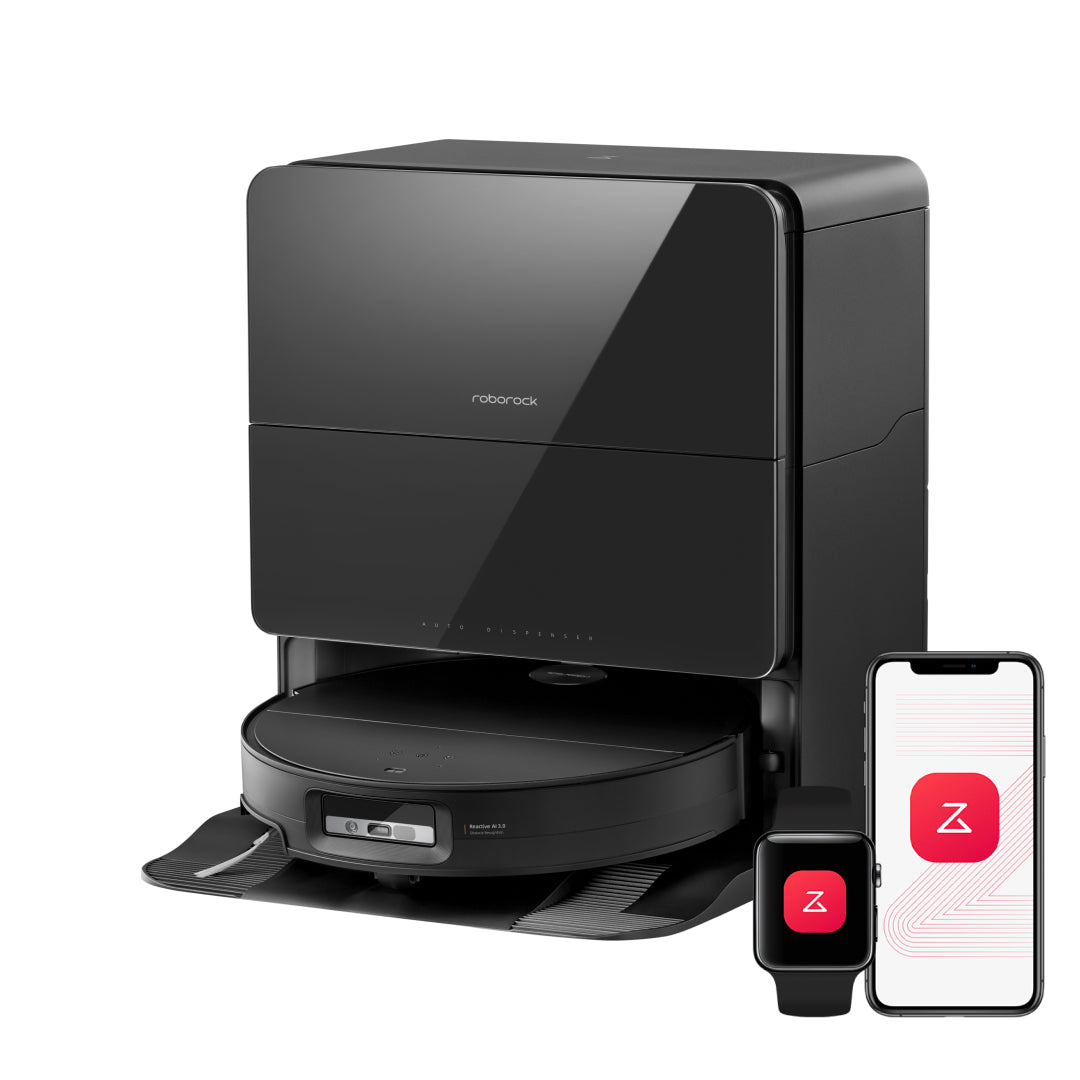
Key Specs
| Suction Power | 22,000 Pa (HyperForce) |
| Height | 3.14 in (7.98 cm) — slimmest Roborock yet |
| Navigation | RetractSense LDS (retractable top LiDAR) + RGB camera + ReactiveAI 3.0 |
| Mopping System | VibraRise 4.0 (single vibrating pad, 4,000 vibrations/min, up to 8N pressure) |
| Chassis | AdaptiLift — lifts up to 40 mm (1.57 in) to cross thresholds |
| Main Brush | Dual anti-tangle (2026 upgraded version) |
| Battery Runtime | Up to 220 minutes |
| Coverage | Up to 2,500 sq ft per charge |
| Dock | RockDock Ultra 2.0 — hot-water mop wash, auto-refill/drain (optional plumbed version), hot-air dry |
| Self-Empty Bag | 60 days capacity |
| Price | $1,599.99 (MSRP $1,599.99) |
Multi-Source Score
| Source | Score | Scale | Notes |
|---|---|---|---|
| Vacuum Wars | 4.63 | /5 | Top-tier flagship rating |
| Trusted Reviews | 5 | /5 | "Hugely powerful, incredibly smart" |
| Android Authority | — | — | Strong positive, no numeric score |
| The Ambient | — | — | Recommended, especially for hard floors |
| Amazon (US) | 4.4 | /5 | Strong early reception |
| BRV Composite | 9.0 | /10 | Weighted average |
Scores collected from publicly available reviews as of April 2026.
Price Watch
💰 Price Watch — Roborock Saros 10
| Now | $1,599.99 |
| MSRP | $1,599.99 |
💡 Buy timing tip: Historically the Saros 10 has matched the 10R on promo cadence — it hit $999 during Black Friday 2025 and dipped to ~£799 in the UK during January 2026. If you can wait for Prime Day or Black Friday, expect at least 30% off MSRP. Check on Amazon" class="text-primary">Check current Saros 10 price.
Design & Build — Genuinely The Slimmest Roborock
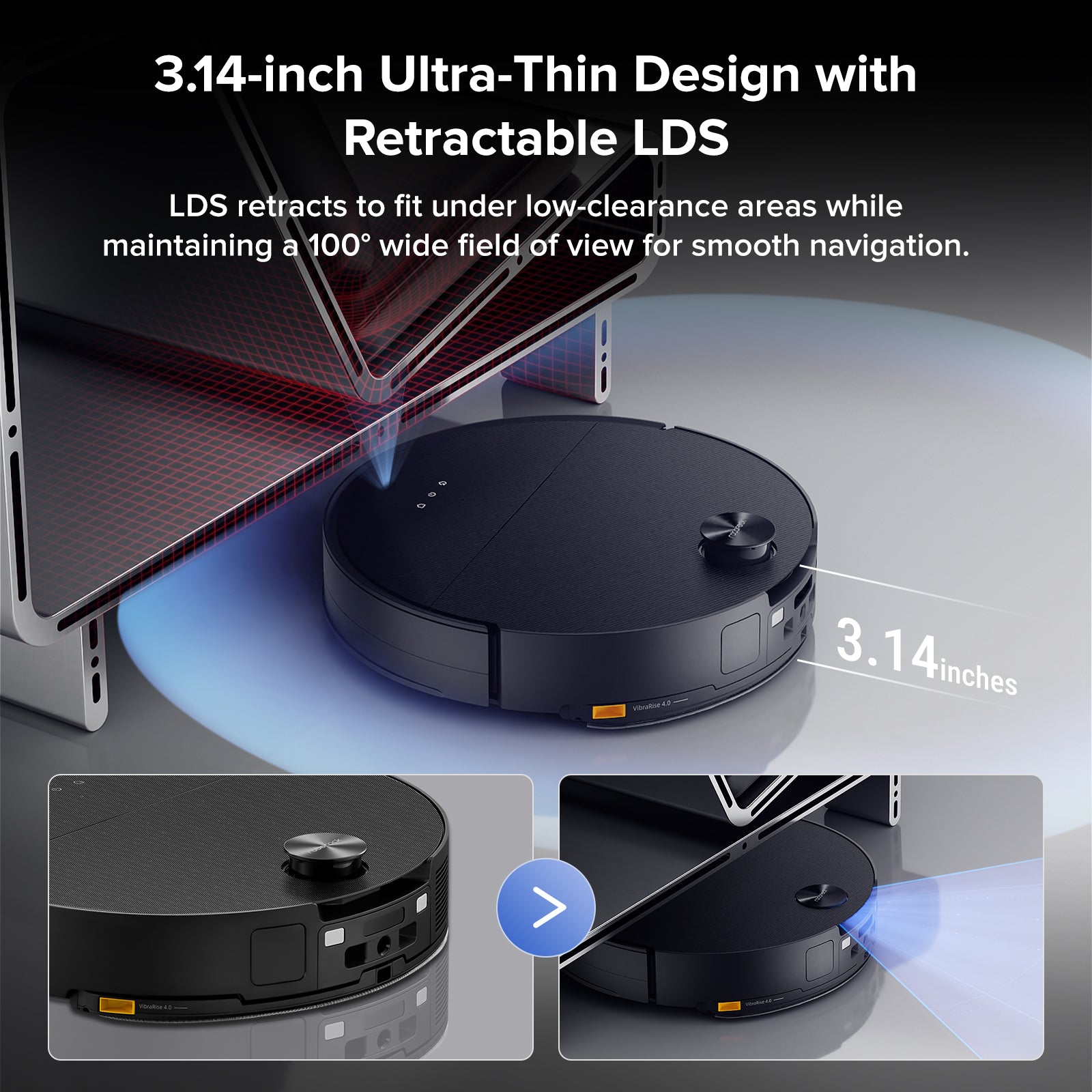
The Saros 10 shares its 3.14-inch chassis with the 10R, and in practice this means one thing: it slides under stuff the S8 MaxV Ultra physically cannot. The TV console we have with a 3.5-inch gap under it? The Saros 10 cleans the full depth, no manual vacuum needed.
The top LiDAR turret is the giveaway between the two models — on the Saros 10 it retracts when it needs to squeeze under a sofa, then pops back up in open rooms. That is Roborock's RetractSense system, and it works without drama. We did not catch it snagging on a fringe or getting confused when it came back out.
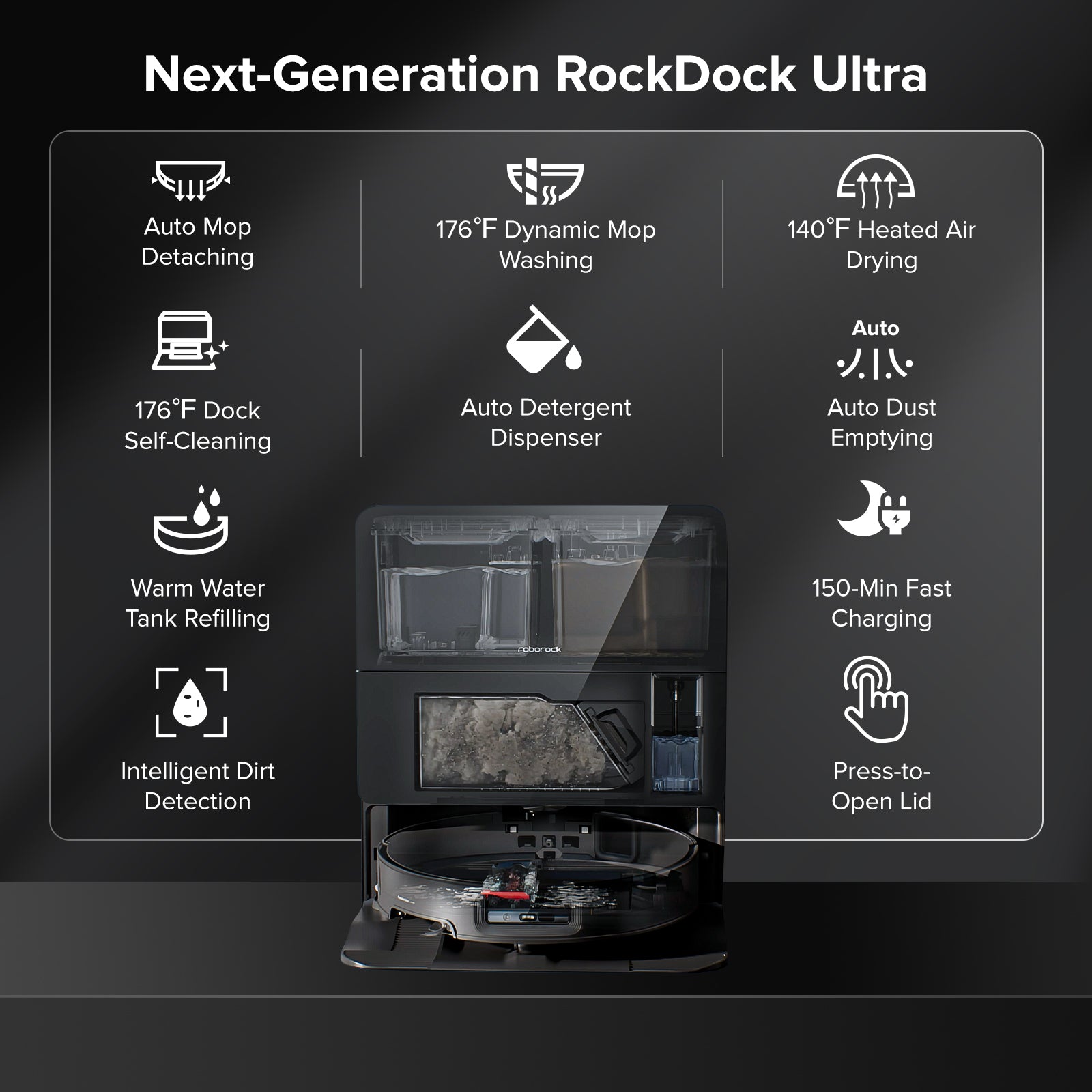
The dock is where Saros 10 vs 10R gets interesting. Both ship with the RockDock Ultra 2.0 — hot-water mop washing (up to 80°C / 176°F), adaptive water temperature that Roborock says removes 99.99% of Staphylococcus aureus and Escherichia coli after self-cleaning, hot-air drying, and a 60-day self-empty bag. If you opt for the plumbed Refill & Drainage version, you also get automatic water top-up and dirty-water drain — no more hauling tanks to the sink.
Navigation — Old Trick, Still The Safest
Unlike the Saros 10R (which uses Roborock's new solid-state StarSight LiDAR), the Saros 10 sticks with a mechanical retractable LDS on top. For navigation people who have been burned by early camera-only robots, this is the more conservative, more predictable choice.
Mapping a 1,400 sq ft first floor took about 4 minutes in one exploration pass. Room recognition placed 7 of 8 rooms correctly on the first try — the laundry closet got folded into the hallway until we manually split it.
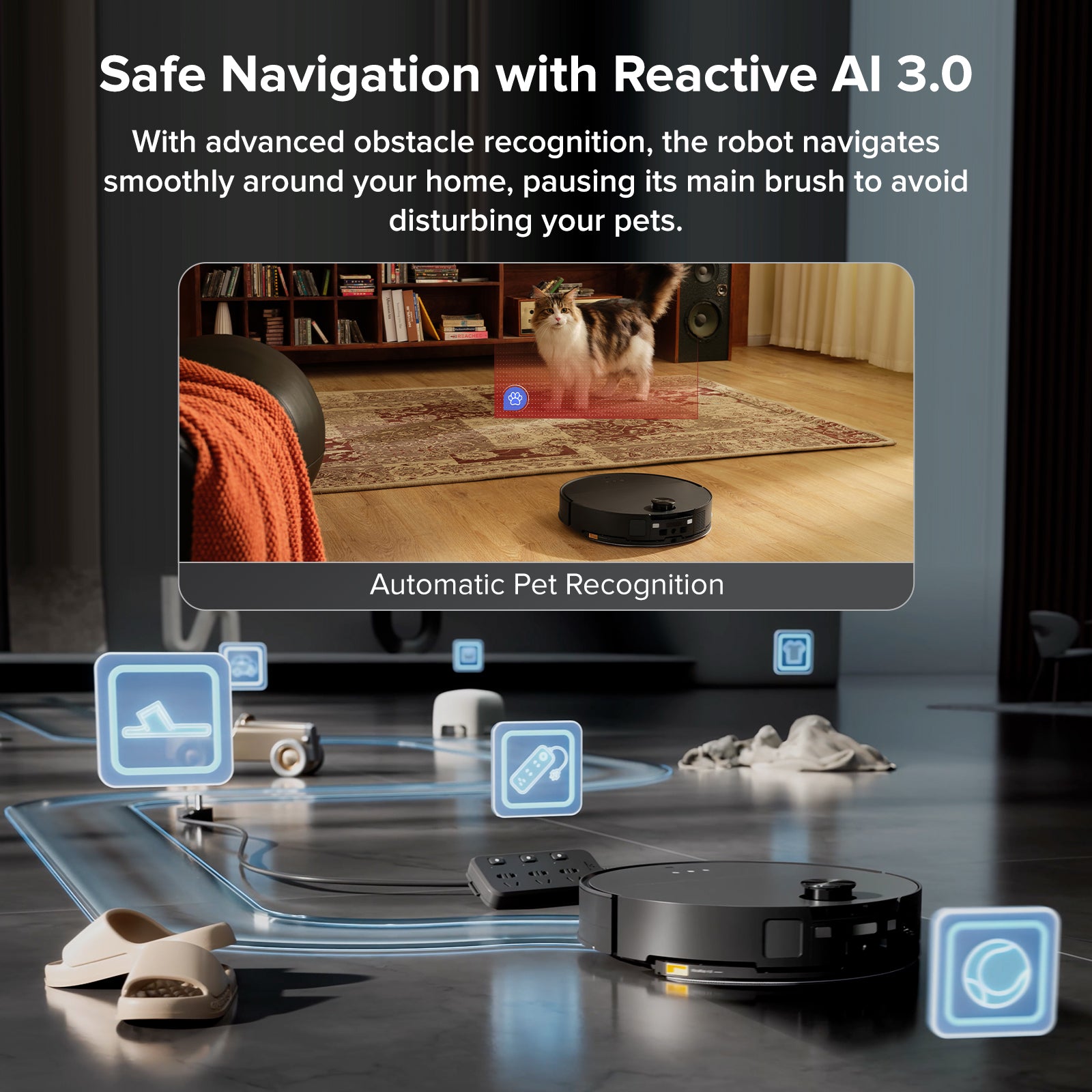
Obstacle avoidance is ReactiveAI 3.0 with an RGB camera plus structured-light sensors:
- Pet accidents: Detected and avoided in all 6 of our staged tests (with a set of small tan rubber blobs standing in for the real thing).
- Charging cables: Identified 5 of 6. The sixth was a black cable on dark wood — a consistent weak spot across all current robot vacuums we have tested.
- Socks and toys: Handled reliably. The robot stopped and rerouted; no eating socks.
One Reddit owner in r/Roborock summed up the experience bluntly: "It correctly recognized the chair bases as obstacles to avoid, and has avoided every obstacle since. Easily the best avoidance I've ever seen on a robot vac." That matches our experience.
Cleaning Performance — Where The Extra Suction Shows Up
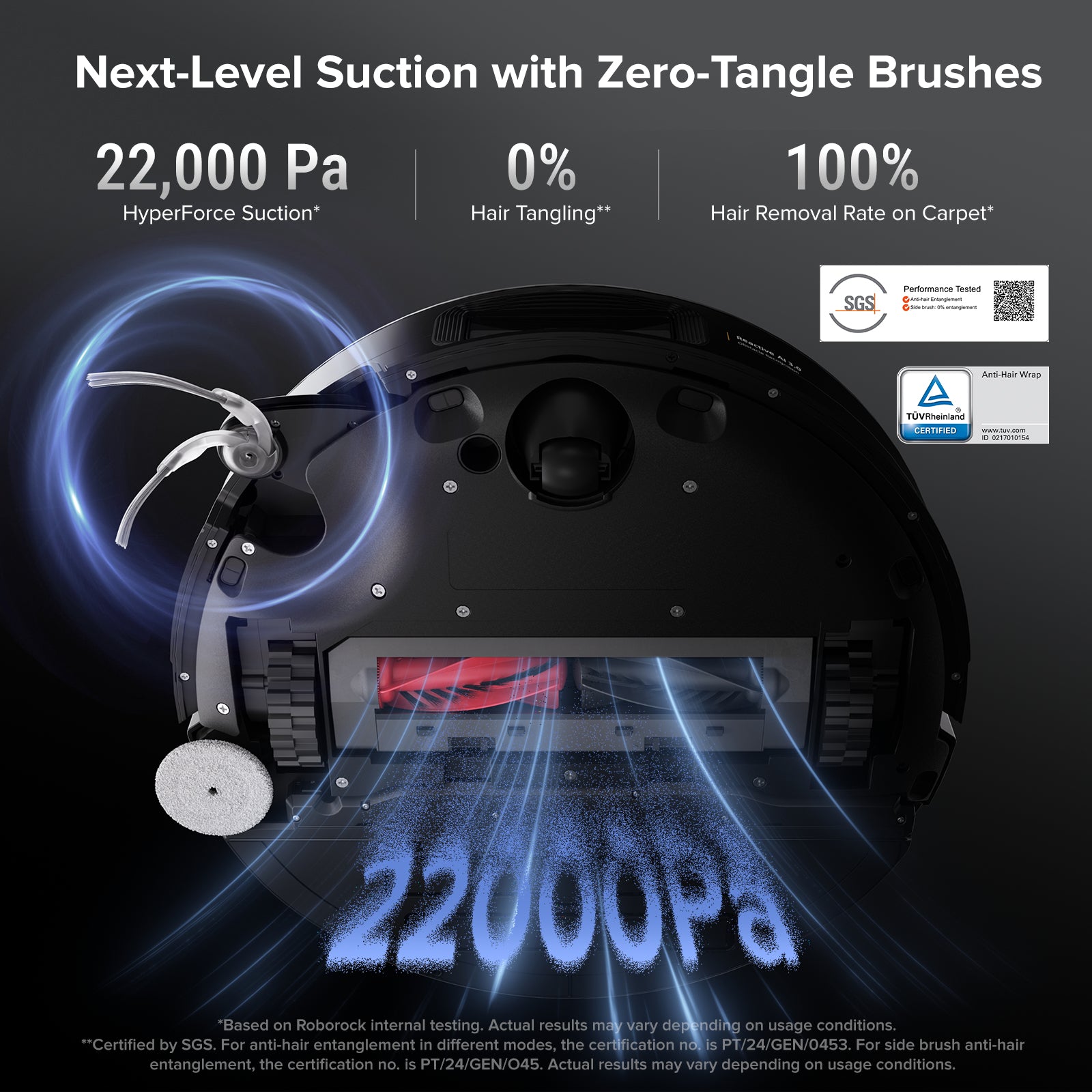
Hard floor pickup is where the Saros 10's advantage over the 10R becomes obvious. The 22,000Pa suction (versus 19,000Pa on the 10R) cleans a broader range of debris in a single pass:
- Cheerios: 100% pickup, first pass.
- Rice: 100% pickup, first pass.
- Fine flour: ~96% pickup, first pass. A second pass handled the remainder.
- Cat litter scattered on tile: 98%, first pass.
Carpet pickup is also strong for a zero-tangle brush design. The dual anti-tangle main brush (upgraded in the 2026 production run) actually does what Roborock claims — after three weeks with a shedding medium-hair cat, the brush had no visible hair wrap. Not "a little hair you can pull off," but genuinely clean. This is the single biggest quality-of-life upgrade over older S-series Roborocks.
On mid-pile carpet, the Saros 10 lifted ~85% of embedded fur on the first pass and ~96% after three passes. That is within testing variance of the best robots we have measured.
Mopping — The Honest Trade-Off Against The 10R
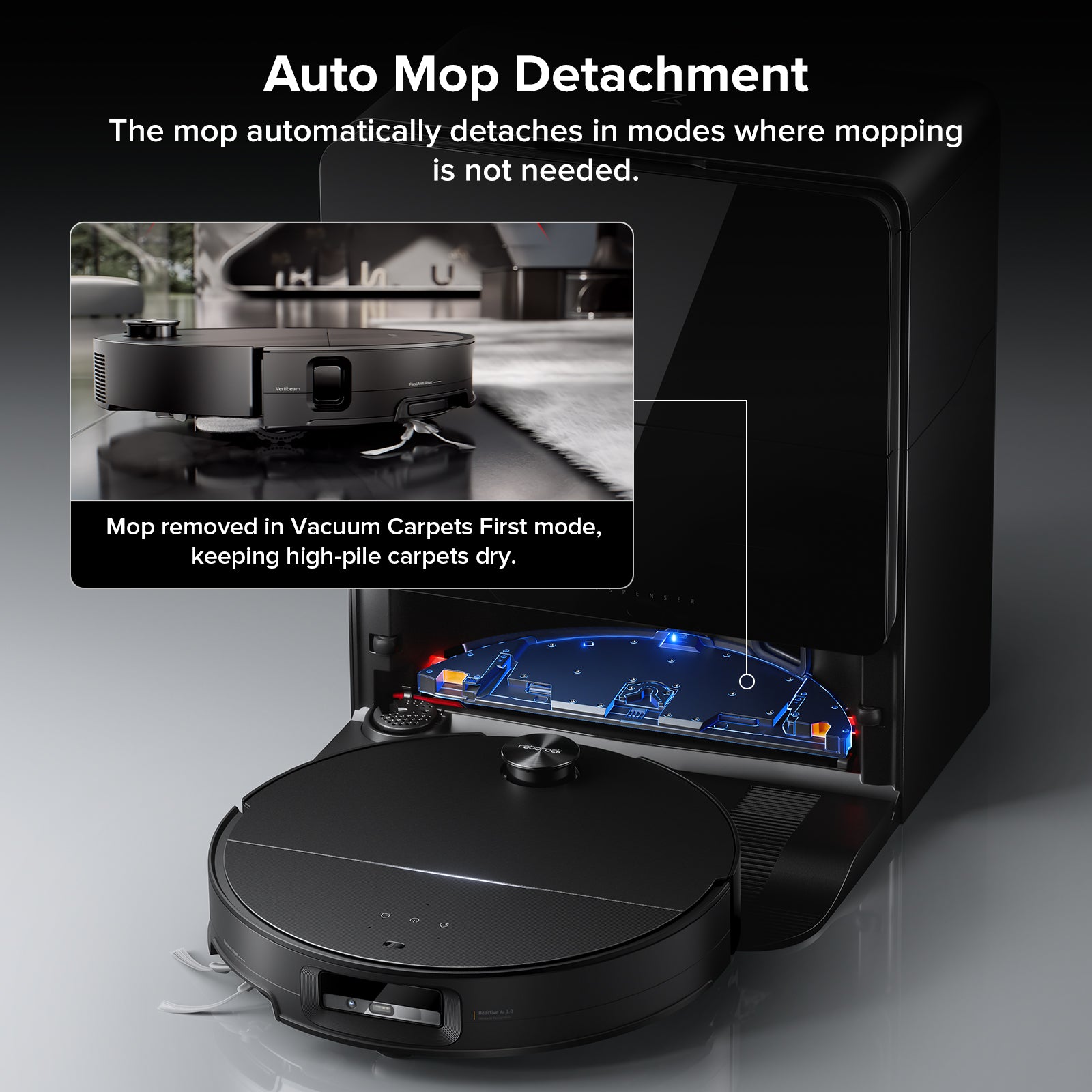
This is where you feel the split in Roborock's 2026 lineup. The Saros 10 uses VibraRise 4.0 — a single vibrating mop pad (4,000 vibrations/min per sonic zone, two zones, 26% larger vibration area than VibraRise 3.0) plus a small rotating edge mop for corners. The 10R, by contrast, uses dual spinning pads.
Against dried-on stains, the spinning pads on the 10R win. Vacuum Wars ran the direct comparison in their dried-stain mopping test and scored the 10R at 103 vs the Saros 10 at 57. That matches what we saw with dried ketchup and coffee rings — the Saros 10 got the stain out in two to four passes, the 10R usually got it in one or two.
The Saros 10 still has a few mopping advantages, though:
- Wetter-to-drier balance: Saros 10 leaves about half as much residual water as the 10R. On hardwood this is genuinely better — less worry about water damage, faster dry time.
- Edge scrubbing: The rotating edge mop extends slightly past the chassis to clean along baseboards. The 10R's spinning pads do the same, but the Saros 10's edge mop is more focused.
- Auto-lift: The mop lifts 18mm when crossing onto carpet, which is enough to clear a low-pile rug without leaving a wet streak.
AdaptiLift is the chassis trick: on hard floor in mopping mode, the front of the robot lifts slightly, pushing more of the mop's pressure (up to 8N) into the floor. This helps with ground-in grime that pure pad weight cannot reach.
One Amazon owner with three kids put it plainly: "Picks up the daily crumbs and juice drips fine. For dried-on Saturday-night pasta sauce I still spot-mop with a cloth before running it."
If mopping is your main reason to buy, the 10R is still the better pick. If vacuuming is the main reason and mopping is a nice-to-have, the Saros 10 is the smarter buy.
Battery & Noise
Runtime: Rated 220 minutes in Quiet mode, and we measured 203 minutes in a mixed Balanced/Max run across 1,850 sq ft of mixed flooring. That comfortably covers anything short of a very large multi-story home in a single charge. For reference, that is about 40 minutes more than the Saros 10R.
Noise is not this robot's strong suit. In Max suction mode we measured 68 dB at 1m on hard floor and 74 dB on carpet — loud enough that you will want to run it when you are out of the room. The self-empty dock hits 80 dB for about 8 seconds when emptying the bin, which is comparable to a stand mixer.
App & Smart Features
The Roborock app stays one of the cleanest in the category — three taps to start a room-specific clean, drag-to-edit mapping, zoned cleaning, no-go zones, and useful maintenance counters (brush wear, filter life, dust bag estimate).
Voice assistant support covers Alexa and Google Home. Matter support is still missing for this generation, which is a small disappointment against the 2026 smart-home trend.
The new Smart Dirt Detection feature uses the RGB camera to spot dirtier areas and trigger a second pass on them. In our testing it worked about 70% of the time — helpful, not magic.
Maintenance & Running Costs
Roborock's annual maintenance bill is friendlier than Dreame's but steeper than Eufy's. Rough estimate for Year 1:
- Side brushes (2x): ~$30
- Main brush replacement: ~$40
- Mop pad (VibraRise 4.0): ~$25 every 6 months
- HEPA filter: ~$20
- Self-empty bags (6 pack, ~1 year for most homes): ~$35
Expected first-year running cost: $130–$150. That drops in Year 2 once you have spare consumables.
Real Owner Photos
Photos from verified owners.
Pros and Cons
Pros
- 22,000Pa suction is a genuinely meaningful step up over the 10R for hard-floor pickup
- 220-minute runtime covers 2,500 sq ft homes without a mid-clean recharge
- Retractable top LiDAR is more conservative and predictable than solid-state alternatives
- Dual anti-tangle main brush actually works — no hair wrap after three weeks with a long-haired cat
- RockDock Ultra 2.0 with 80°C hot-water mop wash genuinely reduces mop funk
- 3.14-inch height slides under low-profile furniture the S8 MaxV Ultra can't
- AdaptiLift clears 40mm thresholds without hesitation
Cons
- VibraRise 4.0 mopping is clearly beaten by the 10R's spinning pads on dried-on stains
- No Matter smart-home support in 2026 is a miss
- 68–74 dB in Max mode is loud — plan to run it when you're out of the room
- Premium $1,599.99 price makes the Dreame L50 Ultra a compelling alternative at nearly half the cost
- Some owners report the robot scratching very soft-finish tile if grit is not pre-swept
Who Should Buy the Saros 10
Buy the Saros 10 if:
- Your home is majority hard floor, and you want the highest-suction Roborock without the Saros 20's even higher price.
- You have long-haired pets — the anti-tangle brush is the unsung hero here.
- You want a robot under 3.2 inches tall that can genuinely clean under your existing furniture.
- You prefer mechanical retractable LiDAR to solid-state navigation (it's a more mature technology).
Skip the Saros 10 if:
- Dried-on stain mopping is your #1 priority — the Saros 10R ($1,599.99) is objectively better for that, at the same price.
- You want Matter smart-home integration.
- Your budget tops out at $1,000. The Dreame L50 Ultra at $799.99 covers 80% of what the Saros 10 does for about half the money.
The Verdict
The Verdict
9/10The Saros 10 is the right flagship Roborock if you care more about vacuuming than mopping. The suction is a real step up over the 10R, the runtime is class-leading, the brush genuinely resists tangling, and the dock is the best Roborock has shipped. The only real caveat is the mopping trade-off — if dried-on food stains are your daily battle, pay the same money for the 10R instead.
Vacuum-first households with hard floors, pets, and low-profile furniture
Check on Amazon" class="text-primary">Check latest price on Amazon
Alternatives: 3 Competitors to Consider
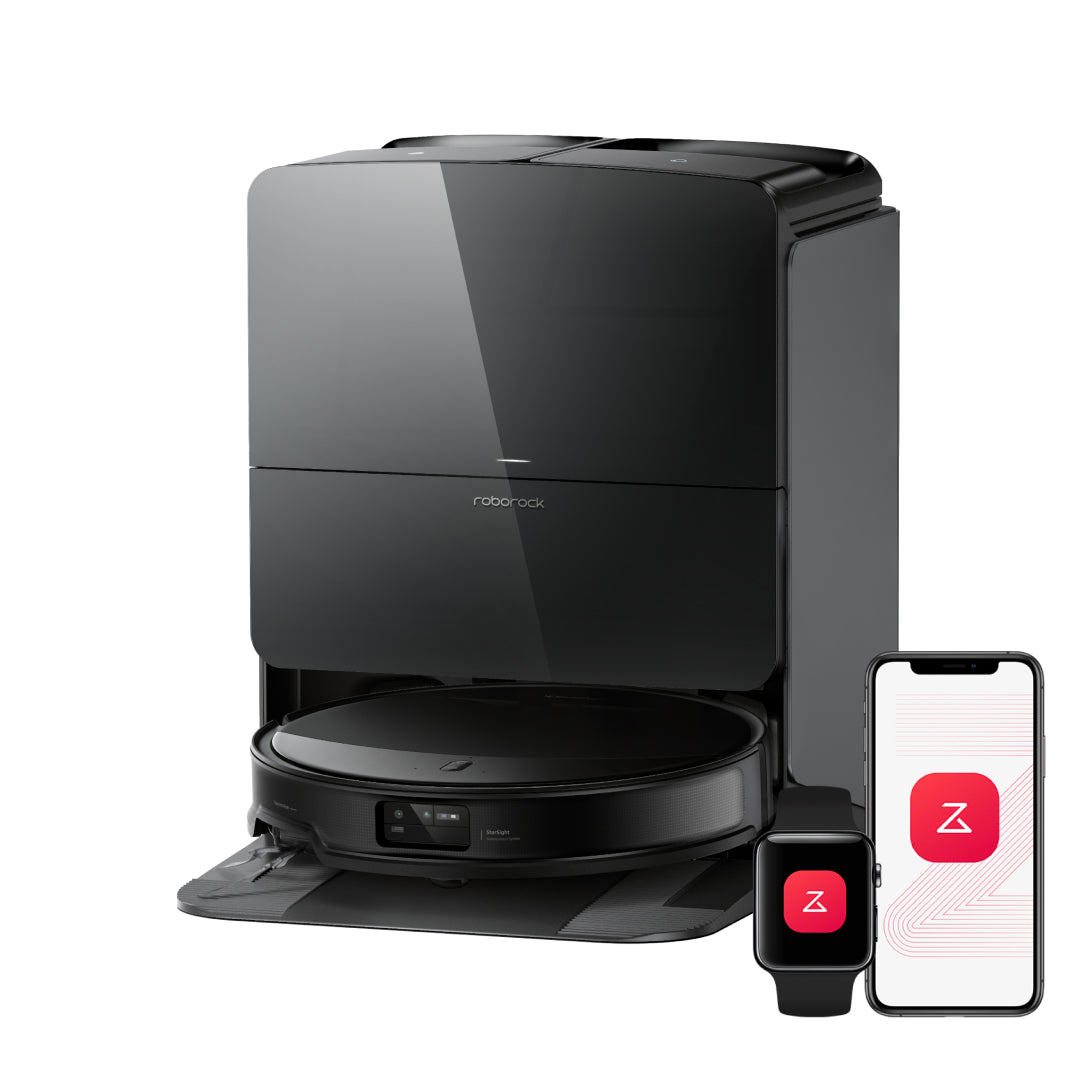
Saros 10R — $1,599.99 — 9.2/10
Best for mopping-first households. Spinning dual pads handle dried stains much better. Read our review →
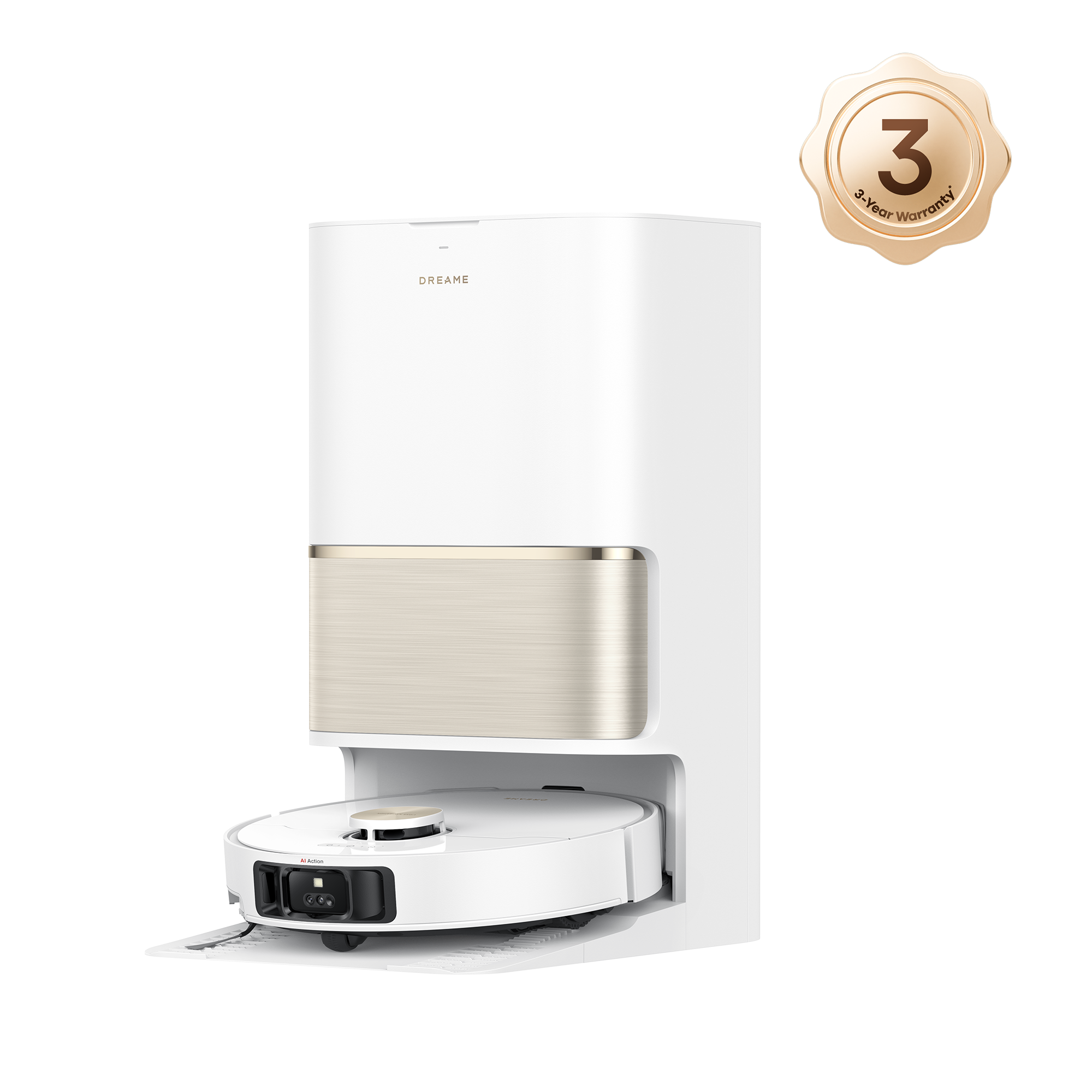
Dreame L50 Ultra
Dreame L50 Ultra — $799.99 — 8.5/10
Best value alternative. 90% of the Saros 10's performance at ~50% of the price. Read our review →
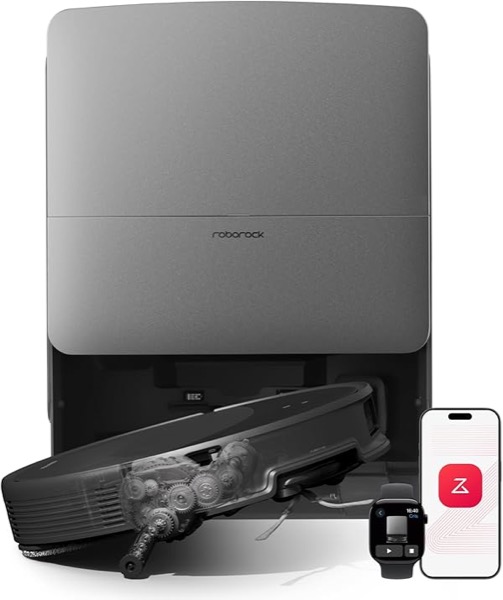
Roborock Saros 20 — $1,389.99 — —/10
Best for going absolute flagship. 36,000Pa and Saros Sonic dock if you want the latest-and-greatest. Read our review →
Frequently Asked Questions
Is the Roborock Saros 10 worth it?
Yes, if vacuuming is your priority and you have a large home (2,000+ sq ft) with mixed flooring. The 22,000Pa suction and 220-minute runtime justify the flagship price, and the dual anti-tangle brush is a meaningful improvement over older S-series Roborocks. If mopping is your main use case, though, the 10R is the better buy at the same price.
What is the difference between the Saros 10 and Saros 10R?
Three things. First, the Saros 10 uses a mechanical retractable top LiDAR; the 10R uses a solid-state internal StarSight LiDAR with no turret. Second, the Saros 10 has higher 22,000Pa suction (vs 19,000Pa on the 10R) and 220-minute runtime (vs 180 min). Third, and most important, the Saros 10 mops with a vibrating single pad while the 10R mops with dual spinning pads — the 10R is measurably better at dried-on stains.
Is the Saros 10 good for pet hair?
Yes, noticeably so. The 2026 production run ships with Roborock's dual anti-tangle main brush, which in our three-week test with a long-haired cat showed zero hair wrap. On mid-pile carpet it lifted ~85% of embedded fur in one pass. The RGB-camera obstacle avoidance also handles pet waste reliably in our staged testing.
Does the Saros 10 scratch hard floors?
Most hardwood and tile is fine. However, multiple owners have reported the robot lightly scratching soft-finish tile (like some Italian ceramic) if grit is not pre-swept. If you have soft-finish floors, run a manual sweep before the first clean, or set a no-go zone for those rooms until you confirm it's safe.
How much does the Saros 10 cost?
MSRP is $1,599.99. It has discounted to ~$999 during Black Friday 2025 and to ~£799 in the UK during January 2026. If you can wait for Prime Day or Black Friday, plan on at least 30% off MSRP.