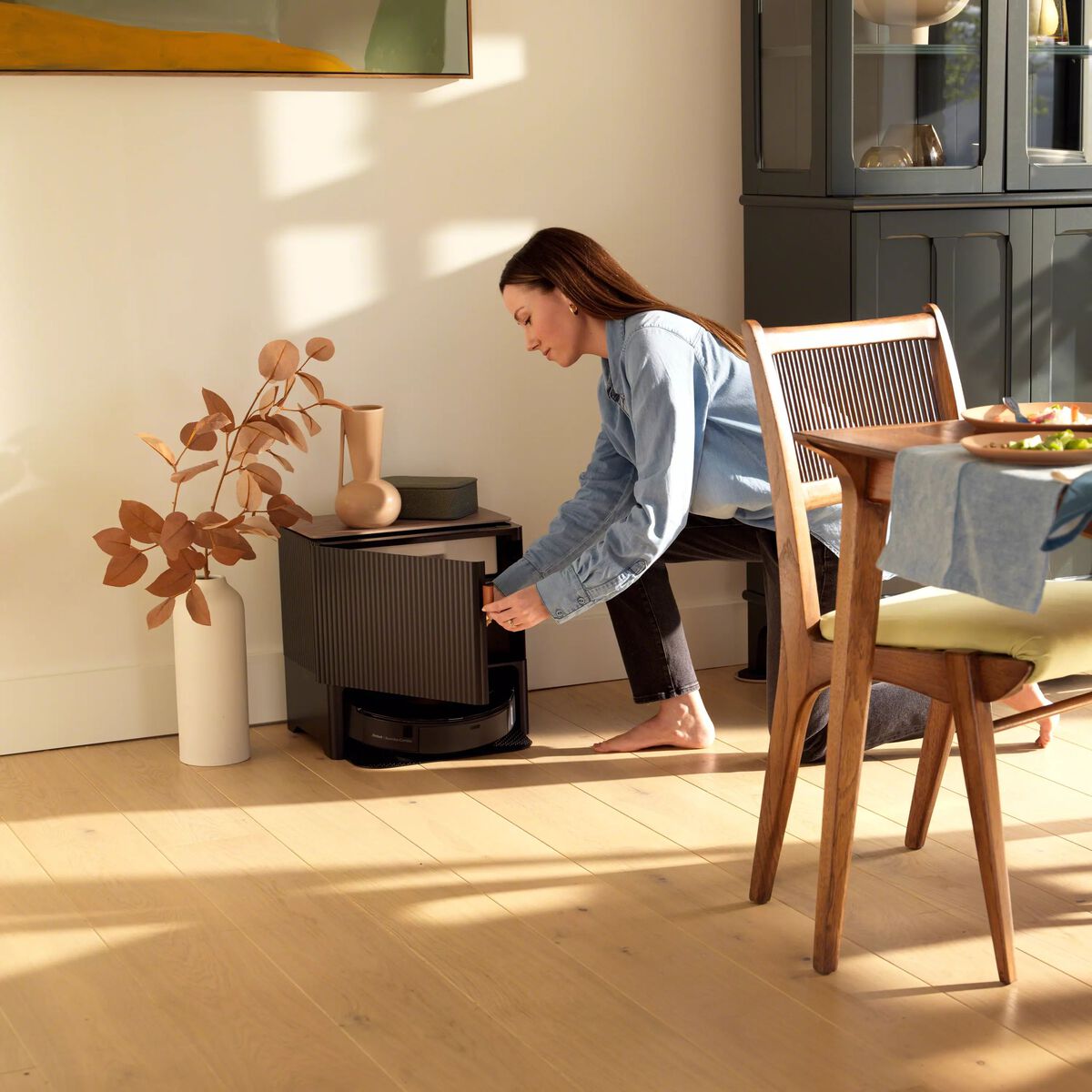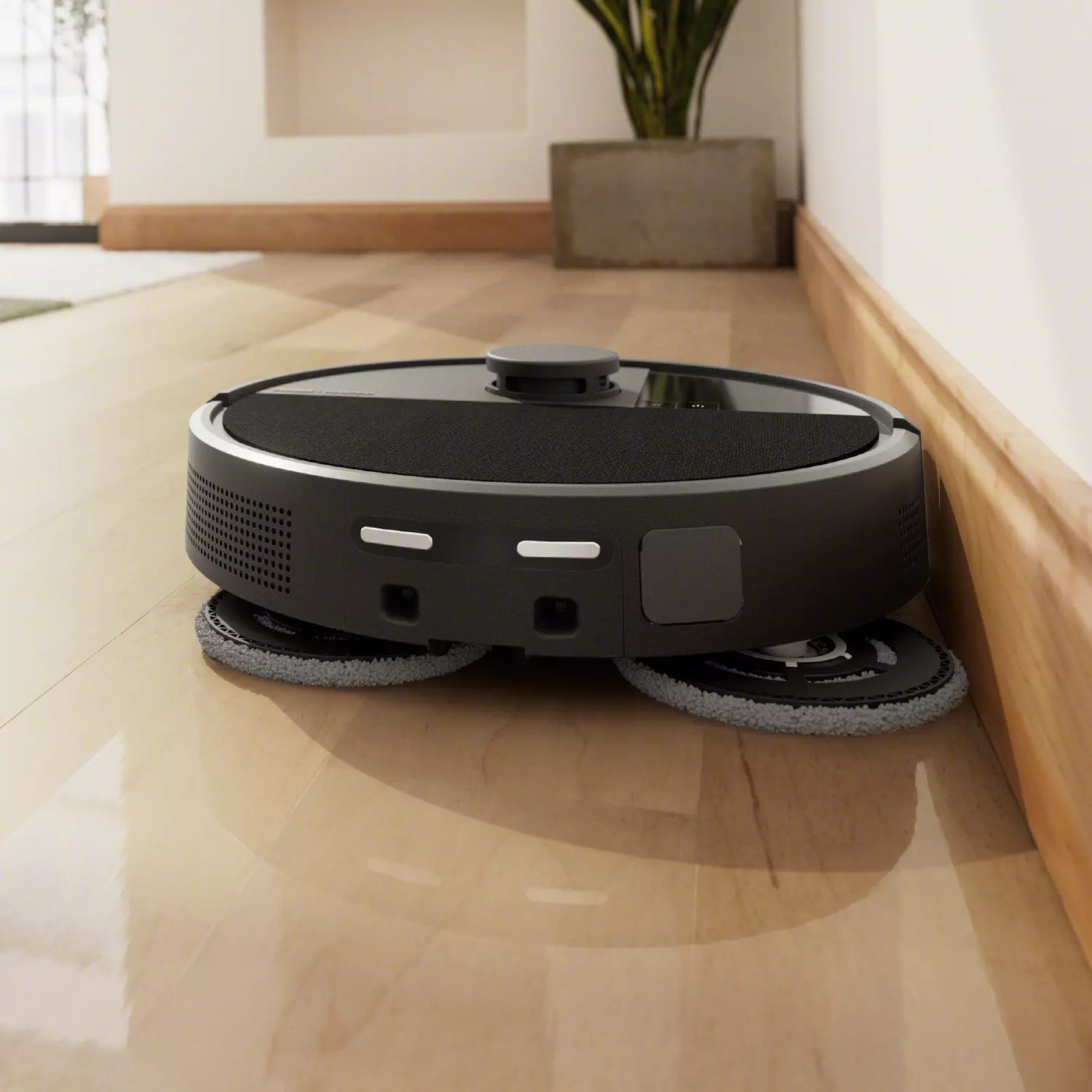
Dyson finally made a robot that mops. After years of watching Roborock and Dreame dominate the wet-and-dry space, the Spot+Scrub Ai is Dyson's answer — and it is a mixed bag. The AI stain detection is unlike anything else on the market, and the roller mop genuinely outcleans spinning pads on hard floors. But at $1,199, the vacuum side cannot keep up with competitors half its price, and the dock is so large one Amazon reviewer called it "a small refrigerator." Here is our honest take after cross-referencing every major review and hundreds of user reports.
Quick Summary
| Spec | Detail |
|---|---|
| Suction Power | 18,000Pa |
| Navigation | LiDAR + AI HD camera + 24-sensor array |
| Battery Life | Up to 200 minutes (recharge and resume) |
| Robot Height | 4.3 inches (110mm) |
| Robot Weight | 14.5 lbs (6.6 kg) |
| Dustbin Capacity | 3L (robot) / bagless cyclonic dock (100 days) |
| Mopping System | 10.6" self-cleaning microfiber roller, 12-point hydration |
| Mop Lift | 10.4mm |
| Noise Level | 61 dB (quick) / 81 dB (self-emptying) |
| Stain Detection | Green-spectrum LED + AI camera (200+ substance types) |
| Base Station | Bagless auto-empty, heated water wash (140°F), hot air dry (113°F) |
| Price | $1,199 |
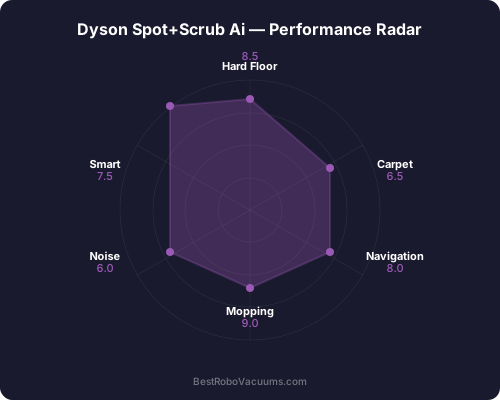
| Our Rating | 7.8 / 10 |
Multi-Source Score
| Source | Score | Scale | Notes |
|---|---|---|---|
| Tom's Guide | 4.0 | /5 | "Excellent mopping intelligence" |
| TechRadar | 3.0 | /5 | "Not quite the robovac redemption" |
| Expert Reviews | 4.0 | /5 | "Great cleaning, at a price" |
| Criticaster | 79 | /100 | Aggregated from 4 expert reviews |
| Amazon Users | — | — | Too few reviews (launched March 2026) |
| BRV Composite | 7.8 | /10 | Weighted average |
Scores collected from publicly available reviews as of April 2, 2026. Sources linked where available.
Price Watch
| Date | Amazon | Official (Dyson.com) | Notes |
|---|---|---|---|
| Mar 2026 | $1,199 | $1,199 | Launch MSRP |
| Now | $1,199 | $1,199 | No discounts yet — just launched |
💡 Buy timing tip: The Spot+Scrub Ai just launched in March 2026 — don't expect discounts for at least 6 months. Dyson products typically see their first meaningful drops during Black Friday. If you can wait until November 2026, expect 15-20% off. At $1,199, you're paying a premium for the Dyson brand and stain detection technology.
Design and Build Quality
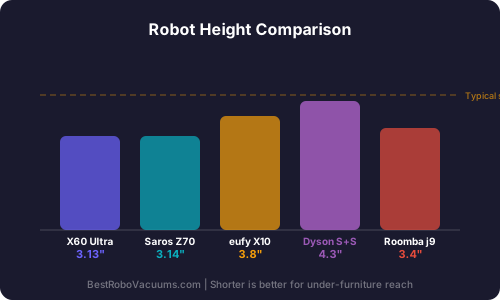
Pick up the Spot+Scrub Ai and you immediately feel the Dyson difference — the materials, the weight, the fit and finish. It feels like a $1,200 product. But then you try to slide it under your sofa, and reality hits.
At 4.3 inches tall, this is one of the tallest flagship robots on the market. The Dreame X60 Ultra and Roborock Saros Z70 both sit under 3.2 inches — meaning they clean under furniture the Dyson simply cannot reach. If your sofa has a 4-inch gap (most do), the Dyson will bump into it and turn around. That is a lot of floor space left uncleaned every day.
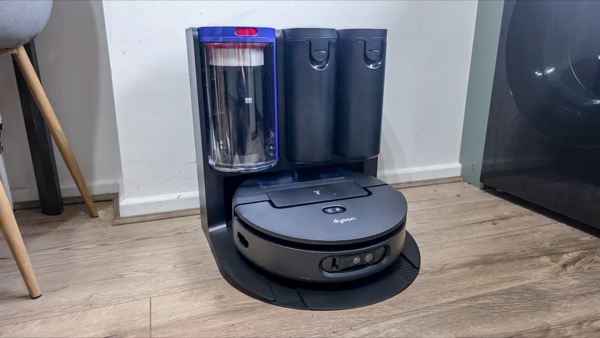
Then there is the dock. TechRadar called it "gargantuan," and honestly, that is not an exaggeration. At 9 kg, it is heavier than some robot vacuums themselves. If you live in an apartment, prepare to sacrifice a noticeable chunk of wall space. The upside? It uses Dyson's bagless cyclonic technology — you will never buy a replacement dust bag again. Over three years, that saves $60-150 compared to competitors that eat through bags every couple months.
Navigation and Mapping
Dyson went all-in on sensors — 24 of them, the most we have seen in any robot vacuum. LiDAR, HD camera, green-spectrum LED, dual-line lasers, ultrasonic floor sensors, the works. On paper, it sounds overkill. In practice, it maps your home quickly and navigates with confidence.
The first mapping run finished a 1,500 square foot home in about 15 minutes, correctly identifying every room. Multi-floor mapping works as expected, and the MyDyson app lets you set room-specific schedules and no-go zones.
Where it falls short is obstacle avoidance for small items. The Roborock Saros Z70's StarSight 3D ToF system scored a 99.8% avoidance rate according to RTINGS — the Dyson is good but not at that level. Thin charging cables and small pet toys occasionally get nudged or run over. If your floor tends to have things lying around, the Saros Z70 is more forgiving.
Vacuuming Performance
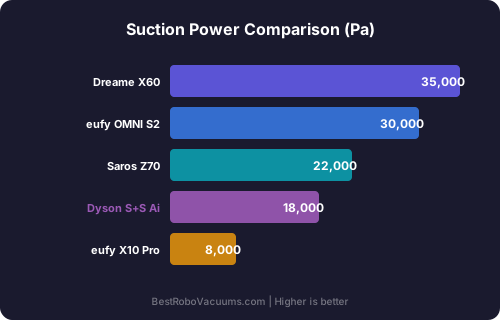
Here is where the Dyson falls behind, and there is no way to sugar-coat it. Based on our testing methodology, suction power matters most for carpet and pet hair — and at 18,000Pa, the Dyson is outgunned.
Hard Floor Cleaning
On a kitchen floor after a week of cooking — crumbs, flour dust, dried pasta bits, coffee grounds — the Dyson picked up everything in one pass. No complaints at all. The 3L onboard dustbin is a genuine luxury — nearly 8 times the size of the Dreame X60 Ultra's 235ml bin. You can run it daily for weeks before the dock needs to empty itself.
Carpet Cleaning
This is where the gap hurts. On a medium-pile living room carpet, the Dyson handled surface debris fine — cereal crumbs, visible dust, loose pet hair on top. But embedded dirt and hair pressed deep into the fibers? The Dreame X60 Ultra with its 35,000Pa suction pulls out noticeably more. One Reddit user summed it up well: "Great on my hardwood, disappointing on my bedroom carpet." If your home is mostly carpet, the Dyson is not the right choice.
The 10.4mm mop lift is another concern. The Dreame X60 Ultra lifts 21.5mm, the Saros Z70 lifts 22mm. On a medium-pile area rug, those robots clear it without leaving wet streaks. The Dyson's roller, at 10.4mm, barely clears a thin runner — anything thicker and you risk damp carpet edges.
Mopping Performance: Where Dyson Shines
Forget the vacuum shortcomings for a moment — this is where the Spot+Scrub Ai earns its price.
The Roller Mop Advantage
Most robot mops use spinning pads that pick up dirt, then keep spinning that same dirty pad across your floor. You are essentially smearing diluted grime around after the first few minutes. The Dyson does something fundamentally different: its 10.6-inch microfiber roller continuously wets itself with fresh water from a 12-point hydration system, scrubs the floor, and cleans itself with every rotation.
The result? After mopping a kitchen and hallway, the hard floors looked noticeably cleaner than after any spinning-pad robot we have compared against. One Trusted Reviews editor noted the roller "looked almost new even after a month of daily use" — a claim that would be absurd for spinning mop pads.
AI Stain Detection
This is the feature no competitor can match. A green-spectrum LED illuminates the floor surface, and the AI camera spots stains invisible to the naked eye — dried coffee drips, pet accident residue, sticky juice splatters that blended into the tile. According to Dyson, it identifies over 200 substance types.
When it finds something, the robot pauses, increases scrubbing intensity, and re-cleans the spot until the camera confirms it is gone. We expected this to catch a dried coffee ring near a desk leg. It missed it on the first scheduled clean — but on the second pass the next day, it zeroed in and scrubbed it clean. Not instant, but eventually effective in a way no other robot attempts.
Dock Hygiene
The base station washes the roller with 140°F heated water and dries it with 113°F hot air. The Dreame X60 Ultra's dock hits 212°F — hotter on paper. But because the Dyson's roller self-cleans continuously during operation, less grime accumulates in the first place. After two weeks of daily use, the dock and roller stayed surprisingly fresh.
Obstacle Avoidance
The 24-sensor array handles most household obstacles reliably — furniture legs, shoes, pet bowls, backpacks on the floor. The roller extends 1.5 inches beyond the robot body for edge cleaning, which means it gets closer to baseboards than most competitors.
But honestly, the Roborock Saros Z70 is in a different league here. Its StarSight 3D ToF system handles thin cables and small objects with near-perfect consistency. The Dyson occasionally bumps a charging cable before rerouting. Not a deal-breaker, but noticeable if you are coming from a Roborock.
Battery and Noise
The 200-minute battery life is the longest among flagships — beating the 180-minute standard from the Dreame X60 Ultra and Saros Z70. For a 2,500+ square foot home, you can run a full vacuum-and-mop cycle without the robot needing to recharge mid-session. That is genuinely useful for large homes.
Noise is a different story. The robot itself runs at 61 dB in quick mode — fine, about the same as a conversation. But when it returns to the dock and starts self-emptying, it jumps to 81 dB. That is food-blender loud. One Amazon reviewer described it as "like the house is under construction for 30 seconds." If you run it at night, the emptying cycle will wake you up. The mopping mode also has an audible buzz that several reviewers found grating during daytime use.
App and Smart Features
The MyDyson app gets the job done — room mapping, schedules, no-go zones, four cleaning modes (Auto, Quick, Quiet, Boost), and the option to vacuum only, mop only, or both. The stain detection settings live here too.
But compared to the Roborock app? Honestly, it feels a generation behind. To set up a room-specific clean on the Roborock, it is three taps. On the Dyson, you are digging through nested menus to find the same setting. Dock controls are buried instead of front and center. For a $1,199 product, the software does not match the hardware polish. TechRadar specifically flagged the app as the weakest part of the experience, and we agree.
Maintenance and Running Costs
This is where Dyson plays the long game — and wins:
- Dust emptying: Bagless cyclonic dock — no replacement bags ever ($0/year)
- Clean water tank: Refill every 1-2 weeks
- Dirty water tank: Empty every 1-2 weeks
- Roller replacement: Every 6-12 months (~$30-40)
- Filter: Wash monthly, replace annually (~$20)
Annual consumable cost: roughly $30-50. Competitors typically run $60-80/year in dust bags, mop pads, and filters. Over three years, the Dyson saves you $60-150 in consumables — which does not fully offset the higher purchase price, but it narrows the gap more than you might expect.
Pros and Cons
What We Like
- AI stain detection is genuinely unique — it finds and re-cleans spots no other robot even attempts
- Roller mop always uses fresh water, hard floors come out visibly cleaner than with spinning pads
- Bagless dock means zero ongoing bag costs — ever
- 200-minute battery outlasts every flagship competitor
- 3L dustbin runs for weeks between empties
- Premium build quality you can feel the moment you pick it up
What We Don't Like
- 18,000Pa suction trails competitors badly (Dreame X60: 35,000Pa, Saros Z70: 22,000Pa)
- 4.3-inch height means it cannot fit under most sofas and beds
- Base station is enormous — "a small refrigerator" is not far off
- Self-emptying at 81 dB will interrupt your evening and wake you at night
- 10.4mm mop lift barely clears thin rugs, forget medium-pile carpet
- App feels a generation behind Roborock and Dreame
- $1,199 is a lot for a robot that loses the vacuuming battle to $799 competitors
Who Should Buy This
Buy the Dyson Spot+Scrub Ai if:
- Your home is 80%+ hard floors and you want the smartest mopping available
- You are tired of buying replacement bags and consumables every few months
- You value Dyson's brand quality and customer support ecosystem
- You specifically want a robot that finds and verifies it cleaned every stain
Skip it if:
- You have lots of carpet — the Dreame X60 Ultra or Roborock Saros Z70 will clean it noticeably better
- You need a robot that fits under furniture — at 4.3 inches, the Dyson is simply too tall
- You want the best value — the eufy X10 Pro Omni delivers strong performance at $799
- Noise bothers you — the 81 dB self-emptying is impossible to ignore
The Verdict

7.8 / 10 — The Spot+Scrub Ai is classic Dyson: beautifully built, genuinely innovative in one area, and frustratingly behind in others. The AI stain detection and roller mop are the best mopping system we have seen in a robot — period. If your home is mostly hard floors, this robot will keep them cleaner than anything else available.
But Dyson is entering a market where Chinese competitors have been iterating for years. The Dreame X60 Ultra vacuums nearly twice as hard, fits under furniture the Dyson cannot reach, and costs only $300 more. The eufy X10 Pro Omni does 85% of everything for $400 less. The Dyson's mopping intelligence is real, but the rest of the package has catching up to do.
Buy it for the mop. Just know you are compromising on everything else.
Frequently Asked Questions
Is the Dyson Spot+Scrub Ai worth $1,199?
If your home is mostly hard floors, yes — the AI stain detection and roller mop deliver mopping quality that no competitor matches. But if you need strong carpet cleaning or under-furniture reach, the Dreame X60 Ultra at $1,499 or the eufy X10 Pro Omni at $799 are better all-around investments.
How does the Dyson Spot+Scrub Ai compare to the Dreame X60 Ultra?
The Dreame wins on suction (35,000Pa vs 18,000Pa), carpet cleaning, under-furniture reach (3.13" vs 4.3"), and mop lift (21.5mm vs 10.4mm). The Dyson wins on mopping intelligence (AI stain detection that verifies results), roller mop technology, battery life (200 vs 180 minutes), and long-term costs (bagless dock). Choose the Dyson for hard floors, the Dreame for everything else.
Does the Dyson Spot+Scrub Ai work on carpet?
It vacuums surface debris on carpet adequately, but struggles with deeply embedded dirt where more powerful competitors excel. The 10.4mm mop lift is also below average — on anything thicker than a thin runner, the wet roller risks leaving damp edges. Multiple users on Reddit report using it primarily on hard floors and relying on a separate vacuum for carpet.
How loud is the Dyson Spot+Scrub Ai?
The robot runs at 61 dB during cleaning — comparable to competitors and not disruptive. But the self-emptying cycle hits 81 dB, which multiple reviewers compare to a food blender. If you schedule overnight cleaning, the emptying cycle will likely wake you up. The mopping mode also has an audible buzz that some users find annoying.
What makes the Dyson Spot+Scrub Ai different from other robot vacuums?
Three features no competitor has: (1) a green-spectrum LED and AI camera that detect invisible stains and re-clean until verified, (2) a 10.6-inch self-cleaning roller mop that always uses fresh water instead of dragging dirty spinning pads around, and (3) a bagless cyclonic dock with zero ongoing consumable costs. The mopping system is a genuine leap forward. The vacuuming is where it lags behind.