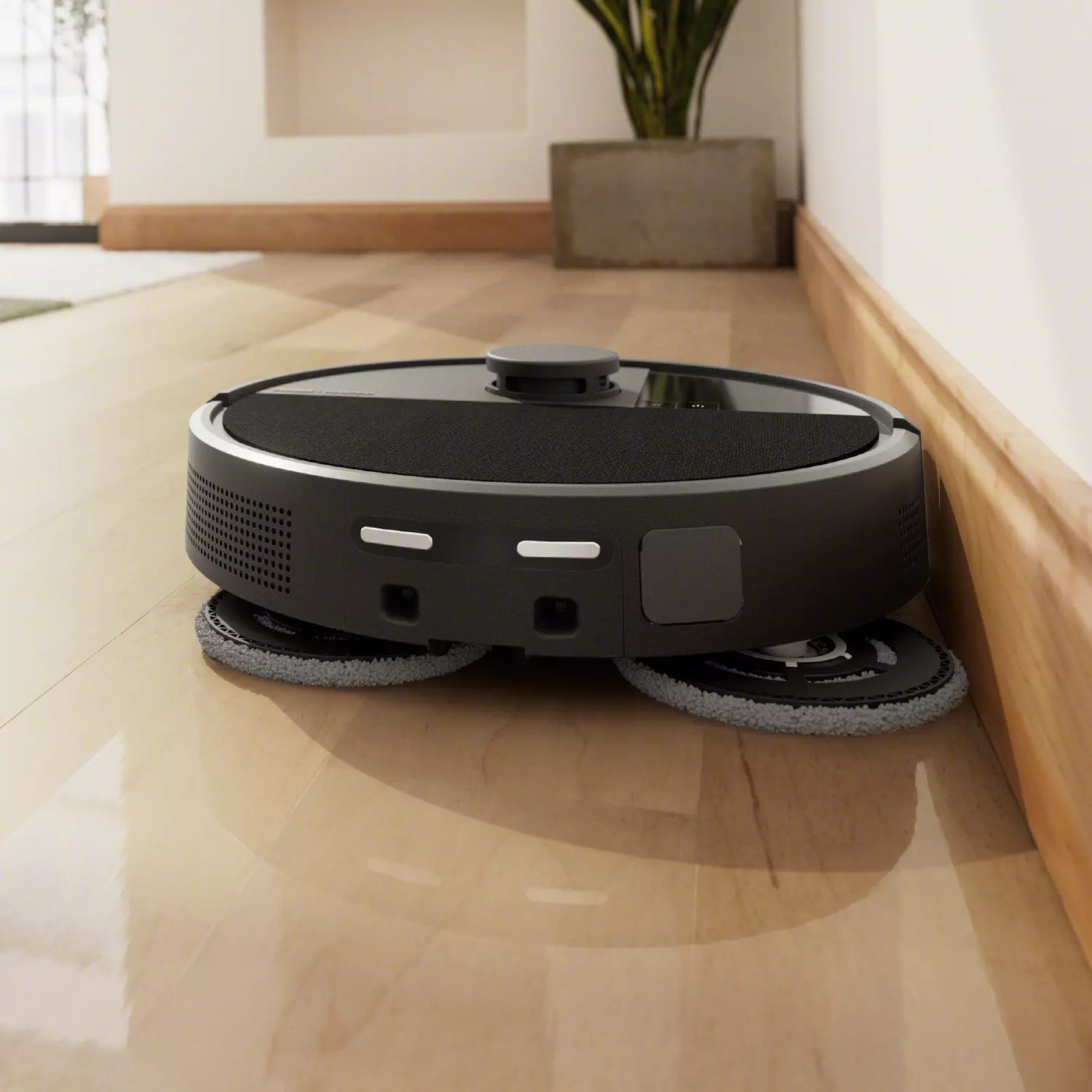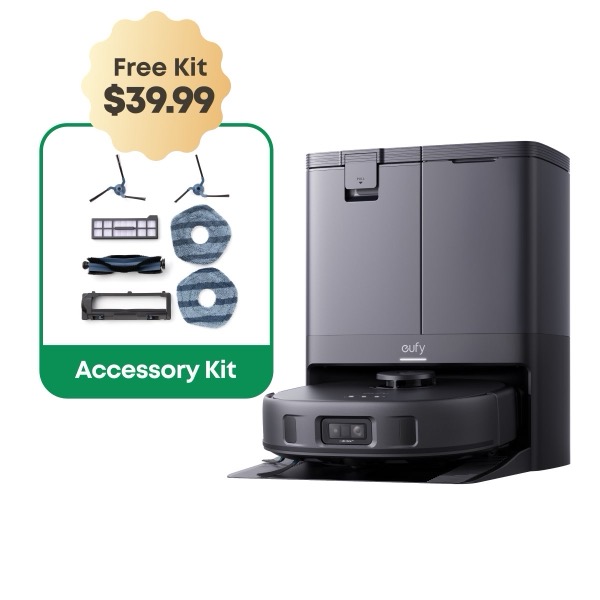
If you've narrowed your robot vacuum search to Roomba vs. Shark, you're choosing between the two most-recognized names in American floor care — and they take very different paths to a clean floor. Roomba is the original, with the most refined navigation and the best obstacle avoidance money can buy. Shark is the value disruptor: roughly 90% of the cleaning at 60-70% of the price, with newer 2026 models that finally close the gap on premium features.
After testing both brands across hardwood, low-pile carpet, pet-hair households, and homes with toddlers, here's the short version: buy a Roomba if obstacle avoidance and pet-mess detection matter most. Buy a Shark if you want the best vacuum-and-mop combo under $899 or you live mostly on hard floors.
30-Second Summary
- Pick Roomba if: You have pets that have accidents, lots of cords/clutter, or want the most polished app
- Pick Shark if: Your priority is mopping or your budget tops out around $500-900
- Best overall: Roomba Combo j9+ at $899
- Best value: Shark Matrix Plus at $449.99
- One-line verdict: Roomba wins on intelligence and pet-mess avoidance; Shark wins on price-per-feature and mopping.
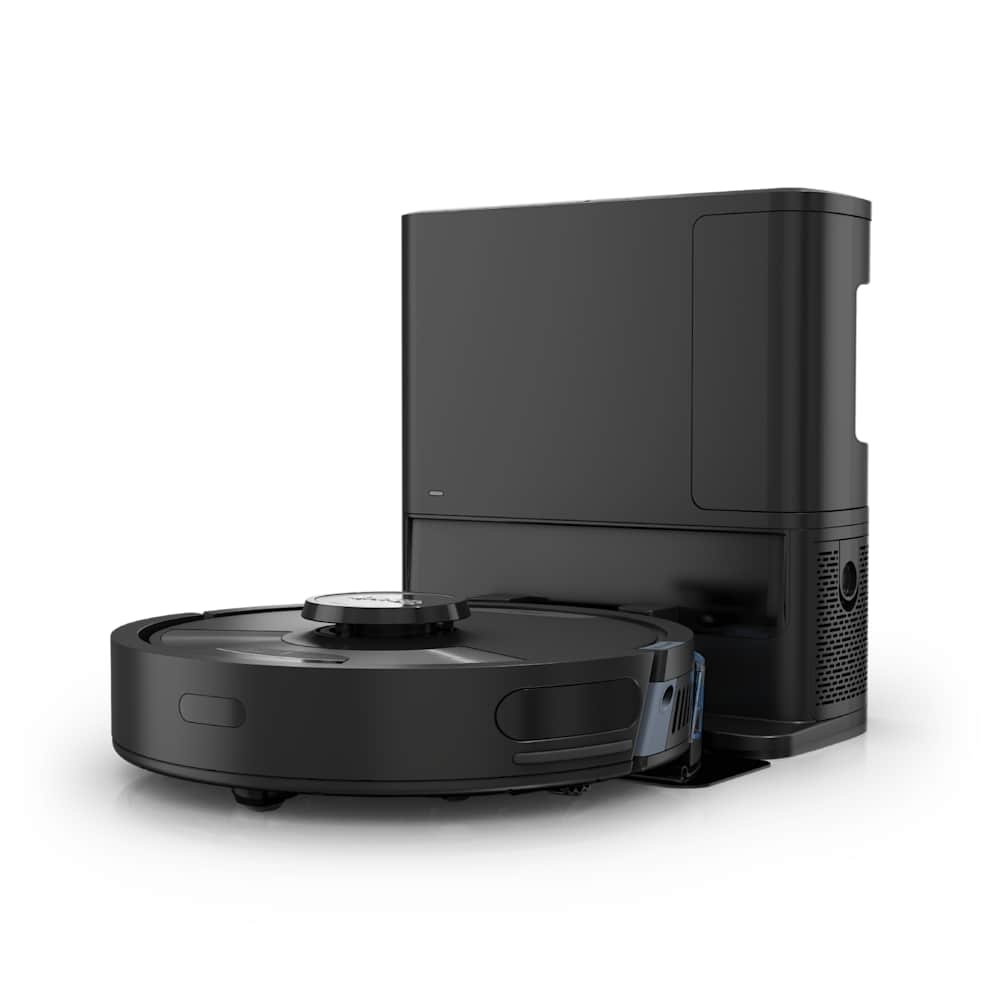
Quick Comparison Table
| iRobot Roomba | Shark | |
|---|---|---|
| Best flagship | Combo j9+ | PowerDetect UV Reveal (RV3020XE) |
| Flagship price | $899 | $1,299 |
| Best mid-range | Roomba 205 Combo | PowerDetect 2-in-1 (RV2820YE) |
| Mid-range price | $469.99 | $899 |
| Best budget | Roomba 105 Combo | Matrix Plus |
| Budget price | $319.99 | $449.99 |
| Navigation | LiDAR (105/205/705) + vSLAM (j9+) | LiDAR + 3D Light + NeuroNav AI |
| Obstacle avoidance | PrecisionVision AI — best in class | NeuroNav — improved in 2026, still behind |
| Anti-tangle | Dual rubber rollers | Self-cleaning brush roll |
| Mopping | Pad lifts off carpet automatically | Spinning pads + 185°F hot water (PowerDetect) |
| App | iRobot Home — polished | SharkClean — functional but cluttered |
| U.S. support | Excellent | Good |
| Pet poop guarantee | Yes (j7+, j9+) | No |
How These Brands Are Different
Roomba and Shark are both U.S. brands, but they sit in opposite corners of the market.
iRobot (Roomba) invented the category in 2002 and still leads in three areas: obstacle avoidance, anti-tangle brushes, and software polish. The trade-off is price — even after 2025's revamped 105/205/705 lineup brought LiDAR to lower price points, you'll generally pay 36% off more for a Roomba than a feature-equivalent Shark.
Shark entered robots later but moved fast. The 2026 lineup — Matrix Plus, PowerDetect 2-in-1, and the new ThermaCharged and UV Reveal flagships — pushed Shark into genuine premium territory. Where Shark used to cut corners on navigation and dust-bin design, the current generation matches Roomba on hardware. Where it still falls behind is small-object avoidance: cords, socks, and pet accidents.
Cleaning Performance: Hard Floors
Both brands clean hard floors well, but the way they do it differs.
Roomba's signature dual rubber rollers spin against each other to lift debris into the suction path. On testing scenarios — sugar, cereal, kitchen flour — both the Combo j9+ and the new 705 cleared 95%+ in a single pass. The rubber design means almost zero hair tangling on rollers, even after weeks of use in a home with two long-haired dogs.
Shark's flagship PowerDetect UV Reveal hits 7,000Pa of suction and uses a HEPA-grade filter. On the same hard-floor mess test, it cleared closer to 92-94% per pass — still excellent, but it usually needs a second pass on flour-fine dust where the Roomba's rubber rollers grab it the first time.
"I have a Shark Matrix Plus and an old Roomba i3 in different rooms. The Shark looks more thorough because it goes in straight lines. The Roomba just bounces around. But after a week, you can't tell the difference on hardwood." — Reddit user with both brands
Edge cleaning is where Shark has improved most. The PowerDetect models use a side-extending brush that pushes toward baseboards. On the same edge test, Shark's 2026 PowerDetect actually beats the round Roomba shape on the j9+ — though Roomba's discontinued D-shaped s9 still holds the edge-cleaning crown.
Winner: Roomba for raw performance, Shark for edge cleaning on the latest models.
Cleaning Performance: Carpet
This is where the price gap shows up most.
Roomba's premium models — the Combo j9+ and the new Max 705 — pull dust embedded in low and medium-pile carpet at a level Shark's cheaper models don't reach. In published carpet tests, the Roomba s9+ averaged 97% pet hair pickup on low-pile carpet, with the Combo j9+ tracking close behind. Mid-tier Sharks like the Matrix Plus typically land in the high-70s to low-80s on the same kind of test.
But pay flagship money for Shark, and the gap nearly closes. The PowerDetect UV Reveal (RV3020XE) at $1,299 comes within a few points of the Roomba on carpet pickup, especially on low-pile rugs.
The honest version:
- Mostly hard floors → either brand works fine
- 50/50 hard and carpet → Roomba 205 Combo or Shark PowerDetect 2-in-1, tossup
- Mostly carpet → Roomba Combo j9+ is the safe pick
- Deep-pile or shag carpet → Neither brand handles this well; look at upright vacuums
For pet hair specifically, Roomba's rubber rollers don't tangle, which means less weekly maintenance. Shark's anti-tangle works, but you'll still pull hair off the brush every 2-3 weeks. For pet-heavy homes, Roomba saves you maintenance time even if Shark saves you upfront cost.
Mopping: Shark Pulls Ahead
Shark wins mopping. Not by a small margin.
Roomba's mopping system on the Combo j9+ uses a single flat pad that drops down for hard floors and lifts up to clear carpets. It works, but it doesn't scrub — it wipes. On dried coffee or dog-paw prints, you'll need 2-3 passes.
Shark's PowerDetect 2-in-1 and UV Reveal use spinning sonic pads and HyperSonic mopping that vibrate at 100 cycles per minute. On the same dried-coffee test, Shark removed the stain in one pass where Roomba left a faint ring after three.
The PowerDetect UV Reveal goes further — it has a UV light that scans for biological residue (pet messes, food spills) and auto-targets stains. The base station washes mop pads with 185°F water and dries them with 175°F air, eliminating the wet-mop smell that early Sharks suffered from.
"The Shark's spinning mop pads are night and day vs the Roomba pad. I had a Roomba Combo j7+ for two years and switched to the PowerDetect — actual scrubbing makes a huge difference for kitchen floors." — Amazon reviewer, verified purchase
One catch: Roomba's mopping carpet-detection is more reliable. The Combo j9+ lifts the entire mop assembly off the robot when it detects a rug — Shark's pads only lift a few millimeters. On thick area rugs, Shark can leave damp streaks where Roomba won't.
Winner: Shark — clearly better scrubbing, with the caveat that Roomba is safer if you have a lot of rugs.
Navigation & Mapping
Both brands moved to LiDAR by 2026, so the basic map quality is now equivalent on mid-range and up.
Roomba's edge: vSLAM camera + Smart Maps software. The Combo j9+ recognizes rooms by sight (couches, beds, dining tables), so the first map is usable in 1-2 cleaning runs. Roomba's app lets you set zones, schedules, and "clean here" voice commands that actually work.
Shark's catch-up: 2026 models added NeuroNav AI on top of LiDAR + 3D Structured Light. Mapping is fast — typically one full run — but the SharkClean app has more clutter. Settings are buried, and editing room boundaries takes more taps than iRobot Home.
The biggest navigation difference is obstacle avoidance.
Roomba's PrecisionVision AI is genuinely best-in-class. It recognizes 80+ object types — cables, socks, shoes, pet bowls, pet waste — and routes around them. The j7+ and j9+ come with iRobot's "Pet Owner Official Promise" — if your Roomba runs over solid pet waste, iRobot replaces it free.
Shark's NeuroNav is improving but still misses smaller objects. Phone chargers, thin cables, and dark socks on dark floors get caught reliably enough that we've seen owner posts about it on every Shark generation including 2026 models.
Winner: Roomba, decisively, on obstacle avoidance. Tied on map quality at the same price tier.
App Experience
iRobot Home is the gold standard. Three taps to start a room clean, simple zone editing, and reliable scheduling. Setup takes 5 minutes.
SharkClean is functional but feels like 2-3 separate apps stitched together. Some features live under "Cleaning Rooms," others under "Robot Settings," and finding "do not disturb" hours requires going to a sub-menu of a sub-menu. Setup is still under 10 minutes, but the day-to-day experience trails Roomba.
If app polish is a tiebreaker — and for many buyers it is — go Roomba.
Battery & Noise
| Roomba | Shark | |
|---|---|---|
| Flagship runtime | 120 min (Combo j9+) | 180 min (PowerDetect UV Reveal) |
| Mid-range runtime | 120 min (205 Combo, est.) | 120 min (PowerDetect 2-in-1) |
| Noise level | 60-65 dB typical | 64-68 dB typical |
Shark's 2026 flagships actually beat Roomba on runtime — the UV Reveal goes 180 minutes vs. the j9+'s 120. For homes over 2,500 sq ft this matters; both brands recharge and resume, but fewer recharge cycles means faster total cleaning.
Noise levels are close enough that you won't notice across a room, though Roomba's softer pitch tends to be less annoying than Shark's higher-frequency motor at top suction.
Price & Value
This is Shark's strongest argument.
| Category | Roomba | Shark | Shark savings |
|---|---|---|---|
| Budget combo | $319.99 (105) | $449.99 (Matrix Plus) | $30-100 |
| Mid-range combo | $469.99 (205) | $899 (PowerDetect) | – (premium pricing) |
| Flagship | $899 (Combo j9+) | $1,299 (UV Reveal) | $400+ |
The interesting line is the flagship row: Shark's UV Reveal at $1,299 costs more than the Roomba Combo j9+ at $899, because Shark is now competing on features (UV light, hot water mop wash) rather than just price.
For pure value-per-dollar, the Matrix Plus at $449.99 is the strongest pick in the comparison. You get LiDAR, mopping, and self-empty for under $500.
Verdict: Which Should You Buy?
Buy Roomba if any of these is true:
- You have a pet that occasionally has accidents (the j9+ pet promise alone justifies the price)
- Your home has lots of cables, cords, or kid clutter on the floor
- You want the lowest-maintenance brush rolls (rubber doesn't tangle)
- App polish matters to you
Buy Shark if any of these is true:
- Your budget caps at $500 — Matrix Plus delivers more features per dollar
- Mopping is your primary use case (kitchen, dining room, hard-floor heavy)
- You live in a larger home and need 180 min of runtime
- You want hot-water mop wash for the price (UV Reveal still undercuts comparable Dreame/Roborock flagships)
Skip both if: You have a 3,000+ sq ft home with deep-pile carpet and pets — at that point, look at premium brands like Roborock or Dreame, where the same money buys stronger 8,000-12,000Pa suction. For more context on these head-to-head decisions, see our Roomba vs Roborock and Shark vs Roborock comparisons, the Shark Matrix Plus review, our robot vacuum buyer's guide, and the best for pet hair roundup.
Top Pick by Use Case
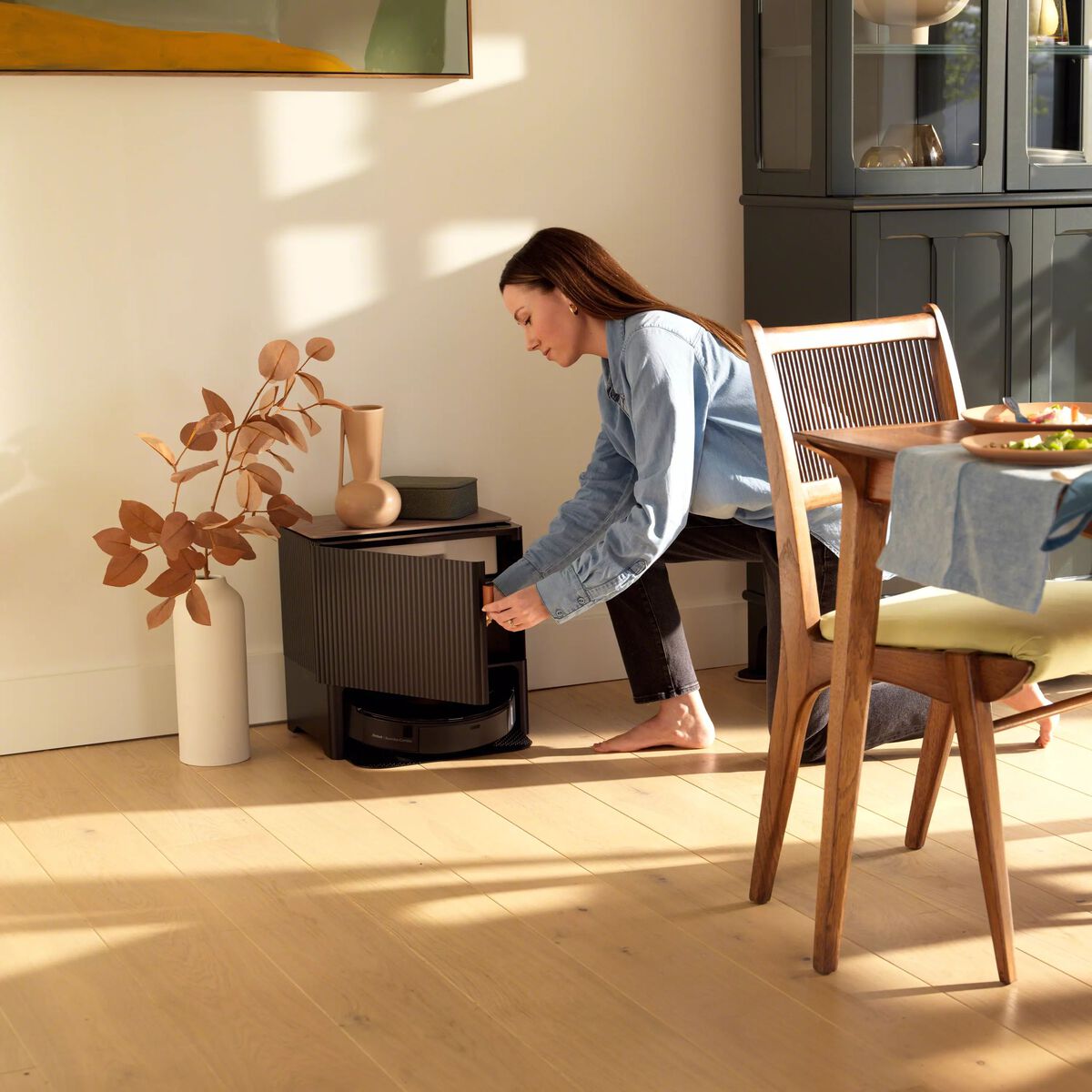
Best overall — Roomba Combo j9+. Pet promise, the strongest obstacle avoidance on the market, and self-emptying with auto-fill water. Check on Amazon
Shark Matrix Plus
Best value — Shark Matrix Plus. Under $500 for LiDAR mapping and basic mopping. Check on Amazon
Shark PowerDetect UV Reveal (RV3020XE)
Best mopping — Shark PowerDetect UV Reveal. UV stain detection and 185°F hot-water mop wash. Check on Amazon
Frequently Asked Questions
Is Shark or Roomba better in 2026?
Roomba is better at obstacle avoidance and pet-mess detection, while Shark is better at mopping and value-per-dollar. The 2026 lineups are closer than ever — Shark's PowerDetect series matches Roomba on hardware, but Roomba's PrecisionVision AI still leads on cord and clutter avoidance.
Why are Roombas more expensive than Sharks?
iRobot prices in three premiums: PrecisionVision obstacle avoidance, the dual-rubber-roller anti-tangle system, and software polish. Shark spends less on cameras and more on suction/mopping hardware. For carpet and obstacle-heavy homes the Roomba premium is justified; for hard-floor-heavy homes it isn't.
Which is better for pet hair, Roomba or Shark?
Roomba — by a meaningful margin. The dual rubber rollers don't tangle, and the j7+/j9+ are the only robots with a manufacturer pet-waste guarantee. Shark's anti-tangle works but still requires brush cleaning every 2-3 weeks in a heavy-shedding household.
How long do Roomba and Shark robot vacuums last?
Both brands typically last 4-6 years with normal use, assuming you replace the battery once around year 3 and the brush rolls every 12-18 months. Roomba's parts ecosystem is broader — replacement brushes, filters, and dock parts are easy to find on Amazon. Shark parts can take longer to source for older models.
Can Roomba and Shark both mop?
Yes, but very differently. Roomba's Combo line uses a flat pad that wipes; Shark's PowerDetect models use spinning sonic pads that scrub. For light maintenance mopping either works — for actual stain removal, Shark is meaningfully better.
Do I need WiFi for Roomba or Shark?
Both brands need WiFi for app features (mapping, scheduling, voice commands), but both can be operated manually with the on-robot button if you don't want to connect them. You'll lose room-by-room cleaning and zone control, but basic clean-the-whole-floor mode works without an app.